
Filter
2661
Text search:
UN
Population
Fund
Featured
177
858
Language
2442
193
55
40
34
12
10
7
5
5
4
3
2
2
2
2
2
2
1
1
1
1
1
1
1
1
1
1
1
1
1
Document type
1549
548
178
148
114
39
39
23
8
7
4
1
Countries / Regions
154
87
72
72
68
63
63
62
58
56
52
51
43
42
41
40
40
39
39
34
33
30
26
24
24
24
22
22
22
22
21
21
20
20
20
19
19
19
18
16
15
15
13
13
12
12
11
11
11
11
10
10
9
9
9
8
7
7
7
7
7
7
7
7
6
6
6
6
5
5
4
4
4
4
4
4
4
4
4
4
4
4
3
3
3
3
3
3
3
3
2
2
2
2
2
2
2
2
2
2
2
2
2
1
1
1
1
1
1
1
1
1
1
1
1
1
1
1
1
1
1
1
1
Authors & Publishers
226
120
97
87
86
67
62
50
32
28
25
23
22
21
20
20
19
17
17
17
16
16
16
15
14
13
13
12
12
11
11
10
10
10
10
8
8
8
8
8
8
8
7
7
7
7
7
7
7
7
7
7
7
7
6
6
6
6
6
6
6
6
6
5
5
5
5
5
5
5
5
5
5
5
5
5
5
5
5
5
5
5
5
5
5
5
5
5
4
4
4
4
4
4
4
4
4
4
4
4
4
4
4
4
4
4
4
4
4
4
4
4
3
3
3
3
3
3
3
3
3
3
3
3
3
3
3
3
3
3
3
3
3
3
3
3
3
3
3
3
3
3
3
3
3
3
3
3
3
3
3
3
3
3
3
3
3
3
3
3
3
3
3
3
3
3
3
3
3
3
3
3
3
3
3
3
3
3
3
3
3
3
3
3
3
3
3
3
3
3
2
2
2
2
2
2
2
2
2
2
2
2
2
2
2
2
2
2
2
2
2
2
2
2
2
2
2
2
2
2
2
2
2
2
2
2
2
2
2
2
2
2
2
2
2
2
2
2
2
2
2
2
2
2
2
2
2
2
2
2
2
2
2
2
2
2
2
2
2
2
2
2
2
2
2
2
2
2
2
2
2
2
2
2
2
2
2
2
2
2
2
2
2
2
2
2
2
2
2
2
2
2
2
2
2
2
2
2
2
2
2
2
2
2
2
2
2
2
2
2
2
2
2
2
2
2
2
2
2
2
2
2
2
2
2
2
2
2
2
2
2
2
2
2
2
2
2
2
2
2
2
2
2
2
2
2
2
2
2
2
2
2
2
2
2
2
2
2
1
1
1
1
1
1
1
1
1
1
1
1
1
1
1
1
1
1
1
1
1
1
1
1
1
1
1
1
1
1
1
1
1
1
1
1
1
1
1
1
1
1
1
1
1
1
1
1
1
1
1
1
1
1
1
1
1
1
1
1
1
1
1
1
1
1
1
1
1
1
1
1
1
1
1
1
1
1
1
1
1
1
1
1
1
1
1
1
1
1
1
1
1
1
1
1
1
1
1
1
1
1
1
1
1
1
1
1
1
1
1
1
1
1
1
1
1
1
1
1
1
1
1
1
1
1
1
1
1
1
1
1
1
1
1
1
1
1
1
1
1
1
1
1
1
1
1
1
1
1
1
1
1
1
1
1
1
1
1
1
1
1
1
1
1
1
1
1
1
1
1
1
1
1
1
1
1
1
1
1
1
1
1
1
1
1
1
1
1
1
1
1
1
1
1
1
1
1
1
1
1
1
1
1
1
1
1
1
1
1
1
1
1
1
1
1
1
1
1
1
1
1
1
1
1
1
1
1
1
1
1
1
1
1
1
1
1
1
1
1
1
1
1
1
1
1
1
1
1
1
1
1
1
1
1
1
1
1
1
1
1
1
1
1
1
1
1
1
1
1
1
1
1
1
1
1
1
1
1
1
1
1
1
1
1
1
1
1
1
1
1
1
1
1
1
1
1
1
1
1
1
1
1
1
1
1
1
1
1
1
1
1
1
1
1
1
1
1
1
1
1
1
1
1
1
1
1
1
1
1
1
1
1
1
1
1
1
1
1
1
1
1
1
1
1
1
1
1
1
1
1
1
1
1
1
1
1
1
1
1
1
1
1
1
1
1
1
1
1
1
1
1
1
1
1
1
1
1
1
1
1
1
1
1
1
1
1
1
1
1
1
1
1
1
1
1
1
1
1
1
1
1
1
1
1
1
1
1
1
1
1
1
1
1
1
1
1
1
1
1
1
1
1
1
1
1
1
1
1
1
1
1
1
1
1
1
1
1
1
1
1
1
1
1
1
1
1
1
1
1
1
1
1
1
1
1
1
1
1
1
1
1
1
1
1
1
1
1
1
1
1
1
1
1
1
1
1
1
1
1
1
1
1
1
1
1
1
1
1
1
1
1
1
1
1
1
1
1
1
1
1
1
1
1
1
1
1
1
1
1
1
1
1
1
1
1
1
1
1
1
1
1
1
1
1
1
1
1
1
1
1
1
1
1
1
1
1
1
1
1
1
1
1
1
1
1
1
1
1
1
1
1
1
1
1
1
1
1
1
1
1
1
1
1
1
1
1
1
1
1
1
1
1
1
1
1
1
1
1
1
1
1
1
1
1
1
1
1
1
1
1
1
1
1
1
1
1
1
1
1
1
1
1
1
1
1
1
1
1
1
1
1
1
1
1
1
1
1
1
1
1
1
1
1
1
1
1
1
1
1
1
1
1
1
1
1
1
1
1
1
1
1
1
1
1
1
1
1
1
1
1
1
1
1
1
1
1
1
1
1
1
1
1
1
1
1
1
1
1
1
1
1
1
1
1
1
1
1
1
1
1
1
1
1
1
1
1
1
1
1
1
1
1
1
1
1
1
1
1
1
1
1
1
1
1
1
1
1
1
1
1
1
1
1
1
1
1
1
1
1
1
1
1
1
1
1
1
1
1
1
1
1
1
1
1
1
1
1
1
1
1
1
1
1
1
1
1
1
1
1
1
1
1
1
1
1
1
1
1
1
1
1
1
1
1
1
1
1
1
1
1
1
1
1
1
1
1
1
1
1
1
1
1
1
1
1
1
1
1
1
1
1
1
1
1
1
1
1
1
1
1
1
1
1
1
1
1
1
1
1
1
1
1
1
1
1
1
1
1
1
1
1
1
1
1
1
1
1
1
1
1
1
1
1
1
1
1
1
1
1
1
1
1
1
1
1
1
1
1
1
1
1
1
1
1
1
1
1
1
1
1
1
1
1
1
1
1
1
1
1
1
1
1
1
1
1
1
1
1
1
1
1
1
1
1
1
1
1
1
1
1
1
1
1
1
1
1
1
1
1
1
1
1
1
1
1
1
1
1
1
1
1
1
1
1
1
1
1
1
1
1
1
1
1
1
1
1
1
1
1
1
1
1
1
1
1
1
1
1
1
1
1
1
1
1
1
1
1
1
1
1
1
1
1
1
1
1
1
1
1
1
1
1
1
1
1
1
1
1
1
1
1
1
1
1
1
1
1
1
1
1
1
1
1
1
1
1
1
1
1
1
1
1
1
1
1
1
1
1
1
1
1
1
1
1
1
1
1
1
1
1
1
1
1
1
1
1
1
1
1
1
1
1
1
1
1
1
1
1
1
1
1
1
1
1
1
1
1
1
1
1
1
1
1
1
1
1
1
1
1
1
1
1
1
1
1
1
1
1
1
1
1
1
1
1
1
1
1
1
1
1
1
1
1
1
1
1
1
1
1
1
1
1
1
1
1
1
1
1
1
1
1
1
1
1
1
1
1
1
1
1
1
1
1
1
1
1
1
1
1
1
1
1
1
1
1
1
1
1
1
1
1
1
1
1
1
1
1
1
1
1
1
1
1
1
1
1
1
1
1
1
1
1
1
1
1
1
1
1
1
1
1
1
1
1
1
1
1
1
1
1
1
1
1
1
1
1
1
1
1
1
1
1
1
1
1
1
1
1
1
1
1
1
1
1
1
1
1
1
1
1
1
1
1
1
1
1
1
1
1
1
1
1
1
1
1
1
1
1
1
1
1
1
1
1
1
1
1
1
1
1
1
1
1
1
1
1
1
1
1
1
1
1
1
1
1
1
1
1
1
1
1
1
1
1
1
1
1
1
1
1
1
1
1
1
1
1
1
1
1
1
1
1
1
1
1
1
1
1
1
1
1
1
1
1
1
1
1
1
1
1
1
1
1
1
1
1
1
1
1
1
1
1
1
1
1
1
1
1
1
1
1
1
1
1
1
1
1
1
1
1
1
1
1
1
1
1
1
1
1
1
1
1
1
1
1
1
1
1
1
1
1
1
1
1
1
1
1
1
1
1
1
1
1
1
1
1
1
1
1
1
1
1
1
1
1
1
1
1
1
1
1
1
1
1
1
1
1
1
1
1
1
1
1
1
1
1
1
1
1
1
1
1
1
1
1
1
1
1
1
1
1
1
1
1
1
1
1
1
1
1
1
1
1
1
1
1
1
1
1
1
1
1
1
1
1
1
1
1
1
1
1
1
1
1
1
1
1
1
1
1
1
1
1
1
1
1
1
1
1
1
1
1
1
1
1
1
1
1
1
1
1
1
1
1
1
1
1
1
1
1
1
1
1
1
1
1
1
1
1
1
1
1
1
1
1
1
1
1
1
1
1
1
1
1
1
1
1
1
1
1
1
1
1
1
1
1
1
1
1
1
1
1
1
1
1
1
1
1
1
1
1
1
1
1
1
1
1
1
1
1
1
1
1
1
1
1
1
1
1
1
1
1
1
1
1
1
1
1
1
1
1
1
1
1
1
1
1
1
1
1
1
1
1
1
1
1
1
1
1
1
1
1
1
1
1
1
1
1
1
1
1
1
1
1
1
1
1
1
1
1
1
1
1
1
1
1
1
1
1
1
1
1
1
1
1
1
1
1
1
1
1
1
1
1
1
1
1
1
1
1
1
1
1
1
1
1
1
1
1
1
1
1
1
1
1
1
1
1
1
1
1
1
1
1
1
1
1
1
1
1
1
1
1
1
1
1
1
1
1
1
1
1
1
1
1
1
1
1
1
1
1
1
1
1
1
1
1
1
1
1
1
1
1
1
1
1
1
1
1
1
1
1
1
1
1
1
1
1
1
1
1
1
1
1
1
1
1
1
1
1
1
1
1
1
1
1
1
1
1
1
1
1
1
1
1
1
1
1
1
1
1
1
1
1
1
1
1
1
1
1
1
1
1
1
1
1
1
1
1
1
1
1
1
1
1
1
1
1
1
1
1
1
1
1
1
1
1
1
1
1
1
1
1
1
1
1
1
1
1
1
1
1
1
1
1
1
1
1
1
1
1
1
1
1
1
1
1
1
1
1
1
1
1
1
1
1
1
1
1
1
1
1
1
1
1
1
1
1
1
1
1
1
1
1
1
1
1
1
1
1
1
1
1
1
1
1
1
1
1
1
1
1
1
1
1
1
1
1
1
1
1
1
1
1
1
1
1
1
1
1
1
1
1
1
1
1
1
1
1
1
1
1
1
1
1
1
1
1
1
1
1
1
1
1
1
1
1
1
1
1
1
1
1
1
1
1
1
1
1
1
Publication Years
781
1711
161
8
Category
1150
219
194
110
84
25
9
Toolboxes
191
177
158
145
133
131
110
80
69
64
62
58
34
29
23
23
21
20
19
17
15
14
8
7
3
2
2
The 2021 Global monitoring report on financial protection in health shows that before the COVID-19 pandemic, the world was off-track to reduce financial hardship due to health expenditures because trends in catastrophic health spending were going in the wrong direction and the number of people incur
...
ring impoverishing health spending remained unacceptably high (Chapter 1). Chapter 2 summarizes emerging evidence on the consequence of the pandemic and the related macroeconomic and fiscal crisis that points to the likely worsening of financial protection for households, particularly as a result of declining income and consumption, along with rising poverty and inequality
more
Background: Mental health has recently gained increasing attention on global health and development agendas, including calls for an increase in international funding. Few studies have previously characterized official development assistance for mental health (DAMH) in a nuanced and differentiated ma
...
nner in order to support future funding efforts. Methods: Data from the Organisation for Economic Cooperation and Development Creditor Reporting System were obtained through keyword searches. Projects were manually reviewed and categorized into projects dedicated entirely to mental health and projects that mention mental health (as one of many aims). Analysis of donor, recipient, and sector characteristics within and between categories was undertaken cumulatively and yearly.
more
Development finance institutions owned by European governments and the World Bank Group are spending hundreds of millions of dollars on expensive for-profit hospitals in the Global South that block patients from getting care, or bankrupt them, with some even imprisoning patients who cannot afford th
...
eir bills. At the height of the COVID-19 pandemic, some of these same hospitals denied entry to patients suffering from the virus or sold intensive care beds at eyewatering prices to the highest bidder. These development institutions have woefully inadequate safeguards, invest via a complex web of tax-avoiding financial intermediaries, and offer little to zero evidence on the impacts their investments are having. Oxfam is calling on rich-country governments and the World Bank Group to immediately halt their spending on for-profit private healthcare, and for an urgent independent investigation to be conducted into all active and historic investments.
more
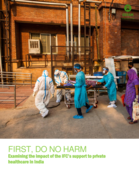
This report examines the support to private healthcare provision in India by the World Bank’s private sector arm, the International Finance Corporation (IFC). Despite supporting private healthcare in the country since 1997, no healthcare results for lending and investments have been disclosed sinc
...
e the start of these operations over twenty-five years ago. The IFC has overwhelmingly invested in high-end urban hospitals which are out of reach for the majority of Indians. Several have consistently failed to provide free healthcare to poor patients despite this being a condition under which free or subsidized public land was allotted to these hospitals. Supporting private healthcare in a context where 37% of Indians experience catastrophic health expenditures in private hospitals appears to run counter to the World Bank Group’s focus on poverty reduction. These investments do not contribute to the building of stronger healthcare infrastructure or respond to unmet healthcare needs. Only 14% of IFC-financed hospitals are located in the 10 states ranked lowest in terms of the overall performance of the health system. Furthermore, we found many instances where regulators upheld complaints pertaining to violations of patients’ rights by these hospitals including overcharging, denial of healthcare, price rigging, financial conflict of interest and medical negligence.
more

Cholera remains an issue of major public health importance in Kenya. Kenya has in recent years experienced outbreaks affecting different parts of the country

This report summarizes the World Health Organization’s (WHO) global work on water, sanitation and hygiene (WASH) during 2022. It describes how the Organization continued to deliver its essential WASH programming as elaborated in its 2018–2025 strategy.

Multiple pandemics, numerous outbreaks, thousands of lives lost and billions of dollars of national income wiped out—all since the turn of this century, in barely 17 years—and yet the world’s investments in pandemic preparedness and response remain woefully inadequate. We know by now that the
...
world will see another pandemic in the not-too-distant future; that random mutations occur often enough in microbes that help them survive and adapt; that new pathogens will inevitably find a way to break through our defenses; and that there is the increased potential for intentional or accidental release of a synthesized agent. Every expert commentary and every analysis in recent years tells us that the costs of inaction are immense. And yet, as
the havoc caused by the last outbreak turns into a fading memory, we become complacent and relegate the case for investing in preparedness on a back burner, only to bring it to the forefront when the next outbreak occurs. The result is that the world remains scarily vulnerable.
more

There is growing understanding and high-level endorsement of the importance of strong collaborative multisectoral approaches to address a broad range of social, economic and governance issues for the prevention and control of noncommunicable disease (NCDs) and mental health conditions. In 2019, Worl
...
d Health Organization (WHO) Member States requested the WHO Director-General to provide an analysis across countries of successful approaches for the prevention and control of NCDs that used multisectoral action.This report describes the experiences of different countries, areas and territories in implementing multisectoral actions to tackle NCDs and is the first step to address their request for an analysis of such efforts
more

This brief update on tuberculosis (TB) in the African region covers the state of TB in the WHO African region, strategic priorities and targets and the impact of COVID-19 on essential services. This is followed by key figures for the region, the role of WHO in country support and, recognizing the im
...
portance of diagnosis and drug susceptibility testing, a focus onstrengthening laboratory networks and the regional laboratory and diagnostic objectives. A brief update of the state of the science and how this is funded across the African region is provided, before closing with challenges and opportunities,strategic directions and a brief discussion of funding concerns. Discussions around the drivers of the disease, and issues of the poverty, inequality and stigma that continue to plague those living with TB are fully recognized, but are outside the scope of this report.
more

World Vision’s Gender Equality and Social Inclusion (GESI) approach actively strives to examine, question, and change harmful social norms and power imbalances as a means of reaching gender equality and social inclusion objectives in a programme area.
This reference guide is designed to help WASH
...
practitioners implement GESI-transformative WASH programmes by supporting change across all five GESI domains – access, decision-making, participation, systems, and well-being. It provides information on how to design, implement, monitor and evaluate a WASH project or programme to address GESI.
more

This guide presents a basis for understanding how diarrhoeal diseases are currently influenced by climate and weather, and may be further exacerbated by climate change. It is a technical guide on how to conduct a Vulnerability & Adaptation assessment for diarrhoeal diseases and climate change, and p
...
rovides guidance on how to:
identify populations and regions vulnerable to diarrhoeal diseases and the reasons for their vulnerability;
establish relevant baselines that can be analysed and monitored;
conduct analyses to project how diarrhoeal diseases may be impacted in the future due to climate change; and
identify appropriate responses to mitigate and monitor these risks over time.
more
World Humanitarian Data and Trends presents global- and country-level data-and-trend analysis about humanitarian
crises and assistance. Its purpose is to consolidate this information and present it in an accessible way, providing policymakers, researchers and humanitarian practitioners with an evid
...
ence base to support humanitarian policy decisions and provide context for operational decisions.
more

Ukraine: Russian invasion has forced older people with disabilities to endure isolation and neglect – new report
Many temporary shelters inaccessible to people with physical disabilities
Overburdened care system often provides few alternatives to institutions for older people
Authorities
...
and humanitarian actors must ensure an inclusive response
Displaced older people with disabilities in Ukraine are physically and financially unable to access adequate housing and care amid Russia’s ongoing invasion, sometimes leaving few alternatives to being placed in residential institutions, Amnesty International said in a new report.
more
This article analyzes the impact of the COVID-19 pandemic on foreign aid. Using examples from Canadian foreign aid, it argues that, despite the terrible toll it is exacting, the crisis has accelerated some significant positive pre-existing trends, both by destabilizing the perception of aid as flowi
...
ng essentially from the Global North to Global South and by reinforcing awareness of the importance of joint efforts for global public goods and humanitarian assistance, as well as debt relief. However, it has also reinforced potentially harmful self-interested justifications for aid, which could align assistance more with donors’ priorities than the needs of the poor
more

The World Heart Federation (WHF) is a leading global advocate for stronger legislation and policies regarding cardiovascular disease (CVD) and its risk factors, including raised cholesterol. The present Cholesterol Advocacy Toolkit 2022 provides WHF member organizations with information as well as p
...
ractical tools to
support cholesterol advocacy at the local and regional levels.
more

Cholera is an acute gastrointestinal infection caused by the bacterium Vibrio Cholerae serogroup O1 or O139, and is often linked to unsafe drinking water, lack of proper sanitation and personal hygiene. It adversely affects mostly the poor and vulnerable populations in countries, which are already d
...
eprived of proper health facilities and conducive environmental conditions. The disease spreads through oro-fecal transmission by the ingestion of contaminated food or water or by person-to-person contact. It has a short incubation period of 2 hours to 5 days and the number of affected cases can rapidly increase across large regions. Cholera is a significant threat to global public health leading to an estimated 3-5 million cases per year worldwide, with an annual toll of 100,000 deaths. The disease was first reported in 1817 from the Ganges Delta of India and since then the ongoing 7th pandemic has emerged from Indonesia, reached Africa in 1970 and Somalia happens to be one of the early affected countries. Over the past few decades,
Somalia has witnessed the occurrence of repeated AWD/Cholera disease outbreaks that have caused high morbidity and mortality across the country.
more

Benchmarking is a strategic process often used by businesses and institutes to standardize performance in relation to the best practices of their sector. The World Health Organization (WHO) and partners have developed a tool with a list of benchmarks and corresponding suggested actions that can be a
...
pplied to implement the International Health Regulations 2005 (IHR) and strengthen health emergency prevention, preparedness, response and resilience capacities.
The first edition of the benchmarks was published in 2019 to support countries in developing, implementing and documenting progress of national IHR or health security plans (e.g. national action plan for health security (NAPHS), national action plan for emerging infectious diseases, public health emergencies and health security and other country level plans for health emergencies). The tool has been updated to incorporate lessons from COVID-19 and other health emergencies, to align with the updated IHR monitoring & evaluation framework (IHR MEF) tools and the health systems for health security framework, and to support strengthening health emergency prevention, preparedness, response and resilience (HEPR) capacities and the Preparedness and Resilience for Emerging Threats (PRET) initiative.
more

The World Food Programme (WFP) has taken important steps to progress disability inclusion across its programming and operations. In late 2022, WFP commissioned the Nossal Institute, University of Melbourne in partnership with the Faculty of Psychology, Universitas Gadjah Mada, Indonesia to identify
...
pathways for increasing disability inclusion in WFP’s emergency preparedness and response (EPR) programming.
The study explored WFP’s programming in Indonesia and the Philippines, including WFP’s advisory, technical assistance and service provision roles to government and partners and informed the development of this guide (see appendix 2). As general guidance on disability inclusion is increasingly available, the purpose of this guide is to contextualize disability inclusion in WFP’s emergency preparedness and response programming. The guide builds on core reference materials, such as the Inter-Agency Standing Committee (IASC) Guidelines on Inclusion of Persons with Disabilities in Humanitarian Action, 2019. While of wider relevance, this guide is directed at WFP’s EPR programming in Asia and the Pacific.
more

The risk communication and community engagement (RCCE) competency framework is a resource that details the essential behaviours and activities necessary for effective communication and engagement with communities before, during and after public health emergencies. The purpose of this framework is to
...
establish and promote a common understanding of behavioural competencies and how they should be applied for high-performing and community-centred health emergency programmes. It is intended to support the development of standardized training programmes, professional development and talent acquisition and to enhance the capabilities of public health professionals involved in RCCE. Its goal is to inform the establishment of a skilled, well-trained RCCE workforce that consistently understands and executes the necessary behaviours and activities required to conduct RCCE activities with competence and professionalism.
more

Noncommunicable diseases (NCDs) – chief among them, cardiovascular diseases (heart disease and stroke), cancer, diabetes and chronic respiratory diseases – along with mental health, cause nearly three quarters of deaths in the world. Their drivers are social, environmental, commercial and geneti
...
c, and their presence is global. Every year 17 million people under the age of 70 die of NCDs, and 86% of them live in low- and middle-income countries (LMICs).
more
