
Filter
1654
Text search:
NCDs
Featured
90
295
Language
Document type
543
456
172
111
103
58
54
44
29
28
17
15
13
10
1
Countries
419
86
52
47
44
32
28
27
26
23
21
20
19
18
18
18
17
17
16
16
15
15
13
13
13
12
11
8
8
8
8
7
7
7
7
7
6
6
6
6
6
5
5
5
5
4
4
4
4
4
4
3
3
3
3
3
3
2
2
2
2
2
2
2
2
2
2
2
1
1
1
1
1
1
1
1
1
1
1
1
1
1
1
1
1
1
1
1
1
1
1
1
1
1
1
1
1
1
1
1
1
1
1
1
1
1
Authors & Publishers
Publication Years
Category
632
545
133
49
34
33
6
Toolboxes
748
103
70
67
44
31
27
22
21
18
14
14
7
6
5
3
2
2
2
1
1
1

Although air pollution is well known to be harmful to the lung and airways, it can also damage most other organ systems of the body. It is estimated that about 500,000 lung cancer deaths and 1.6 million COPD deaths can be attributed to air pollution, but air pollution may also account for 19% of all
...
Polluted air is a public health hazard that cannot be evaded. It is widely known that long-term exposure to air pollution enhances the risks of cardiovascular and respiratory diseases. Scientists from the Max Planck Institute for Chemistry and the University Medical Center Mainz now calculated in a
...

The combined effects from ambient (outdoor) air pollution and indoor (household, in particular) air pollution cause approximately 7 million premature deaths every year, largely as a result of increased mortality from stroke, IHD, COPD, lung cancer and acute respiratory infections (1). Air pollution
...
Alcohol has historically, and continues to, hold an important role in social engagement and bonding for many. Social drinking or moderate alcohol consumption for many is pleasurable.
However, alcohol consumption – especially in excess – is linked to a number of negative outcomes: as a risk fa
...

The video titled "Physical Activity and Chronic Disease Prevention" emphasizes the importance of regular physical activity in reducing the risk of chronic diseases. It discusses how engaging in consistent exercise can help prevent conditions such as heart disease, diabetes, and certain cancers. The
...

Keeping active can help people stay at a healthy weight, avoid many chronic health problems, and reduce stress and boost mood.
Despite all its benefits, about one in three people globally gets too little, if any, physical activity.
The article "Cardiovascular Diseases" on Our World in Data provides an in-depth analysis of cardiovascular diseases (CVD), the leading cause of death globally. It examines CVD trends, such as the decline in mortality rates in high-income countries due to improved healthcare and lifestyle changes, wh
...

The World Health Organization's fact sheet on Chronic Obstructive Pulmonary Disease (COPD) - arabic version
The objective of the BREATHE study was to estimate the regional prevalence of chronic obstructive pulmonary disease (COPD) symptoms within the general population in the Middle East/North Africa (MENA) region and to document risk factors, disease characteristics and management using a standardised me
...
Read and share this easy-to-understand content about the ABCS of heart health (Aspirin when appropriate, Blood pressure control, Cholesterol management, and Smoking cessation).
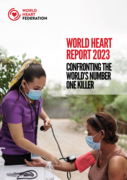
Global progress against cardiovascular disease (CVD) is flatlining.
Though rates of CVD deaths globally have fallen in the last three
decades, this trend has begun to stall and, without concerted
efforts, is at risk of reversing.

The World Heart Federation (WHF) is a leading global advocate for stronger legislation and policies regarding cardiovascular disease (CVD) and its risk factors, including raised cholesterol. The present Cholesterol Advocacy Toolkit 2022 provides WHF member organizations with information as well as p
...

Cardiovascular diseases, principally ischemic heart disease (IHD), are the most important cause of death and disability in the majority of low- and lower-middle-income countries (LLMICs). In these countries, IHD mortality rates are significantly greater in individuals of a low socioeconomic status (
...
Heart & Circulatory Diseases (Cardiovascular Disease; CVD)
Heart and circulatory diseases is an umbrella term for all diseases of the heart and circulation. It includes everything from conditions that are inherited or that a person is born with, to those that develop later, such as coronary heart d
...
Global cardiovascular disease (CVD) burden is high and rising, especially in low-income and middle-income countries (LMICs). Focussing on 45 LMICs, we aimed to determine (1) the adult population’s median 10-year predicted CVD risk, including its variation within countries by socio-demographic char
...

Socioeconomic status is associated with differences in risk factors for cardiovascular disease incidence and outcomes, including mortality. However, it is unclear whether the associations between cardiovascular disease and common measures of socioeconomic status—wealth and education—differ among
...
To assess the quality of Indian clinical practice guidelines (CPG)s for the management of cardiovascular conditions, MEDLINE, Embase, Google Scholar and websites of relevant medical associations and government organisations were searched, from inception until August 2020, to identify Indian CPGs for
...

Objective: To identify gaps in national stroke guidelines that could be bridged to enhance the quality of stroke care services in low- and
middle-income countries.
Methods: We systematically searched medical databases and websites of medical societies and contacted international organizations.
Co
...

Approximately 80% of the 463 million adults worldwide with diabetes live in low-income and middle-income countries (LMICs). A major obstacle to designing evidence-based policies to improve diabetes outcomes in LMICs is the scarce availability of nationally representative data on the current patterns
...

Diabetes mellitus is a leading cause of mortality and reduced life expectancy. We aim to estimate the burden of diabetes by type, year, regions, and socioeconomic status in 195 countries and territories over the past 28 years, which provide information to achieve the goal of World Health Organizatio
...
