
Filter
829
Text search:
Health
Workforce
Team
of
the
World
Health
Organization
Regional
Office
for
Africa
(WHO
Featured
79
248
Language
Document type
381
157
115
75
75
13
8
3
2
Countries / Regions
42
33
28
28
28
21
18
18
17
16
15
15
13
12
12
11
11
11
11
10
10
9
9
9
8
8
8
7
6
6
6
6
5
5
5
5
5
4
4
4
4
3
3
3
3
3
3
2
2
2
2
2
2
2
2
2
2
2
2
2
2
2
2
1
1
1
1
1
1
1
1
1
1
1
1
1
1
1
1
1
1
1
1
1
1
1
1
1
1
1
1
1
Authors & Publishers
Publication Years
Category
344
95
51
47
43
14
10
Toolboxes
85
50
44
33
30
30
27
26
25
23
22
19
19
15
14
11
11
9
7
7
5
2
2

Every year, around 830 000 children die from unintentional or "accidental" injuries. The vast majority of these injuries occur in low-income and middle-income countries. However, dozens
...
Every year, an estimated 15 million babies are born preterm – before 37 weeks of pregnancy. That is more than 1 in 10 live births. Approximately 1 million children die each year worldwide due to complications from their early birth. Those that sur
...
The country profiles incorporate facts indicating the national status of medical devices in areas such as: medical device policies, regulations, incorporation, lists, inventories, nomenclature,
...
Climate change and health vulnerability and adaptation assessment
In 2013 the World Health
...
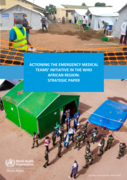
Emergency medical teams (EMT) are first response health care providers – doctors, nurses, paramedics, and others – during outbreaks and emergencies or disasters, working with governments, charities such as nongovernmental organizations (NGOs), a
...

While the full effects of COVID-19 remain unknown, the pandemic continues to profoundly impact regional
...
Since the release of the first volume in May 2020, the COVID-19 pandemic has continued to rage a
...

This year marked the beginning of the WHO biennium 2016-2017 action plan; this annual report highlights WHO’s key achievements in 2016
It also
...
The purpose of the review was to assign a cause of death, to ascertain
...

Patient safety standards are critical for the establishment and assessment of patient safety programmes within hospitals. This third edition of
...

The purpose of this document is to present and promote the minimum requirements for IPC programmes at t
...
WHO published guidance for clinicians and health care decision-makers on the use of corticosteroids in patients with COVID-19.
We recommend syst
...

This country cooperation strategy (CCS) outlines how the World Health Organization (WHO) will wo
...

The development of the Country Cooperation Strategy (CCS) was based on a consultative and participatory process with strong commitment and support
...
The aim of this “model contingency plan” is to assist programme managers and planners in devel-oping a national, context-specific, dengue outbreak response plan in order to: (a) detect a dengue
...

Despite the significant role of vector control in national leishmaniasis control programmes, the programmatic community perceives vector control as
...

Updated 20 Nov. 2020
Countries can use this checklist of hospital governance, structures, plans and protocols to rapidly determine the current capacities
...

The far-reaching impacts of the COVID-19 pandemic underscore the critical need for evidence-info
...

This global status report on prevention and control of NCDs (2014), is framed around the nine voluntary global targets. The report provides data on
...
