
Filter
473
Text search:
Government
of
Nepal,
Ministry
of
Health
and
Population,
National
Centre
for
AIDS
and
STD
Control
Featured
45
186
Language
Document type
322
68
33
29
13
4
2
1
1
Countries / Regions
135
26
21
17
15
11
9
6
6
5
5
5
4
3
3
3
3
3
3
3
3
3
3
2
2
2
2
2
2
2
2
2
2
1
1
1
1
1
1
1
1
1
1
1
1
1
1
1
1
1
1
1
1
Authors & Publishers
Publication Years
Category
190
44
32
27
18
5
Toolboxes
49
34
21
18
18
16
13
12
11
11
9
8
7
6
5
5
4
4
3
3
2
1
1
Many low-resource settings have a shortage of physicians and health workers. (1) In order to provide patient-centred continuous care more effective
...
CoPEH-Canada has generated a series of teaching and training resources over more than a decade. These resources began with the production of the Co
...

"This is the final report of the six-year collaboration between the WHO Department of Mental Health and
...

This Guide is part of WHO’s overall programme of work on Political Economy of Health Financing
...

The Global Antibiotic Resistance Partnership (GARP)-Mozambique team, in partnership with the Center for Disease Dynamics, Economics & Policy (CDDEP), has produced this report as part of a solid com-mitment to develop actionable policy proposals to t
...

Access to safe blood and blood products is recognized as one of the key requirements for delivery of modern
...

This special issue on Newborn Health in Global Health Action is being launched to share the experience of how to scale up a cost-effective package
...

In April and May 2015, Nepal was hit by two major earthquakes killing around 9,000 people and leaving many thousands more injured
...

Measuring progress towards universal health coverage.
This sixth edition of Health at a Glance Asia/Pacific presents a set
...

Antibiotics and other antimicrobial agents are invaluable life savers, particularly in resource-limited countries where infectious diseases are abundant. Both uncomplicated and severe in
...

Burns are a global public health problem, accounting for close to 200,000 deaths annually. The majority of these occur in low- and middle-income co
...
The 2020 Report analyzes global health spending for 190 countries from 2000 to 2018 and provides insights as to the health spending trajectory from
...

This report reviews the latest evidence on what works to reduce HIV-related stigma and discrimination through key programmes to reduce stigma and discrimination
...

Water, sanitation and hygiene education in schools – WASH in Schools – provides safe drinking water, improves sanitation facilities and promotes lifelong
...
Beyond borders. How to make the global compacts on migration and refugees work for uprooted children
The report presents successful case studies from around the world, including the implementation of minimum protection standards for refugee children in Germany, cross border child protection systems in West Africa,
...
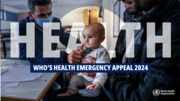
In 2024, we need US$1.5 billion to provide live-saving health care to millions of people in emergencies. An alarming combination of conflict, clima
...

This South-East Asia Regional Strategy for Primary Health Care: 2022-2030 aims to accelerate progress in all countries of the Region towards universal hea
...

Every year, nearly 250 million people move across borders temporarily or permanently for a job opportunity, studying, to flee a crisis back home, or for other reasons. Another 750 million move for similar reasons within the borders of their countrie
...
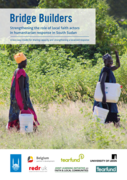
This report outlines and analyses the implementation of the Bridge Builder Model. This is a two-way, capacity-sharing model aimed at bringing together local faith actors (LFAs)
...
The Look Back Study (LBS) focuses on the water and sanitation and hygiene (WASH) component of the project but some additional information was colle
...
