
Filter
260
Text search:
C.
Thomson
Featured
Recommendations
24
New Publications
41
Language
Document type
No document type
122
Studies & Reports
61
Guidelines
39
Manuals
22
Training Material
7
Strategic & Response Plan
6
Fact sheets
2
Situation Updates
1
Countries / Regions
Global
21
Ukraine
7
India
6
Russia
6
Senegal
5
Ethiopia
5
Kenya
5
Somalia
4
Germany
4
South Africa
4
Burkina Faso
3
Congo, Democratic Republic of
3
Cameroon
3
Philippines
3
Africa
3
Eastern Europe
3
Sierra Leone
2
Mali
2
Niger
2
Jordan
2
Egypt
2
Thailand
2
Rwanda
2
Mozambique
2
Benin
2
Brazil
2
Botswana
2
Lesotho
2
Myanmar / Burma
2
Middle East and North Africa
2
Latin America and the Carribbean
2
Western and Central Europe
2
Liberia
1
Côte d’Ivoire / Ivory Coast
1
Morocco
1
Saudi Arabia
1
Haiti
1
Nepal
1
Iraq
1
Lebanon
1
Zambia
1
Syria
1
Chad
1
Cambodia
1
Mauritania
1
Bangladesh
1
Malawi
1
Sudan
1
Argentina
1
Dominican Republic
1
Peru
1
Cuba
1
Colombia
1
Honduras
1
Ecuador
1
El Salvador
1
Bolivia
1
Libya
1
Guatemala
1
Madagascar
1
Mexico
1
Nicaragua
1
Chile
1
Yemen
1
East and Southern Africa
1
Asia
1
Venezuela
1
Congo-Brazzaville
1
Qatar
1
Romania
1
Kazakhstan
1
France
1
Tunisia
1
Spain
1
Belarus
1
Israel
1
Authors & Publishers
Publication Years
Category
Countries
61
Clinical Guidelines
34
Public Health
22
Women & Child Health
21
Key Resources
7
Pharmacy & Technologies
2
Toolboxes
TB
33
COVID-19
20
HIV
18
Mental Health
18
Caregiver
16
Planetary Health
12
NCDs
12
Global Health Education
8
Health Financing Toolbox
8
Malaria
8
Conflict
7
AMR
7
Natural Hazards
6
Disability
5
Ebola & Marburg
4
Refugee
4
NTDs
4
Pharmacy
3
Rapid Response
2
Cholera
1
Polio
1
Zika
1
2.0 Rapid Response
1
Orientations provisoires
9 août 2021
Le présent document vise à décrire un ensemble minimal d'activités de surveillance recommandées au niveau national pour détecter et surveiller la prévalence relative des variantes du SRAS-CoV-2 et à présenter un ensemble d'activités pour la caractér
...

South Eastern European Journal of Public Health, EEJPH 2016, posted: 11 January 2016. DOI 10.4119/UNIBI/SEEJPH-2016-85
The pharmacological management of asthma has changed considerably in recent decades, as it has come to be understood that it is a complex, heterogeneous disease with different phenotypes and endotypes. It is now clear that the goal of asthma treatment should be to achieve and maintain control of the
...
The GTFCC Laboratory Support for Public Health Surveillance document provides guidelines on using DNA-based molecular techniques for identifying and monitoring Vibrio cholerae strains in cholera outbreaks. It highlights the importance of genetic sequencing for tracking transmission, detecting new va
...
Outil pour la communication comportementale et sociale dans le cadre de la riposte aux flambées épidémiques
Several challenges face asthma management in Egypt, including the high percentage of uncontrolled patients, inadequate compliance, and overuse of short-acting beta-agonists (SABAs) leading to increased asthma-related morbidity and mortality. In this regard, the recent Global Initiative for Asthma (G
...


Key populations brief
Accessed 2017
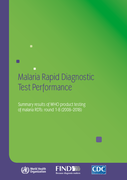
This report, published in conjunction with a summary overview of results of rounds 1–8, is the eighth and final report in a series of laboratory-based evaluations of rapid diagnostic tests (RDTs) for malaria. It provides a comparative measure of their performance in a standardized way to distingui
...
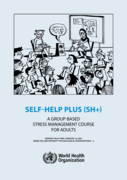
Self-help Plus (SH+)
recommended
A group-based stress managment course for adults.
Self-Help Plus (SH+) is WHO’s 5-session stress management course for large groups of up to 30 people. It is delivered by supervised, non-specialist facilitators who complete a short training course and use pre-recorded audio and an illustrated gui
...
Twenty-Fourth Annual Trachoma Control Program Review, Summary Proceedings


Cardiovascular disease (CVD) is the leading cause of global deaths, with the majority occurring in low- and middle-income countries (LMIC). The primary and secondary prevention of CVD is suboptimal throughout the world, but the evidence-practice gaps are much more pronounced in LMIC. Barriers at the
...
The frequency of infectious disease epidemics is increasing, and the role of the health sector in the management of epidemics is crucial in terms of response. In the context of infectious disease epidemics, the use of climate-informed early warning systems (EWS) has the potential to increase the eff
...
The 2021 Global monitoring report on financial protection in health shows that before the COVID-19 pandemic, the world was off-track to reduce financial hardship due to health expenditures because trends in catastrophic health spending were going in the wrong direction and the number of people incur
...

World malaria report 2024
recommended
New data from the WHO reveal that an estimated 2.2 billion cases of malaria and 12.7 million deaths have been averted since 2000, but the disease remains a serious global health threat, particularly in the WHO African Region. According to WHO’s latest World malaria report, there were an estimated
...

The WHO guidelines for malaria bring together the Organization’s most up-to-date recommendations for malaria in one user-friendly and easy-to-navigate online platform.
The WHO guidelines for malaria bring together the Organization’s most up-to-date recommendations for malaria in one user-frie
...

World malaria report 2025
recommended
Addressing the threat of antimalarial drug resistance. This year’s report spotlights the growing threat of antimalarial drug resistance. Partial resistance to artemisinin derivatives – the backbone of malaria treatments after failures of chloroquine and sulfadoxine-pyrimethamine – has now b
...
The window to 2030, the SDG target year, is closing. Without accelerated and sustained progress, hard-won UHC gains risk being lost. Using revised and improved UHC indicators the report presents the latest available UHC data and concludes with a call to shared action.
