
Filter
4833
Text search:
health
system
strengthening
Featured
395
1453
Language
4706
109
86
65
47
31
26
16
6
5
5
4
4
4
4
3
3
3
3
3
3
3
3
2
2
2
2
2
2
2
2
2
2
2
2
2
1
1
1
1
1
1
1
1
1
1
1
1
1
1
1
1
1
Document type
2543
958
535
326
263
74
64
45
10
6
4
2
1
1
Countries
295
194
145
131
120
117
112
107
103
97
96
92
85
82
74
71
70
69
66
66
61
53
50
46
45
42
39
39
38
36
36
35
34
32
29
28
27
25
24
23
23
20
19
18
18
18
18
16
15
15
15
14
14
13
13
12
12
11
11
11
11
10
10
9
9
8
8
7
7
7
7
7
6
6
6
5
5
4
4
4
4
4
4
4
4
4
4
4
4
3
3
3
3
3
3
3
3
3
3
2
2
2
2
2
2
2
2
2
2
2
2
2
2
2
2
2
1
1
1
1
1
1
1
1
1
1
1
1
1
1
1
1
1
1
1
1
1
1
1
1
1
1
1
1
1
1
1
Authors & Publishers
698
160
158
127
120
92
88
57
54
48
42
32
32
30
29
28
23
23
22
21
21
21
20
20
19
19
18
17
17
16
16
16
15
15
15
14
14
14
14
14
13
13
13
13
13
13
13
13
13
12
12
12
12
12
12
11
11
11
11
10
10
10
10
10
10
10
9
9
9
9
9
9
9
9
8
8
8
8
8
8
8
8
7
7
7
7
7
7
7
7
7
7
7
7
7
7
6
6
6
6
6
6
6
6
6
6
6
6
6
6
6
6
6
6
6
6
6
5
5
5
5
5
5
5
5
5
5
5
5
5
5
5
5
5
5
5
5
5
5
5
5
5
5
5
5
5
5
5
5
5
5
4
4
4
4
4
4
4
4
4
4
4
4
4
4
4
4
4
4
4
4
4
4
4
4
4
4
4
4
4
4
4
4
4
4
4
4
4
4
4
4
4
4
4
4
4
4
4
4
4
4
4
3
3
3
3
3
3
3
3
3
3
3
3
3
3
3
3
3
3
3
3
3
3
3
3
3
3
3
3
3
3
3
3
3
3
3
3
3
3
3
3
3
3
3
3
3
3
3
3
3
3
3
3
3
3
3
3
3
3
3
3
3
3
3
3
3
3
3
3
3
3
3
3
3
3
3
3
3
3
3
3
3
3
3
3
3
3
3
3
3
3
3
3
3
3
3
3
3
3
3
2
2
2
2
2
2
2
2
2
2
2
2
2
2
2
2
2
2
2
2
2
2
2
2
2
2
2
2
2
2
2
2
2
2
2
2
2
2
2
2
2
2
2
2
2
2
2
2
2
2
2
2
2
2
2
2
2
2
2
2
2
2
2
2
2
2
2
2
2
2
2
2
2
2
2
2
2
2
2
2
2
2
2
2
2
2
2
2
2
2
2
2
2
2
2
2
2
2
2
2
2
2
2
2
2
2
2
2
2
2
2
2
2
2
2
2
2
2
2
2
2
2
2
2
2
2
2
2
2
2
2
2
2
2
2
2
2
2
2
2
2
2
2
2
2
2
2
2
2
2
2
2
2
2
2
2
2
2
2
2
2
2
2
2
2
2
2
2
2
2
2
2
2
2
2
2
2
2
2
2
2
2
2
2
2
2
2
2
2
2
2
2
2
2
2
2
2
2
2
2
2
2
2
2
2
2
2
2
2
2
2
2
2
2
2
2
2
2
2
2
2
2
2
2
2
2
2
2
2
2
2
2
2
2
2
2
1
1
1
1
1
1
1
1
1
1
1
1
1
1
1
1
1
1
1
1
1
1
1
1
1
1
1
1
1
1
1
1
1
1
1
1
1
1
1
1
1
1
1
1
1
1
1
1
1
1
1
1
1
1
1
1
1
1
1
1
1
1
1
1
1
1
1
1
1
1
1
1
1
1
1
1
1
1
1
1
1
1
1
1
1
1
1
1
1
1
1
1
1
1
1
1
1
1
1
1
1
1
1
1
1
1
1
1
1
1
1
1
1
1
1
1
1
1
1
1
1
1
1
1
1
1
1
1
1
1
1
1
1
1
1
1
1
1
1
1
1
1
1
1
1
1
1
1
1
1
1
1
1
1
1
1
1
1
1
1
1
1
1
1
1
1
1
1
1
1
1
1
1
1
1
1
1
1
1
1
1
1
1
1
1
1
1
1
1
1
1
1
1
1
1
1
1
1
1
1
1
1
1
1
1
1
1
1
1
1
1
1
1
1
1
1
1
1
1
1
1
1
1
1
1
1
1
1
1
1
1
1
1
1
1
1
1
1
1
1
1
1
1
1
1
1
1
1
1
1
1
1
1
1
1
1
1
1
1
1
1
1
1
1
1
1
1
1
1
1
1
1
1
1
1
1
1
1
1
1
1
1
1
1
1
1
1
1
1
1
1
1
1
1
1
1
1
1
1
1
1
1
1
1
1
1
1
1
1
1
1
1
1
1
1
1
1
1
1
1
1
1
1
1
1
1
1
1
1
1
1
1
1
1
1
1
1
1
1
1
1
1
1
1
1
1
1
1
1
1
1
1
1
1
1
1
1
1
1
1
1
1
1
1
1
1
1
1
1
1
1
1
1
1
1
1
1
1
1
1
1
1
1
1
1
1
1
1
1
1
1
1
1
1
1
1
1
1
1
1
1
1
1
1
1
1
1
1
1
1
1
1
1
1
1
1
1
1
1
1
1
1
1
1
1
1
1
1
1
1
1
1
1
1
1
1
1
1
1
1
1
1
1
1
1
1
1
1
1
1
1
1
1
1
1
1
1
1
1
1
1
1
1
1
1
1
1
1
1
1
1
1
1
1
1
1
1
1
1
1
1
1
1
1
1
1
1
1
1
1
1
1
1
1
1
1
1
1
1
1
1
1
1
1
1
1
1
1
1
1
1
1
1
1
1
1
1
1
1
1
1
1
1
1
1
1
1
1
1
1
1
1
1
1
1
1
1
1
1
1
1
1
1
1
1
1
1
1
1
1
1
1
1
1
1
1
1
1
1
1
1
1
1
1
1
1
1
1
1
1
1
1
1
1
1
1
1
1
1
1
1
1
1
1
1
1
1
1
1
1
1
1
1
1
1
1
1
1
1
1
1
1
1
1
1
1
1
1
1
1
1
1
1
1
1
1
1
1
1
1
1
1
1
1
1
1
1
1
1
1
1
1
1
1
1
1
1
1
1
1
1
1
1
1
1
1
1
1
1
1
1
1
1
1
1
1
1
1
1
1
1
1
1
1
1
1
1
1
1
1
1
1
1
1
1
1
1
1
1
1
1
1
1
1
1
1
1
1
1
1
1
1
1
1
1
1
1
1
1
1
1
1
1
1
1
1
1
1
1
1
1
1
1
1
1
1
1
1
1
1
1
1
1
1
1
1
1
1
1
1
1
1
1
1
1
1
1
1
1
1
1
1
1
1
1
1
1
1
1
1
1
1
1
1
1
1
1
1
1
1
1
1
1
1
1
1
1
1
1
1
1
1
1
1
1
1
1
1
1
1
1
1
1
1
1
1
1
1
1
1
1
1
1
1
1
1
1
1
1
1
1
1
1
1
1
1
1
1
1
1
1
1
1
1
1
1
1
1
1
1
1
1
1
1
1
1
1
1
1
1
1
1
1
1
1
1
1
1
1
1
1
1
1
1
1
1
1
1
1
1
1
1
1
1
1
1
1
1
1
1
1
1
1
1
1
1
1
1
1
1
1
1
1
1
1
1
1
1
1
1
1
1
1
1
1
1
1
1
1
1
1
1
1
1
1
1
1
1
1
1
1
1
1
1
1
1
1
1
1
1
1
1
1
1
1
1
1
1
1
1
1
1
1
1
1
1
1
1
1
1
1
1
1
1
1
1
1
1
1
1
1
1
1
1
1
1
1
1
1
1
1
1
1
1
1
1
1
1
1
1
1
1
1
1
1
1
1
1
1
1
1
1
1
1
1
1
1
1
1
1
1
1
1
1
1
1
1
1
1
1
1
1
1
1
1
1
1
1
1
1
1
1
1
1
1
1
1
1
1
1
1
1
1
1
1
1
1
1
1
1
1
1
1
1
1
1
1
1
1
1
1
1
1
1
1
1
1
1
1
1
1
1
1
1
1
1
1
1
1
1
1
1
1
1
1
1
1
1
1
1
1
1
1
1
1
1
1
1
1
1
1
1
1
1
1
1
1
1
1
1
1
1
1
1
1
1
1
1
1
1
1
1
1
1
1
1
1
1
1
1
1
1
1
1
1
1
1
1
1
1
1
1
1
1
1
1
1
1
1
1
1
1
1
1
1
1
1
1
1
1
1
1
1
1
1
1
1
1
1
1
1
1
1
1
1
1
1
1
1
1
1
1
1
1
1
1
1
1
1
1
1
1
1
1
1
1
1
1
1
1
1
1
1
1
1
1
1
1
1
1
1
1
1
1
1
1
1
1
1
1
1
1
1
1
1
1
1
1
1
1
1
1
1
1
1
1
1
1
1
1
1
1
1
1
1
1
1
1
1
1
1
1
1
1
1
1
1
1
1
1
1
1
1
1
1
1
1
1
1
1
1
1
1
1
1
1
1
1
1
1
1
1
1
1
1
1
1
1
1
1
1
1
1
1
1
1
1
1
1
1
1
1
1
1
1
1
1
1
1
1
1
1
1
1
1
1
1
1
1
1
1
1
1
1
1
1
1
1
1
1
1
1
1
1
1
1
1
1
1
1
1
1
1
1
1
1
1
1
1
1
1
1
1
1
1
1
1
1
1
1
1
1
1
1
1
1
1
1
1
1
1
1
1
1
1
1
1
1
1
1
1
1
1
1
1
1
1
1
1
1
1
1
1
1
1
1
1
1
1
1
1
1
1
1
1
1
1
1
1
1
1
1
1
1
1
1
1
1
1
1
1
1
1
1
1
1
1
1
1
1
1
1
1
1
1
1
1
1
1
1
1
1
1
1
1
1
1
1
1
1
1
1
1
1
1
1
1
1
1
1
1
1
1
1
1
1
1
1
1
1
1
1
1
1
1
1
1
1
1
1
1
1
1
1
1
1
1
1
1
1
1
1
1
1
1
1
1
1
1
1
1
1
1
1
1
1
1
1
1
1
1
1
1
1
1
1
1
1
1
1
1
1
1
1
1
1
1
1
1
1
1
1
1
1
1
1
1
1
1
1
1
1
1
1
1
1
1
1
1
1
1
1
1
1
1
1
1
1
1
1
1
1
1
1
1
1
1
1
1
1
1
1
1
1
1
1
1
1
1
1
1
1
1
1
1
1
1
1
1
1
1
1
1
1
1
1
1
1
1
1
1
1
1
1
1
1
1
1
1
1
1
1
1
1
1
1
1
1
1
1
1
1
1
1
1
1
1
1
1
1
1
1
1
1
1
1
1
1
1
1
1
1
1
1
1
1
1
1
1
1
1
1
1
1
1
1
1
1
1
1
1
1
1
1
1
1
1
1
1
1
1
1
1
1
1
1
1
1
1
1
1
1
1
1
1
1
1
1
1
1
1
1
1
1
1
1
1
1
1
1
1
1
1
1
1
1
1
1
1
1
1
1
1
1
1
1
1
1
1
1
1
1
1
1
1
1
1
1
1
1
1
1
1
1
1
1
1
1
1
1
1
1
1
1
1
1
1
1
1
1
1
1
1
1
1
1
1
1
1
1
1
1
1
1
1
1
1
1
1
1
1
1
1
1
1
1
1
1
1
1
1
1
1
1
1
1
1
1
1
1
1
1
1
1
1
1
1
1
1
1
1
1
1
1
1
1
1
1
1
1
1
1
1
1
1
1
1
1
1
1
1
1
1
1
1
1
1
1
1
1
1
1
1
1
1
1
1
1
1
1
1
1
1
1
1
1
1
1
1
1
1
1
1
1
1
1
1
1
1
1
1
1
1
1
1
1
1
1
1
1
1
1
1
1
1
1
1
1
1
1
1
1
1
1
1
1
1
1
1
1
1
1
1
1
1
1
1
1
1
1
1
1
1
1
1
1
1
1
1
1
1
1
1
1
1
1
1
1
1
1
1
1
1
1
1
1
1
1
1
1
1
1
1
1
1
1
1
1
1
1
1
1
1
1
1
1
1
1
1
1
1
1
1
1
1
1
1
1
1
1
1
1
1
1
1
1
1
1
1
1
1
1
1
1
1
1
1
1
1
1
1
1
1
1
1
1
1
1
1
1
1
1
1
1
1
1
1
1
1
1
1
1
1
1
1
1
1
1
1
1
1
1
1
1
1
1
1
1
1
1
1
1
1
1
1
1
1
1
1
1
1
1
1
1
1
1
1
1
1
1
1
1
1
1
1
1
1
1
1
1
1
1
1
1
1
1
1
1
1
1
1
1
1
1
1
1
1
1
1
1
1
1
1
1
1
1
1
1
1
1
1
1
1
1
1
1
1
1
1
1
1
1
1
1
1
1
1
1
1
1
1
1
1
1
1
1
1
1
1
1
1
1
1
1
1
1
1
1
1
1
1
1
1
1
1
1
1
1
1
1
1
1
1
1
1
1
1
1
1
1
1
1
1
1
1
1
1
1
1
1
1
1
1
1
1
1
1
1
1
1
1
1
1
1
1
1
1
1
1
1
1
1
1
1
1
1
1
1
1
1
1
1
1
1
1
1
1
1
1
1
1
1
1
1
1
1
1
1
1
1
1
1
1
1
1
1
1
1
1
1
1
1
1
1
1
1
1
1
1
1
1
1
1
1
1
1
1
1
1
1
1
1
1
1
1
1
1
1
1
1
1
1
1
1
1
1
1
1
1
1
1
1
1
1
1
1
1
1
1
1
1
1
1
1
1
1
1
1
1
1
1
1
1
1
1
1
1
1
1
1
1
1
1
1
1
1
1
1
1
1
1
1
1
1
1
1
1
1
1
1
1
1
1
1
1
1
1
1
1
1
1
1
1
1
1
1
1
1
1
1
1
1
1
1
1
1
1
1
1
1
1
1
1
1
1
1
1
1
1
1
1
1
1
1
1
1
1
1
1
1
1
1
1
1
1
1
1
1
1
1
1
1
1
1
1
1
1
1
1
1
1
1
1
1
1
1
1
1
1
1
1
1
1
1
1
1
1
1
1
1
1
1
1
1
1
1
1
1
1
1
1
1
1
1
1
1
1
1
1
1
1
1
1
1
1
1
1
1
1
1
1
1
1
1
1
1
1
1
1
1
1
1
1
1
1
1
1
1
1
1
1
1
1
1
1
1
1
1
1
1
1
1
1
1
1
1
1
1
1
1
1
1
1
1
1
1
1
1
1
1
1
1
1
1
1
1
1
1
1
1
1
1
1
1
1
1
1
1
1
1
1
1
1
1
1
1
1
1
1
1
1
1
1
1
1
1
1
1
1
1
1
1
1
1
1
1
1
1
1
1
1
1
1
1
1
1
1
1
1
1
1
1
1
1
1
1
1
1
1
1
1
1
1
1
1
1
1
1
1
1
1
1
1
1
1
1
1
1
1
1
1
1
1
1
1
1
1
1
1
1
1
1
1
1
1
1
1
1
1
1
1
1
1
1
1
1
1
1
1
1
1
1
1
1
1
1
1
1
1
1
1
1
1
1
1
1
1
1
1
1
1
1
1
1
1
1
1
1
1
1
1
1
1
1
1
1
1
1
1
1
1
1
1
1
1
1
1
1
1
1
1
1
1
1
1
1
1
1
1
1
1
1
1
1
1
1
1
1
1
1
1
1
1
1
1
1
1
1
1
1
1
1
1
1
1
1
1
1
1
1
1
1
1
1
1
1
1
1
1
1
1
1
1
1
1
1
1
1
1
1
1
1
1
1
1
1
1
1
1
1
1
1
1
1
1
1
1
1
1
1
1
1
1
1
1
1
1
1
1
1
1
1
1
1
1
1
1
1
1
1
1
1
1
1
1
1
1
1
1
1
1
1
1
1
1
1
1
1
1
1
1
1
1
1
1
1
1
1
1
1
1
1
1
1
1
1
1
1
1
1
1
1
1
1
1
1
1
1
1
1
1
1
1
1
1
1
1
1
1
1
1
1
1
1
1
1
1
1
1
1
1
1
1
1
1
1
1
1
1
1
1
1
1
1
1
1
1
1
1
1
1
1
1
1
1
1
1
1
1
1
1
1
1
1
1
1
1
1
1
1
1
1
1
1
1
1
1
1
1
1
1
1
1
1
1
1
1
1
1
1
1
1
1
1
1
1
1
1
1
1
1
1
1
1
1
1
1
1
1
1
1
1
1
1
1
1
1
1
1
1
1
1
1
1
1
1
1
1
1
1
1
1
1
1
1
1
1
1
1
1
1
1
1
1
1
1
1
1
1
1
1
1
1
1
1
1
1
1
1
1
1
1
1
1
1
1
1
1
1
1
1
1
1
1
1
1
1
1
1
1
1
1
1
1
1
1
1
1
1
1
1
1
1
1
1
1
1
1
1
1
1
1
1
1
1
1
1
1
1
1
1
1
1
Publication Years
1587
2888
344
11
3
Category
2026
354
331
253
238
86
35
Toolboxes
316
316
237
216
173
173
146
139
137
136
132
122
117
106
94
81
77
76
71
63
29
23
20
16
10
4
1

Despite the significant role of vector control in national leishmaniasis control programmes, the programmatic community perceives vector control as the weakest component of leishmaniasis control strategies in terms of resources, scientific evidence of the usefulness of interventions and capacity for
...
quality-assured implementation. Therefore, the main objective of this manual is to provide practical tools, techniques and procedures to strengthen sand fly control and surveillance in order to improve implementation of leishmaniasis control programmes. The manual provides a rationale for programme managers in different geographical regions on the types of vector control interventions to be used in different epidemiological and environmental settings and also how to measure their impact.
more

Pharmaceutical News
Evaluation of Saccharide Content of the WHO 2nd International Standard for Haemophilus Influenzae Polysaccharide Polyribosyl Ribitol Phosphate (PRP) by HPAECPAD Analysis Following Acid Hydrolysis
Consultation Documents
Lamivudine and tenofovir disoproxil fumarate tablets (lami
...
vudini et tenofoviri disoproxili fumarati compressi)
Tenofovir disoproxil fumarate tablets (tenofoviri disoproxili fumarati compressi)
ATC/DDD Classification
Temporary
Final
more

Report of the WHO/Bill & Melinda Gates Foundation Consultation. The Consultation was organized back-to-back with the first annual meeting of the International Coordinating Group of the BMGF-funded project for human and dog rabies elimination in developing countries, held at WHO headquarters, Geneva,
...
Switzerland, from 5 to 7 October 2009. This allowed the Consultation to benefit from the participation of the national coordinators and advisers of the BMGF-funded projects in the Philippines, South Africa (KwaZulu-Natal) and the United Republic of Tanzania
more

Countries are making progress toward the global goal of 95% of people living with HIV knowing their status by 2025. However, considerable gaps remain in achieving these goals globally. Men in high HIV burden settings and men from key populations in all settings are consistently less likely to know t
...
heir HIV status than women. Globally, 78% of men ages 15 years and older who are living with HIV are aware of their HIV status, compared with 86% of women with HIV of these ages.
Offering HIV testing services, including HIV self-testing, at formal and informal workplaces has emerged as an effective, acceptable and feasible approach for reaching men. A 2018 World Health Organization (WHO) and International Labour Organization (ILO) policy brief provides key guiding principles for HIVST implementation at workplaces. Building on the 2018 policy brief, this brief captures early experience with HIVST implementation at workplaces and discusses emerging approaches of sustainable financing that can be adapted for HIV self-testing at workplaces.
The primary audiences for this policy brief are ministries of health and labour, national HIV programmes, employers’ organizations, workers’ organizations (labour unions), enterprises, implementing partners, including civil society organizations, and health insurance agencies.
more

An interregional meeting on leishmaniasis among neighbouring endemic
countries in the Eastern Mediterranean, African and European regions was organized by the World Health Organization (WHO) Regional Office for the Eastern
Mediterranean in Amman,
...
Jordan, from 23 to 25 September 2018. The meeting was attended by representatives from the health ministries of Albania, Georgia, Greece, Iran (Islamic Republic of), Iraq, Jordan, Lebanon, Morocco, Pakistan, Saudi Arabia, Sudan, Syrian Arab Republic and Tunisia. Representatives from Afghanistan, Algeria and Libya were unable to attend. The Secretariat comprised staff from WHO headquarters, WHO regional offices in the Eastern Mediterranean, Africa and Europe, WHO country offices in Iraq, Pakistan, Syrian Arab Republic and Yemen, and WHO temporary advisors from Spain and Tunisia.
more

This report outlines the coordination and partnership between two key ministries (Education and Public Health) in Kenya, other line ministries, the private sector, NGOs and the community in implementing the first phase of a sub-national school-based
...
deworming exercise. The areas targeted included Coast, Central, Western, Nyanza
and parts of Eastern provinces, covering over 45 districts in this first phase. The SBD programme is guided by the National School Health Policy and Guidelines launched in 2009.
more

Rabies is fatal, vaccine-preventable disease responsible for an estimated 59,000 human deaths each year. Most cases are transmitted by dogs, and most deaths occur in underserved populations in Africa and Asia. Approximately 40% of deaths occur in children.

This document aims to assist countries to take the first step towards better considering gender and equity issues in their efforts to tackle antimicrobial resistance (AMR), to inform the implementation of strategies in national action plans and contribute to improved reach and effectiveness of AMR e
...
fforts in the longer term. It is part of a series of papers being developed y WHO, FAO and OIE to build a better global evidence base for implementing AMR national action plans. This version is illustrated by examples from the health sector predominantly but
will be updated with advice from the food and animal sectors in due course.
more
Report of a global meeting on yaws eradication surveillance, monitoring and evaluation: Geneva, 29–30 January 2018. World Health Organization.

В дорожной карте по борьбе с забытыми тропическими болезнями на 2021–2030 гг. («дорожная карта») определены глобальные цели и основные этапы в отношении борьбы с 20 болÐ
...
µзнями и группами болезней, их элиминации или полной ликвидации. В ней также определены сквозные целевые показатели, согласованные с Тринадцатой общей программой работы ВОЗ и Целями в области устойчивого развития, а также стратегии по достижению этих целевых
показателей в течение ближайших десяти лет.
more

The African Regional Convening of the Global Initiative to Support Parents (GISP) stimulated the interest or engagement of almost 1500 individuals from 742 unique organizations in the fields of health, education, social welfare, women’s affairs, e
...
arly childhood, water and sanitation, mental health, violence prevention, innovative finance, climate, and many others. The convening united representatives across governments, civil society organizations, programme implementers, philanthropies, multilateral organizations, bilateral funders, private companies, universities, schools and day care centres, and hospitals around the common cause of supporting parents and caregivers.
more
The Transformation Agenda (TA) ushered in an ambitious reform process intended to transform the World Health Organization (WHO) into an organization that is proactive, results-driven, accountable and which meets stakeholder expectations, towards tra
...
nsforming and improving public health services in the African Region. It aimed to achieve a WHO that is pro-results, which optimally and creatively targets technical work as well as make operations more responsive, with greater effectiveness in both communications and partnerships. The Africa Region has been the epicentre of the human immunodeficiency virus (HIV) epidemic and it’s one of the leading causes of disease and death on the continent. The WHO, with partners, has worked tirelessly for many years to control the threat and reduce the negative impact of the disease. Since the early 2000s, significant progress has been made in the global fight against the scourge of HIV. However, the WCA subregion was falling concerningly behind ESA on several key indicators of progress. In 2016, the WHO joined UNAIDS, UNICEF and other partners in a call for a strong and urgent response to support WCA countries to develop catch-up plans to triple and fast-track ART coverage, to enable the region to catch up with ESA by the end of 2020. Implementation of a widespread test-and-treat strategy, coupled with the scale-up of differentiated service delivery (DSD) and mobilization of requisite funding, accelerated WCA’s progress towards this goal. The HIV treatment catch-up and fast-track plan has achieved its target of seeing the West and Central African region (WCA) catch up with the Eastern and Southern African region’s (ESA) antiretroviral coverage rate of 78% in 2021, albeit later than the 2020 target time frame. A 33% improvement was achieved in WCA, against 21% in ESA, between 2015–2020. WCA achieved a significant 42% increase, compared to ESA’s 23%, between 2015 and 2021, to see WCA draw level with ESA at 78%. In the Democratic Republic of the Congo (DRC) alone, progress of up to 47% was observed between 2015 and 2020, for example. In addition, 1.6 million more People Living with HIV (PLHIV) were enrolled on antiretroviral treatment (ART) between 2015 and 2020.
more

The WHO standard: Universal access to rapid tuberculosis diagnostics sets benchmarks to achieve universal access to WHO-recommended rapid diagnostics (WRDs), increase bacteriologically confirmed tuberculosis and drug resistance detection, and reduce the time to diagnosis. WHO-recommended rapid diagn
...
ostics are highly accurate, cost-effective, reduce the time to treatment initiation, and impact patient-important outcomes.
more

The 2023 Country Presence Report provides an overview of what WHO does in countries to advance towards the SDGs and implement GPW13, how we do it, with whom we work, and what is needed to overcome challenges for achieving results and impact in countries.

This document is an output of a WHO cross-programme initiative aiming to improve the prevention, diagnosis and management of anaemia and thereby accelerate reduction in its prevalence. It comes at an important time, midway through the era of the Sustainable Development Goals, when progress in reduci
...
ng anaemia has stagnated. This framework is based on the core principles of primary health care: meeting people’s health needs through comprehensive promotive, protective, curative, and rehabilitative care along the life course; systematically addressing the broader determinants of health; and empowering individuals, families, and communities to optimize their health
more
Lack of trained providers capable of identifying which labouring women could benefit from assisted vaginal birth (AVB), and of safely performing the procedure is a major barrier for its use. Education and training are, therefore, considered crucial for building skills and confidence in conducting AV
...
B and there is evidence that it would be welcomed by healthcare providers. However, acquiring and maintaining AVB skills is a complex task that requires a supportive environment, mentorship, supervision and accountability. As with other practices to manage infrequent procedures and complications, continuous education and on-site supervision are essential to ensure the safe and sustainable use of AVB.
more
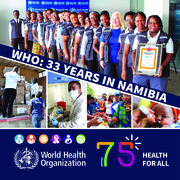
This publication is part of WHO 75th anniversary and aims to capture key successes in public health globally and in Namibia. It includes contributory messages from the Head of State, Prime Minister and the Minister of
...
Health and Social Services.
more
ACT-A - Urgent Priorities & Financing Requirements at 10 November 2020
World Health Organization (WHO), The Global Fund, Gavi et al.
World Health Organization (WHO)
(2020)
CC
Six months after its launch on 24 April, the Access to COVID-19 Tools (ACT) Accelerator has already delivered concrete results in speeding up the development of new therapeutics, diagnostics, and vaccines. Now mid-way through the scale-up phase, the tools we need to fundamentally change the course o
...
f this pandemic are within reach. But to deliver the full impact of the ACT-Accelerator – and ultimately an exit to this global crisis – these tools need to be available everywhere. On behalf of the ACT-Accelerator Pillar lead agencies – CEPI, Gavi, the Global Fund, FIND, Unitaid, Wellcome Trust, the World Bank, and the World Health Organization, as well as the Bill & Melinda Gates Foundation – I am pleased to share this document setting out the near-term priorities, deliverables and financing requirements of the ACT-Accelerator Pillars and Health Systems Connector. Urgent action to address these financing requirements will boost the impact of the ACTAccelerator achievements to date, fast-track the development and deployment of additional game-changing tools, and mitigate the risk of a widening gap in access to COVID-19 tools between low- and high-income countries. Delivering on this promise requires strong political leadership, financial investment, and incountry capacity building. COVID-19 cannot be beaten by any one country acting alone. We must ACT now, and ACT together to end the COVID-19 crisis.
more

The Infection prevention and control in the context of coronavirus disease 2019 (COVID-19): a living guideline consolidates technical guidance developed and published during the COVID-19 pandemic into evidence-informed recommendations for infection prevention and control (IPC). This living guideline
...
is available both online and PDF.
**This version of the living guideline (version 5.0) **includes the following seven revised statements for the prevention, identification and management of SARS-CoV-2 infections among health and care workers:
a good practice statement on national and subnational testing strategies;
a good practice statement on passive syndromic surveillance of health and care workers;
a good practice statement on prioritizing health and care workers for SARS-CoV-2 testing;
a good practice statement on protocols for reporting and managing health and care worker exposures;
a good practice statement to limit in-person work of health and care workers with active SARS-CoV-2 infections;
a statement on high-risk exposures and quarantine; and,
a conditional recommendation on the duration of isolation for health and care workers.
Understanding the updated section
Prevention of infections in the health care setting includes a multi-pronged and multi-factorial approach that includes IPC and occupational health and safety measures and adherence to Public Health and Social Measures in the community by the health workforce. The underlying infection prevention and control strategy of this section is the notion that early identification of symptomatic cases, testing and quarantining/isolating health and care workers decreases the risk of nosocomial infection to patients and to other health and care workers.
more

This report summarizes the World Health Organization’s (WHO) global work on water, sanitation and hygiene (WASH) during 2022. It describes how the Organization continued to deliver its essential WASH programming as elaborated in its 2018–2025 st
...
rategy.
more
