
Filter
2593
Text search:
sub-Saharan
Africa
Featured
Recommendations
166
New Publications
480
Language
Document type
No document type
1326
Studies & Reports
773
Guidelines
211
Manuals
80
Strategic & Response Plan
75
Fact sheets
50
Training Material
27
Infographics
22
Resource Platforms
11
Situation Updates
9
Brochures
4
Online Courses
2
Videos
2
Countries / Regions
Global
173
Africa
121
Kenya
114
Ethiopia
99
Tanzania
78
Zambia
74
Malawi
71
South Africa
68
Nigeria
67
Uganda
61
Namibia
49
Rwanda
46
Ghana
45
Liberia
41
Senegal
37
Sierra Leone
34
Mozambique
32
Zimbabwe
31
East and Southern Africa
30
Lesotho
29
West and Central Africa
26
Congo, Democratic Republic of
25
India
24
Burkina Faso
21
Cameroon
19
Benin
18
South Sudan
16
Nepal
14
Asia
14
Bangladesh
13
Botswana
13
Guinea
12
Mali
11
Syria
11
Ukraine
11
Middle East and North Africa
11
Eswatini/ Swaziland
10
Latin America and the Carribbean
10
Western and Central Europe
10
Central African Republic
9
South–East Asia Region
8
Haiti
7
China
7
Myanmar / Burma
7
Somalia
6
Yemen
6
Southern Africa
6
Cambodia
5
Sudan
5
Eastern Europe
5
Russia
5
Philippines
4
Pakistan
4
Chad
4
Indonesia
4
Côte d’Ivoire / Ivory Coast
3
Jordan
3
Afghanistan
3
Thailand
3
Colombia
3
Libya
3
Angola
3
Madagascar
3
Sri Lanka
3
Niger
2
Egypt
2
Burundi
2
Italy
2
Jamaica
2
Mauritius
2
Guinea-Bissau
1
USA
1
Germany
1
Lebanon
1
Gambia
1
Papua New Guinea
1
Dominican Republic
1
Peru
1
Honduras
1
Venezuela
1
Palestine
1
Congo-Brazzaville
1
Tajikistan
1
Moldova
1
Gabon
1
Tunisia
1
Authors & Publishers
Publication Years
Category
Countries
961
Clinical Guidelines
198
Public Health
151
Women & Child Health
131
Key Resources
93
Capacity Building
36
Pharmacy & Technologies
21
Annual Report MEDBOX
1
Toolboxes
HIV
462
Planetary Health
139
TB
132
NTDs
119
COVID-19
115
Mental Health
105
Health Financing Toolbox
86
Malaria
80
NCDs
74
Global Health Education
62
Caregiver
59
Disability
53
Refugee
41
AMR
40
Ebola & Marburg
25
Conflict
24
Rapid Response
23
Pharmacy
22
Polio
11
Social Ethics
11
Cholera
9
Natural Hazards
9
2.0 Rapid Response
9
Zika
3
Specific Hazards
2
South Sudan
1
Typhoon
1

World malaria report 2024
recommended
New data from the WHO reveal that an estimated 2.2 billion cases of malaria and 12.7 million deaths have been averted since 2000, but the disease remains a serious global health threat, particularly in the WHO African Region. According to WHO’s latest World malaria report, there were an estimated
...
While motivational factors vary, opportunities for career advancement, stimulating and challenging tasks, opportunities for promotion, and co-worker recognition are core factors that can engender retention of rural health workers. Interventions are required to enhance rural health worker motivation
...
Tax capacity—the policy, institutional, and technical capabilities to collect tax revenue—is part of a deeper process of state building that is essential for achieving the sustainable development goals. This Staff Discussion Note shows that developing countries have made some progress in revenue
...

To meet our Strategy objectives and get within reach
of the 2030 SDG 3 target related to the three diseases,
the Global Fund needs to raise US$18 billion for the
Eighth Replenishment. That sum is essential to drive the
required pace of progress in the fight against HIV, TB
and malaria, and to m
...

Overall, harmonisation and innovation should be the
focus of the future direction of DAH and the creation of
a healthy global community. The world needs all hands
on deck if it were to move towards achieving the SDGs,
addressing global health inequalities and improving the
welfare of the global
...

To realize Agenda 2030, aid agencies, private philanthropies, and their partners in the Global South need better data to monitor how official development finance (ODF) dollars advance the Sustainable Development Goals (SDGs) and avoid missing the mark. In this report, we summarize the results of a n
...
IHME’s Financing Global Health report provides an overview of health spending around the world, with a special focus on investments in health in low- and middle-income countries. The report examines how this funding for health is changing each year and forecasts how it may change in the future. Fi
...

This paper presents a bibliometric analysis of the literature on private health aid and official health assistance between 2000 and 2022. It provides an overview of the sites and themes in the literature pertaining to development assistance in health, and collates the significant policy recommendati
...

Rising levels of inflation, debt and macrofiscal tightening are putting expenditures on the social sectors including health under immense scrutiny. Already, there are worrying signs of reductions in social sector investments. However, even before the pandemic, evidence showed the significant returns
...

Development finance is at a turning point, as the macroeconomic environment has changed profoundly and the financing gap for low- and middle-income countries has widened. The events that led to this new situation are the multiple crises that the global economy is facing, such as the climate crisis,
...

Development assistance for health (DAH)
plays a vital role in supporting health programmes in lowand middle-income countries. While DAH has historically
focused on infectious diseases and maternal and child
health, there is a lack of comprehensive analysis of DAH
trends, strategic shifts and the
...

The Council was established in late 2020 by Dr Tedros Adhanom
Ghebreyesus (Director-General, WHO) to provide new economic thinking – reassessing how health and wellbeing are valued, produced and distributed across the economy. An all-female group of 10 distinguished economists and area experts, t
...

For this report, the Task Force commissioned
additional background papers on health taxes to
update the evidence, assess short-term revenue
potential, and understand the role of health taxes
in the current era of multiple crises. We find that
health taxes continue to be underutilized despite th
...

The guidelines are primarily intended for health-care professionals working in first- or second-level health-care facilities, including emergency, inpatient and outpatient services. They are also directed at policy-makers, health-care planners and programme managers, academic institutions, non-gover
...

The objectives of this guideline are the same as those of the 2011 edition, namely to provide evidence-based normative guidance on interventions to improve adolescent morbidity and mortality by reducing the chances of early pregnancy and its resulting poor health outcomes. The specific objectives of
...

2nd edition. This second edition builds on the experience of more than 10 years of SMC deployment, and reflects changes introduced in the WHO guidelines for malaria, 3 June 2022. The goal of this publication is to share these best practices to improve SMC implementation, coverage, and monitoring and
...

This malaria case management training manual was developed by the Federal Ministry of Health (FMOH) of Ethiopia, in collaboration with several national and international partners. Primarily based on WHO guidelines and training materials, as well as the 2022 national malaria guidelines and various te
...
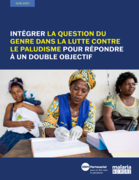
Cette note d'information souligne l'importance d'intégrer une approche sensible au genre dans les efforts de lutte contre le paludisme dans le monde entier. Il montre que la prise en compte des vulnérabilités et des besoins spécifiques à chaque sexe - en particulier ceux des femmes et des enfan
...
