
Filter
4747
Text search:
human
resource
capacity
Featured
478
1407
Language
4665
93
71
52
47
29
23
6
5
4
4
3
3
3
3
2
2
2
2
2
2
2
1
1
1
1
1
1
1
1
1
1
1
1
1
1
1
1
1
1
Document type
2518
819
632
306
285
87
44
30
13
7
4
1
1
Countries
252
194
150
123
112
112
107
102
102
93
90
89
79
75
73
73
70
61
59
57
49
48
39
38
38
37
35
31
30
30
29
29
26
25
24
24
23
23
22
19
18
15
15
14
14
13
12
12
12
11
10
10
10
10
9
9
9
9
9
8
8
8
7
7
6
6
6
6
6
6
5
5
5
5
5
5
4
4
4
4
3
3
3
3
3
3
3
2
2
2
2
2
2
2
2
2
2
2
2
2
2
2
2
2
2
2
2
2
1
1
1
1
1
1
1
1
1
1
1
1
1
1
1
1
1
1
1
1
1
1
1
1
1
1
1
Authors & Publishers
726
181
144
132
121
75
69
63
62
40
37
33
30
24
24
22
20
19
19
18
18
17
17
16
16
15
15
15
15
15
15
14
14
14
14
14
13
13
13
13
13
13
12
12
12
12
11
11
11
11
11
10
10
10
10
10
9
9
9
9
9
9
9
9
8
8
8
8
8
8
8
8
8
8
8
8
8
8
8
7
7
7
7
7
7
7
7
7
7
7
7
7
7
7
7
7
6
6
6
6
6
6
6
6
6
6
6
6
6
6
6
6
6
6
6
6
5
5
5
5
5
5
5
5
5
5
5
5
5
5
5
5
5
5
5
5
5
5
5
5
5
5
5
5
5
5
5
5
5
5
5
4
4
4
4
4
4
4
4
4
4
4
4
4
4
4
4
4
4
4
4
4
4
4
4
4
4
4
4
4
4
4
4
4
4
4
4
4
4
4
4
4
4
4
4
4
4
4
4
4
4
4
3
3
3
3
3
3
3
3
3
3
3
3
3
3
3
3
3
3
3
3
3
3
3
3
3
3
3
3
3
3
3
3
3
3
3
3
3
3
3
3
3
3
3
3
3
3
3
3
3
3
3
3
3
3
3
3
3
3
3
3
3
3
3
3
3
3
3
3
3
3
3
3
3
3
3
2
2
2
2
2
2
2
2
2
2
2
2
2
2
2
2
2
2
2
2
2
2
2
2
2
2
2
2
2
2
2
2
2
2
2
2
2
2
2
2
2
2
2
2
2
2
2
2
2
2
2
2
2
2
2
2
2
2
2
2
2
2
2
2
2
2
2
2
2
2
2
2
2
2
2
2
2
2
2
2
2
2
2
2
2
2
2
2
2
2
2
2
2
2
2
2
2
2
2
2
2
2
2
2
2
2
2
2
2
2
2
2
2
2
2
2
2
2
2
2
2
2
2
2
2
2
2
2
2
2
2
2
2
2
2
2
2
2
2
2
2
2
2
2
2
2
2
2
2
2
2
2
2
2
2
2
2
2
2
2
2
2
2
2
2
2
2
2
2
2
2
2
2
2
2
2
2
2
2
2
2
2
2
2
2
2
2
2
2
2
2
2
2
2
2
2
2
2
2
2
2
2
2
2
2
2
2
2
2
2
2
2
2
2
2
2
2
2
2
2
2
2
2
2
2
2
2
2
2
2
2
2
2
2
2
2
2
2
2
2
1
1
1
1
1
1
1
1
1
1
1
1
1
1
1
1
1
1
1
1
1
1
1
1
1
1
1
1
1
1
1
1
1
1
1
1
1
1
1
1
1
1
1
1
1
1
1
1
1
1
1
1
1
1
1
1
1
1
1
1
1
1
1
1
1
1
1
1
1
1
1
1
1
1
1
1
1
1
1
1
1
1
1
1
1
1
1
1
1
1
1
1
1
1
1
1
1
1
1
1
1
1
1
1
1
1
1
1
1
1
1
1
1
1
1
1
1
1
1
1
1
1
1
1
1
1
1
1
1
1
1
1
1
1
1
1
1
1
1
1
1
1
1
1
1
1
1
1
1
1
1
1
1
1
1
1
1
1
1
1
1
1
1
1
1
1
1
1
1
1
1
1
1
1
1
1
1
1
1
1
1
1
1
1
1
1
1
1
1
1
1
1
1
1
1
1
1
1
1
1
1
1
1
1
1
1
1
1
1
1
1
1
1
1
1
1
1
1
1
1
1
1
1
1
1
1
1
1
1
1
1
1
1
1
1
1
1
1
1
1
1
1
1
1
1
1
1
1
1
1
1
1
1
1
1
1
1
1
1
1
1
1
1
1
1
1
1
1
1
1
1
1
1
1
1
1
1
1
1
1
1
1
1
1
1
1
1
1
1
1
1
1
1
1
1
1
1
1
1
1
1
1
1
1
1
1
1
1
1
1
1
1
1
1
1
1
1
1
1
1
1
1
1
1
1
1
1
1
1
1
1
1
1
1
1
1
1
1
1
1
1
1
1
1
1
1
1
1
1
1
1
1
1
1
1
1
1
1
1
1
1
1
1
1
1
1
1
1
1
1
1
1
1
1
1
1
1
1
1
1
1
1
1
1
1
1
1
1
1
1
1
1
1
1
1
1
1
1
1
1
1
1
1
1
1
1
1
1
1
1
1
1
1
1
1
1
1
1
1
1
1
1
1
1
1
1
1
1
1
1
1
1
1
1
1
1
1
1
1
1
1
1
1
1
1
1
1
1
1
1
1
1
1
1
1
1
1
1
1
1
1
1
1
1
1
1
1
1
1
1
1
1
1
1
1
1
1
1
1
1
1
1
1
1
1
1
1
1
1
1
1
1
1
1
1
1
1
1
1
1
1
1
1
1
1
1
1
1
1
1
1
1
1
1
1
1
1
1
1
1
1
1
1
1
1
1
1
1
1
1
1
1
1
1
1
1
1
1
1
1
1
1
1
1
1
1
1
1
1
1
1
1
1
1
1
1
1
1
1
1
1
1
1
1
1
1
1
1
1
1
1
1
1
1
1
1
1
1
1
1
1
1
1
1
1
1
1
1
1
1
1
1
1
1
1
1
1
1
1
1
1
1
1
1
1
1
1
1
1
1
1
1
1
1
1
1
1
1
1
1
1
1
1
1
1
1
1
1
1
1
1
1
1
1
1
1
1
1
1
1
1
1
1
1
1
1
1
1
1
1
1
1
1
1
1
1
1
1
1
1
1
1
1
1
1
1
1
1
1
1
1
1
1
1
1
1
1
1
1
1
1
1
1
1
1
1
1
1
1
1
1
1
1
1
1
1
1
1
1
1
1
1
1
1
1
1
1
1
1
1
1
1
1
1
1
1
1
1
1
1
1
1
1
1
1
1
1
1
1
1
1
1
1
1
1
1
1
1
1
1
1
1
1
1
1
1
1
1
1
1
1
1
1
1
1
1
1
1
1
1
1
1
1
1
1
1
1
1
1
1
1
1
1
1
1
1
1
1
1
1
1
1
1
1
1
1
1
1
1
1
1
1
1
1
1
1
1
1
1
1
1
1
1
1
1
1
1
1
1
1
1
1
1
1
1
1
1
1
1
1
1
1
1
1
1
1
1
1
1
1
1
1
1
1
1
1
1
1
1
1
1
1
1
1
1
1
1
1
1
1
1
1
1
1
1
1
1
1
1
1
1
1
1
1
1
1
1
1
1
1
1
1
1
1
1
1
1
1
1
1
1
1
1
1
1
1
1
1
1
1
1
1
1
1
1
1
1
1
1
1
1
1
1
1
1
1
1
1
1
1
1
1
1
1
1
1
1
1
1
1
1
1
1
1
1
1
1
1
1
1
1
1
1
1
1
1
1
1
1
1
1
1
1
1
1
1
1
1
1
1
1
1
1
1
1
1
1
1
1
1
1
1
1
1
1
1
1
1
1
1
1
1
1
1
1
1
1
1
1
1
1
1
1
1
1
1
1
1
1
1
1
1
1
1
1
1
1
1
1
1
1
1
1
1
1
1
1
1
1
1
1
1
1
1
1
1
1
1
1
1
1
1
1
1
1
1
1
1
1
1
1
1
1
1
1
1
1
1
1
1
1
1
1
1
1
1
1
1
1
1
1
1
1
1
1
1
1
1
1
1
1
1
1
1
1
1
1
1
1
1
1
1
1
1
1
1
1
1
1
1
1
1
1
1
1
1
1
1
1
1
1
1
1
1
1
1
1
1
1
1
1
1
1
1
1
1
1
1
1
1
1
1
1
1
1
1
1
1
1
1
1
1
1
1
1
1
1
1
1
1
1
1
1
1
1
1
1
1
1
1
1
1
1
1
1
1
1
1
1
1
1
1
1
1
1
1
1
1
1
1
1
1
1
1
1
1
1
1
1
1
1
1
1
1
1
1
1
1
1
1
1
1
1
1
1
1
1
1
1
1
1
1
1
1
1
1
1
1
1
1
1
1
1
1
1
1
1
1
1
1
1
1
1
1
1
1
1
1
1
1
1
1
1
1
1
1
1
1
1
1
1
1
1
1
1
1
1
1
1
1
1
1
1
1
1
1
1
1
1
1
1
1
1
1
1
1
1
1
1
1
1
1
1
1
1
1
1
1
1
1
1
1
1
1
1
1
1
1
1
1
1
1
1
1
1
1
1
1
1
1
1
1
1
1
1
1
1
1
1
1
1
1
1
1
1
1
1
1
1
1
1
1
1
1
1
1
1
1
1
1
1
1
1
1
1
1
1
1
1
1
1
1
1
1
1
1
1
1
1
1
1
1
1
1
1
1
1
1
1
1
1
1
1
1
1
1
1
1
1
1
1
1
1
1
1
1
1
1
1
1
1
1
1
1
1
1
1
1
1
1
1
1
1
1
1
1
1
1
1
1
1
1
1
1
1
1
1
1
1
1
1
1
1
1
1
1
1
1
1
1
1
1
1
1
1
1
1
1
1
1
1
1
1
1
1
1
1
1
1
1
1
1
1
1
1
1
1
1
1
1
1
1
1
1
1
1
1
1
1
1
1
1
1
1
1
1
1
1
1
1
1
1
1
1
1
1
1
1
1
1
1
1
1
1
1
1
1
1
1
1
1
1
1
1
1
1
1
1
1
1
1
1
1
1
1
1
1
1
1
1
1
1
1
1
1
1
1
1
1
1
1
1
1
1
1
1
1
1
1
1
1
1
1
1
1
1
1
1
1
1
1
1
1
1
1
1
1
1
1
1
1
1
1
1
1
1
1
1
1
1
1
1
1
1
1
1
1
1
1
1
1
1
1
1
1
1
1
1
1
1
1
1
1
1
1
1
1
1
1
1
1
1
1
1
1
1
1
1
1
1
1
1
1
1
1
1
1
1
1
1
1
1
1
1
1
1
1
1
1
1
1
1
1
1
1
1
1
1
1
1
1
1
1
1
1
1
1
1
1
1
1
1
1
1
1
1
1
1
1
1
1
1
1
1
1
1
1
1
1
1
1
1
1
1
1
1
1
1
1
1
1
1
1
1
1
1
1
1
1
1
1
1
1
1
1
1
1
1
1
1
1
1
1
1
1
1
1
1
1
1
1
1
1
1
1
1
1
1
1
1
1
1
1
1
1
1
1
1
1
1
1
1
1
1
1
1
1
1
1
1
1
1
1
1
1
1
1
1
1
1
1
1
1
1
1
1
1
1
1
1
1
1
1
1
1
1
1
1
1
1
1
1
1
1
1
1
1
1
1
1
1
1
1
1
1
1
1
1
1
1
1
1
1
1
1
1
1
1
1
1
1
1
1
1
1
1
1
1
1
1
1
1
1
1
1
1
1
1
1
1
1
1
1
1
1
1
1
1
1
1
1
1
1
1
1
1
1
1
1
1
1
1
1
1
1
1
1
1
1
1
1
1
1
1
1
1
1
1
1
1
1
1
1
1
1
1
1
1
1
1
1
1
1
1
1
1
1
1
1
1
1
1
1
1
1
1
1
1
1
1
1
1
1
1
1
1
1
1
1
1
1
1
1
1
1
1
1
1
1
1
1
1
1
1
1
1
1
1
1
1
1
1
1
1
1
1
1
1
1
1
1
1
1
1
1
1
1
1
1
1
1
1
1
1
1
1
1
1
1
1
1
1
1
1
1
1
1
1
1
1
1
1
1
1
1
1
1
1
1
1
1
1
1
1
1
1
1
1
1
1
1
1
1
1
1
1
1
1
1
1
1
1
1
1
1
1
1
1
1
1
1
1
1
1
1
1
1
1
1
1
1
1
1
1
1
1
1
1
1
1
1
1
1
1
1
1
1
1
1
1
1
1
1
1
1
1
1
1
1
1
1
1
1
1
1
1
1
1
1
1
1
1
1
1
1
1
1
1
1
1
1
1
1
1
1
1
1
1
1
1
1
1
1
1
1
1
1
1
1
1
1
1
1
1
1
1
1
1
1
1
1
1
1
1
1
1
1
1
1
1
1
1
1
1
1
1
1
1
1
1
1
1
1
1
1
1
1
1
1
1
1
1
1
1
1
1
1
1
1
1
1
1
1
1
1
1
1
1
1
1
1
1
1
1
1
1
1
1
1
1
1
1
1
1
1
1
1
1
1
1
1
1
1
1
1
1
1
1
1
1
1
1
1
1
1
1
1
1
1
1
1
1
1
1
1
1
1
1
1
1
1
1
1
1
1
1
1
1
1
1
1
1
1
1
1
1
1
1
1
1
1
1
1
1
1
1
1
1
1
1
1
1
1
1
1
1
1
1
1
1
1
1
1
1
1
1
1
1
1
1
1
1
1
1
1
1
1
1
1
1
1
1
1
1
1
1
1
1
1
1
1
1
1
1
1
1
1
1
1
1
1
1
1
1
1
1
1
1
1
1
1
1
1
1
1
1
1
1
1
1
1
1
1
1
1
1
1
1
1
1
1
1
1
1
1
1
1
1
1
1
1
1
1
1
1
1
1
1
1
1
1
1
1
1
1
1
1
1
1
1
1
1
1
1
1
1
1
1
1
1
1
1
1
1
1
1
1
1
1
1
1
1
1
1
1
1
1
1
1
1
1
1
1
1
1
1
1
1
1
1
1
1
1
1
1
1
1
1
1
1
1
1
1
1
1
1
1
1
1
1
1
1
1
1
1
1
1
1
1
1
1
1
1
1
1
1
1
1
1
1
1
1
1
1
1
1
1
1
1
1
1
1
1
1
1
1
1
1
1
1
1
1
1
1
1
1
1
1
1
1
1
1
1
1
1
1
1
1
1
1
1
1
1
1
1
1
1
1
1
1
1
1
1
1
1
1
1
1
1
1
1
1
1
1
1
1
1
1
1
1
1
1
1
1
1
1
1
1
1
1
1
1
1
1
1
1
1
1
1
1
1
1
1
1
1
1
1
1
1
1
1
1
1
1
1
1
1
1
1
1
1
1
1
1
1
1
1
1
1
1
1
1
1
1
1
1
1
1
1
1
1
1
1
1
1
1
1
1
1
1
1
1
1
1
1
1
1
1
1
1
1
1
1
1
1
1
1
1
1
1
1
1
1
1
1
1
1
1
1
1
1
1
1
1
1
1
1
1
1
1
1
1
1
1
1
1
1
1
1
1
1
1
1
1
1
1
1
1
1
1
1
1
1
1
1
1
1
1
1
1
1
1
1
1
1
1
1
1
1
1
1
1
1
1
1
1
1
1
1
1
1
1
1
1
1
1
1
1
1
1
1
1
1
1
1
1
1
1
1
1
1
1
1
1
1
1
1
1
1
1
1
1
1
1
1
1
1
1
1
1
1
1
1
1
1
1
1
1
1
1
1
1
1
1
1
1
1
1
1
1
1
1
1
1
1
1
1
1
1
1
1
1
1
1
1
1
1
1
1
1
1
1
1
1
1
1
1
1
1
1
1
1
1
1
1
1
1
1
1
1
1
1
1
1
1
1
1
1
1
1
1
1
1
1
1
1
1
1
1
1
1
1
1
1
1
1
1
1
1
1
1
1
1
1
1
1
1
1
1
1
1
1
1
1
1
1
1
1
1
1
1
1
1
1
1
1
1
1
1
1
1
1
1
1
1
1
1
1
1
1
1
1
1
1
1
1
1
1
1
1
1
1
1
1
1
1
1
1
1
1
1
1
1
1
1
1
1
1
1
1
1
1
1
1
1
1
1
1
1
1
1
1
1
1
1
1
1
1
1
1
1
1
1
1
1
1
1
1
1
1
1
1
1
1
1
1
1
1
1
1
1
1
1
1
1
1
1
1
1
1
1
1
1
1
1
1
1
1
1
1
1
1
1
1
1
1
1
1
1
1
1
1
1
1
1
1
1
1
1
1
1
1
1
1
1
1
1
1
1
1
1
1
1
1
1
1
1
1
1
1
1
1
1
1
1
1
1
1
1
1
1
1
1
1
1
1
1
1
1
1
1
1
1
1
1
1
1
1
1
1
1
1
1
1
1
1
1
1
1
1
1
1
1
1
1
1
1
1
1
1
1
1
1
1
1
1
1
1
1
1
1
1
1
1
1
1
1
1
1
1
1
1
1
1
Publication Years
1476
2867
392
11
1
Category
1849
423
309
306
249
100
40
1
Toolboxes
303
303
242
240
217
150
141
138
136
130
130
112
95
87
83
82
80
75
68
63
27
25
22
16
14
5
2
A corruption event in 2009 led to changes in how donors supported the Zambian health system. Donor funding was withdrawn from the district basket mechanism, originally designed to pool donor and government financing for primary care. The withdrawal of these funds from the pooled financing mechanism
...
raised questions from Government and donors regarding the impact on primary care financing during this period of aid volatility.
more

World Vision’s Gender Equality and Social Inclusion (GESI) approach actively strives to examine, question, and change harmful social norms and power imbalances as a means of reaching gender equality and social inclusion objectives in a programme area.
This reference guide is designed to help WASH
...
practitioners implement GESI-transformative WASH programmes by supporting change across all five GESI domains – access, decision-making, participation, systems, and well-being. It provides information on how to design, implement, monitor and evaluate a WASH project or programme to address GESI.
more
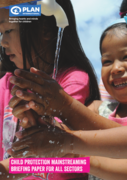
“All sectors of humanitarian response are critical to providing an adequate and holistic response for children who have survived different types of violence, exploitation, abuse and neglect. Following the immediate humanitarian response, all humanitarian sectors have an important contribution to m
...
ake to the effective rehabilitation and reintegration of child survivors. ‘Mainstreaming’ child protection, or ensuring that child protection considerations inform all aspects of humanitarian action, helps to maximize the child protection impacts of the work that all humanitarians do. ”
How to Use This briefing paper: This briefing paper is a quick reference for Plan International Child Protection in Emergencies (CPiE) staff on how to engage with other sectors operating in the emergency to ensure that child protection principles and considerations inform all aspects of humanitarian programming in other sectors. While there is child protection mainstreaming guidance for how to work with specific sectors (e.g. WASH, nutrition, distribution) this “All Sectors” briefing note can give CPiE staff the big picture of shared child protection mainstreaming messages that should be conveyed to all sectors. This briefing is aligned with the Minimum Standards for Child Protection in Humanitarian Action and the Sphere Standards, as well as Plan International staff feedback on what actions are the most vital for child protection mainstreaming in other sectors.
more

: Development assistance for health (DAH) is one of the most important means for Japan to promote
diplomacy with developing countries and contribute to the international community. This study, for the first time,
estimated the gross disbursement of Japan’s DAH from 2012 to 2016 and clarified its
...
flows, including source, aid
type, channel, target region, and target health focus area
more
The World Heart Federation (WHF) is a leading global advocate for stronger legislation and policies regarding cardiovascular disease (CVD) and its risk factors, including raised cholesterol. The present Cholesterol Advocacy Toolkit 2022 provides WHF member organizations with information as well as p
...
ractical tools to
support cholesterol advocacy at the local and regional levels.
more

in the WHO South-East Asia Region 2019-2023

ASEAN ERAT Guidelines

Hypertension is referred to as a “silent killer”. Most people with hypertension are unaware of their condition as in most cases, they experience no warning signs or symptoms hence they are not identified or treated. Hypertention is associated with a number of conditions, disability, and causes o
...
f death. These include: strokes; myocardial infarction; end-stage renal disease; congestive heart failure; peripheral vascular disease and blindness. According to Stats SA, in 2017, hypertensive disorders resulted in 19 900 deaths with a further 44 357 deaths associated with cerebrovascular diseases and other heart diseases. This means around 30% of all deaths in 2017 were associated with increased blood pressure.
more

This paper explores the angles and opportunities of digital health, with a look
at digital innovation and its potential to support patients with circulatory diseases.
In reviewing developments in the field, current applications as well as gaps, the paper aims to support policymakers in leveraging
...
technology for better circulatory health and to capture the roles that various sectors have in making
digital health a tool for everyone.
more

A major problem facing the world is how to build peace following the ravages of increasingly protracted armed conflict. Armed conflicts leave behind shattered, divided societies that are at risk of repeating cycles of violence, and therefore need concerted peacebuilding efforts. Conflicts also take
...
a heavy toll on people’s mental health and psychosocial well-being. One in five people who live in a war zone will likely develop a mental disorder, and many others suffer from painful everyday stresses associated with multiple losses, family separation, gender-based violence (GBV), disability, climate change and ongoing insecurity, among other issues.
more

Around the world, more than 2 billion people lack access to safely managed water, sanitation and hygiene services, with conflicts and climate change exacerbating the issue.
Unsafe and insufficient WASH facilities, especially in rural and remote areas, can lead to increased health complications fo
...
r older people, persons with disabilities and children. They also reinforce cycles of poverty, inequality and deprivation – particularly for women, children and marginalized groups, who are disproportionately impacted by a lack of equitable access to water and sanitation.
Launched on World Water Day, the guidelines address the knowledge gap on ways to practically implement inclusive approaches to WASH infrastructure development, particularly in developing countries and fragile contexts.
more
Global Development: Where Are We Now?
Today, we are facing a vital opportunity to change the profile of cardiovascular disease around the world.
The Millennium Development Goals (MDGs) are due to expire at the end of 2015, placing the cardiovascular health community in a unique position to shape t
...
he priorities for the next development agenda, and save millions of lives.
Despite its devastating impact on people of all ages, genders and ethnicities, cardiovascular disease was excluded from the Millennium Development Goals (MDGs), which were announced by the United Nations in 2000. That oversight was far-reaching;
for well over a decade, non-communicable diseases were omitted from the global funding agenda and deprioritized by other mechanisms. During that period of muted government action, the prevalence and burden of non-communicable diseases increased in every region of the world.
Fifteen years later, as the successors to the MDGs are being negotiated, we are in a position to call for the prioritization of cardiovascular disease on the forthcoming global development agenda. Once we have ensured that CVD is recognised at the global policy level, our efforts will turn to encouraging governments to honour their commitments on
the prevention and control of CVD.
more

Alcohol consumption is deeply embedded in the social landscape of many societies. Several major factors have an impact on levels and patterns of alcohol consumption in populations – such as historical trends in alcohol consumption, the availability of alcohol, culture, economic status and trends i
...
n the marketing of alcoholic beverages, as well as implemented alcohol control measures. At the individual level, the patterns and levels of alcohol consumption are determined by many different factors, including gender, age and individual biological and socioeconomic vulnerability factors, as well as the policy environment. Prevailing social norms that support drinking behaviour and mixed messages about the harms and benefits of drinking encourage alcohol consumption delay appropriate health-seeking behaviour and weaken community action
more

For thousands of years, humans have been using wildlife for commercial and subsistence purposes. Wildlife trade takes place at local, national and international levels, with different forms of wildlife, such as live animals, partly processed products and finished products. Wildlife is a vital source
...
of safe and nutritious food, clothing, medicine, and other products, in addition to having religious and cultural value. Wildlife trade also contributes to livelihoods, income generation and overall economic development.
However, wildlife trade can have detrimental effects on species conservation, depleting natural resources, impoverishing biodiversity and degrading ecosystems (Morton et al., 2021). Wildlife trade, whether legal or illegal, regulated or unregulated, can pose threats to animal health and welfare. It also presents opportunities for zoonotic pathogens to spill over between wildlife and domestic animals, and for diseases to emerge with serious consequences for public or animal health and profound economic impacts (IPBES, 2020; Swift et al., 2007; Smith et al., 2009; Gortazar et al., 2014; Stephen, 2021; Stephen et al., 2022; FAO, 2020). The risk of pathogen spillover and disease emergence is amplified with increased interaction between humans, wildlife and domestic animals. The risk of pathogen spillover has also been exacerbated by climate change, intensified agriculture and livestock production, deforestation, and other land-use changes. Wildlife trade is also a risk to ecosystem biodiversity via the introduction of invasive species (Wikramanayake et al., 2021). Therefore, increased effort must be put into understanding the potential consequences of the wildlife trade, mapping and analysing the adjacent risks, and implementing strategies to manage those risks. Reducing wildlife-trade risks not only helps to limit disease but also minimises the negative effects of invasive species. Between 1960 and 2021, invasive alien species caused estimated cumulative damage of around 116 billion euros across 39 countries in the European Union alone, despite strict import regulations (Haubrock et al., 2021). The effect of invasive species is extremely apparent.
more
An essential component of the return process is counselling, which aims to support counselling beneficiaries to make an informed decision on their future migration pathways. Counselling provides the space for migrants to exert their agency, supports them to prepare for return and positively contr
...
ibutes to their reintegration in countries of origin. The question of how to prepare and provide return counselling is of significant concern for all actors involved in the return process itself, but until
now very little has been done to offer a standardized approach to return counselling. The Return Counselling Toolkit intends to address this question and proposes a rights-based and migrant-centred approach to return counselling, which builds upon
IOM standards and the Organization’s long-standing experience in providing return and reintegration counselling to thousands of migrants every year, in a multiplicity of countries and contexts.
more

The coronavirus disease (COVID-19) pandemic exacerbated pre-existing inequalities in the treatment and care of noncommunicable diseases (NCDs). This report examines the effect of the COVID-19 pandemic on access to NCD medicines, and the policies and strategies implemented by countries and health sys
...
tems to anticipate and mitigate stresses across NCD medicine supply chains. The full range of upstream and downstream impacts are investigated, including: manufacturing; procurement, importation and last mile delivery; patient-level effects through affordability and availability; and the effects on NCD medicine availability by category of disease. The report culminates in recommended actions and interventions for key stakeholders in the NCD pharmaceutical supply chain, including governments, regulatory authorities, manufacturers and the private sector; as well as directions for future research for improving access and supply chain access resilience.
more

This report provides an overview of the operations and activities of the WHO Country Office in Ukraine in 2023. Despite the acute health impacts of the war in Ukraine, the Country Office continued its work according to its core mandate. WHO supported the Government of Ukraine in managing the health
...
emergency and pursued existing priorities set out in WHO’s Thirteenth General Programme of Work 2019–2023, the European Programme of Work 2020–2025, and the Biennial Collaborative Agreement 2022–2023 signed with the Government of Ukraine. The report presents the achievements of the WHO Country Office in Ukraine in 2023 in the context of the war’s impact on the lives, health, and well-being of Ukrainians.
more

The Haiti Earthquake and Cholera Emergency appeal (MDRHT018) was implemented by the International Federation of Red Cross and Red Crescent Societies (IFRC) in collaboration with the Haitian Red Cross Society (HRCS) following the devastating earthquake on 14 August 2021, and the cholera outbreak on 2
...
October 2022.
more

Mpox can spread in humans through close contact, usually skin-to-skin contact, including sexual contact, with an infected person or animal, as well as with materials contaminated with the virus such as clothing, beddings and towels, and respiratory droplets in prolonged face to face contact. People
...
remain infectious from the onset of symptoms until all the lesions have scabbed and healed. The virus may spread from infected animals through handling infected meat or through bites or scratches. Diagnosis is confirmed by polymerase chain reaction (PCR) testing of material from a lesion for the virus’s DNA.
more

Early Identification and Early Intervention Services for Young Children with Developmental Delays and Disabilities in Namibia Republic of Namibia Namibia
Regional Consultations Report
