
Filter
319
Text search:
ebola
diagnostics
Featured
48
88
Language
Document type
133
88
43
28
16
5
2
1
1
1
1
Countries
28
21
20
19
17
14
12
10
8
6
5
4
4
4
4
3
3
3
2
2
2
2
2
2
1
1
1
1
1
1
1
1
1
1
1
1
1
1
1
1
1
1
1
1
1
1
Authors & Publishers
Publication Years
Category
83
19
19
16
14
2
2
1
Toolboxes
61
54
23
23
15
15
14
11
11
10
5
5
4
3
3
2
2
2
2
2
1
1
Le secrétariat du RSI à l’OMS a développé un outil pour les missions d’EEC qui mesure les aptitudes du pays à prévenir, détecter et répondre rapidement aux menaces de santé publique, conformément aux exigences du RSI (2005). Cet outil est également utilisé pour l’exercice d’auto-
...

This paper was developed to support AMR coordination committees and others tasked with addressing AMR at country level to do just that. Drawing on the published literature and the operational experience and expertise of different LMICs, the paper points to six key strategies for success and offers a
...
La résistance à un antimicrobien survient quand un micro-organisme (bactérie, virus, champignon ou parasite), devient résistant à un médicament antimicrobien vis-à-vis duquel il était auparavant sensible . Cette résistance aux antimicrobiens (RAM), concerne un large Ã
...
Antimicrobial resistant (AMR) organisms are increasing globally, threatening to render existing treatments ineffective against many infectious diseases. In Africa, AMR has already been documented to be a problem for HIV and the pathogens that cause malaria, tuberculosis, typhoid, cholera, meningitis
...

Les organismes résistants aux antimicrobiens (RAM) sont de plus en plus répandus à l'échelle mondiale, menaçant de rendre inefficaces les traitements existants contre les nombreuses maladies infectieuses. Il a déjà été établi qu’en Afrique la résistance aux antimicrobiens est un problè
...
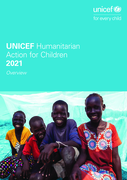
This edition of UNICEF’s annual Humanitarian Action for Children highlights UNICEF’s funding appeal, which sets out an ambitious agenda to address the major challenges facing children and young people living through conflict and crisis. It presents the investments needed in 2021 to save their li
...
Rapport de mission : 25–29 septembre, 2017

In 2006, the Special Session of African Union Health Ministers adopted the Maputo Plan of Action for implementing the Continental Policy Framework on sexual and reproductive health and rights (SRHR), which expired at the end of 2015. The goal was for all stakeholders and partners to join forces and
...
PLOS Neglected Tropical Diseases 18(4): e0012111. https://doi.org/10.1371/journal.pntd.0012111

9 April 2020
WHO has published the guidance “Clinical management of severe acute respiratory infection (SARI) when COVID-19 disease is suspected” This document is intended for clinicians taking care of hospitalized adult and paediatric patients with severe acute respiratory infection (SARI) whe
...
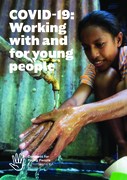
This guidance note is meant to assist humanitarian actors, youth-led organizations, and young people themselves across sectors, working at local, country, regional, and global levels in their response to the novel coronavirus pandemic. It begins diagnostically, exploring the impacts of coronavirus d
...

1 June 2020
Countries around the world are facing the challenge of increased demand for care of people with COVID-19, compounded by fear, misinformation and limitations on movement that disrupt the delivery of health care for all conditions. Maintaining essential health services: operational guidan
...
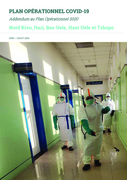
Un Plan humanitaire multisectoriel spécifique à la réponse COVID-19 a été développé en avril 2020. Il s’agit d’un Addendum au Plan de réponse humanitaire 2020 (PRH) qui a pour but d’intégrer l’impact de la pandémie de COVID-19 sur les besoins humanitaires existants, ainsi que sur l
...

While many of the countries hit by the COVID-19 in the first few months of the year are now beginning to relax lockdown measures as infection and death rates fall, in the regions most affected by HIV, TB and malaria, such as Africa, South Asia and Latin America, the pandemic continues to accelerate.
...
Investing in and building longer-term health emergency preparedness during the COVID-19 pandemic
recommended
Interim Guidance
This document is to help Member States build on actions taken during the COVID-19 pandemic to improve national medium- to long-term preparedness for future threats. It maps COVID-19 preparedness and response actions to the building of sustainable International Health Regulations (2
...

How to respond to Covid19 pandemic in West and Central Africa

This report presents three scenarios on the impact of COVID-19 in Africa using economic growth forecasts, mortality and efforts to ameliorate impact through social grants. Likely effects are examined on per capita income, poverty and the attainment of selected Sustainable Development Goals targets.
...
It highlights how proven digital innovation can be replicated to curb the spread of COVID-19 in Africa. It also estimates investment required to implement such high impact solutions.

The results of a WHO survey conducted to assess the impact of the COVID-19 pandemic on up to 25 essential health services in countries show disruptions of essential health services in nearly all countries, and more so in lower-income than higher-income countries. The great majority of service disrup
...
