
Filter
802
Text search:
Ebola
preparedness
Featured
95
256
Language
Document type
346
154
129
61
58
25
13
11
2
1
1
1
Countries
80
79
63
50
48
30
26
23
22
21
19
17
16
14
14
12
11
10
10
8
8
8
7
7
6
6
6
6
5
5
5
4
4
4
4
4
4
4
4
4
3
3
3
3
3
3
2
2
2
2
2
2
1
1
1
1
1
1
1
1
1
1
1
1
1
1
1
1
1
1
1
Authors & Publishers
Publication Years
Category
193
83
39
32
20
10
10
Toolboxes
246
167
71
36
32
27
25
23
18
13
11
9
9
9
6
5
5
5
4
3
3
2
2
1
The document covers: introduction on contact tracing in the Ebola response; general considerations for contact tracing; case definition; planning and preparation; personnel; implementation, and tools for contact tracing.

PLoS ONE 7(12): e52986. doi:10.1371/journal.pone.0052986. Opern Access please download from the website

Practical guidance on immunization services and the risks they present for both Ebola affected and non-affected countries. The specific purpose of this document is to assist countries to:
- Maintain immunization services and use immunization co
...

Up-to-date Literature review current through: Jan 2015. | This topic last updated: Jan 29, 2015.

Morbidity and Mortality Weekly Report Suppl. Vol.63/3

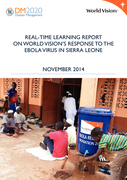
This real-time learning process was carried out in order to identify the gaps and needs within World Vision’s current Ebola Virus Disease (EVD) response in Sierra Leone and to inform World Vision on how other surrounding countries (specifically t
...

Almost 30 countries vulnerable to a new Ebola-style Epidemic, jeopardising the future of millions of Children. The report ranks the world’s poorest countries on the state of their public health systems, finding that 28 have weaker defences in plac
...
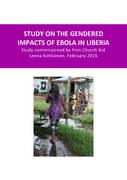
This study examines the gendered impacts of the Ebola virus disease (EVD) in Liberia in the largest outbreak of EVD ever recorded. The findings are based on an extensive two-week desk study and one-week participatory field study conducted in January
...
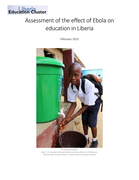
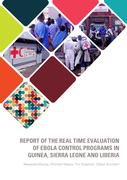
Real Time Evaluation of the Ebola Control Programs in Guinea, Sierra Leone and Liberia. Final Report
The scope includes the assessment of activities to improve the response to affected populations, stakeholders, partners and donors, building on lessons learnt so far in this outbreak.
MMWR Morbidity and Mortality Weekly Report December 19, 2014 / 63(50);1205-1206
Interim emergency guidelines

BMC Health Services Research BMC series – open, inclusive and trusted201818:251; https://doi.org/10.1186/s12913-018-3072-3

Overview: Risk communication and community engagement are essential for any disease outbreak response. This is particularly critical during outbreaks of Ebola which may create fear in the public and frontline responders alike due to severe presentat
...
