
Filter
2322
Text search:
programming
Featured
194
767
Language
2235
60
35
31
24
13
5
4
4
4
3
3
2
2
2
2
2
2
1
1
1
1
1
1
1
1
1
1
1
1
1
1
1
1
Document type
1359
385
229
141
113
41
24
20
3
3
1
1
Countries
111
79
75
72
70
68
56
56
56
52
52
50
44
43
34
29
27
27
27
26
25
25
24
23
22
20
20
19
19
19
18
18
16
15
15
15
14
14
13
12
11
10
10
9
9
8
8
8
8
6
6
6
6
6
6
5
5
5
4
4
4
4
3
3
3
3
3
3
3
3
3
3
3
3
3
3
3
2
2
2
2
2
2
2
2
1
1
1
1
1
1
1
1
1
1
1
1
1
1
1
1
1
1
1
1
1
1
1
1
1
1
1
1
1
1
1
1
1
1
1
1
1
1
1
Authors & Publishers
175
87
59
57
54
53
41
41
35
28
27
21
18
17
17
16
16
15
15
15
15
14
14
13
13
13
12
11
11
11
11
10
10
10
10
9
9
9
9
9
8
8
8
8
8
8
8
8
7
7
7
7
6
6
6
6
6
6
6
6
6
6
6
5
5
5
5
5
5
5
5
5
5
5
5
5
5
5
5
5
5
5
5
4
4
4
4
4
4
4
4
4
4
4
4
4
4
4
4
4
4
4
4
4
4
4
4
4
4
3
3
3
3
3
3
3
3
3
3
3
3
3
3
3
3
3
3
3
3
3
3
3
3
3
3
3
3
3
3
3
3
3
3
3
3
3
3
3
3
3
3
3
3
3
3
3
3
3
3
3
3
3
3
3
3
3
3
3
2
2
2
2
2
2
2
2
2
2
2
2
2
2
2
2
2
2
2
2
2
2
2
2
2
2
2
2
2
2
2
2
2
2
2
2
2
2
2
2
2
2
2
2
2
2
2
2
2
2
2
2
2
2
2
2
2
2
2
2
2
2
2
2
2
2
2
2
2
2
2
2
2
2
2
2
2
2
2
2
2
2
2
2
2
2
2
2
2
2
2
2
2
2
2
2
2
2
2
2
2
2
2
2
2
2
2
2
2
2
2
2
2
2
2
2
2
2
2
2
2
2
2
2
2
2
2
2
2
2
2
2
2
2
2
2
2
2
2
2
2
2
2
2
2
2
2
2
2
2
2
2
1
1
1
1
1
1
1
1
1
1
1
1
1
1
1
1
1
1
1
1
1
1
1
1
1
1
1
1
1
1
1
1
1
1
1
1
1
1
1
1
1
1
1
1
1
1
1
1
1
1
1
1
1
1
1
1
1
1
1
1
1
1
1
1
1
1
1
1
1
1
1
1
1
1
1
1
1
1
1
1
1
1
1
1
1
1
1
1
1
1
1
1
1
1
1
1
1
1
1
1
1
1
1
1
1
1
1
1
1
1
1
1
1
1
1
1
1
1
1
1
1
1
1
1
1
1
1
1
1
1
1
1
1
1
1
1
1
1
1
1
1
1
1
1
1
1
1
1
1
1
1
1
1
1
1
1
1
1
1
1
1
1
1
1
1
1
1
1
1
1
1
1
1
1
1
1
1
1
1
1
1
1
1
1
1
1
1
1
1
1
1
1
1
1
1
1
1
1
1
1
1
1
1
1
1
1
1
1
1
1
1
1
1
1
1
1
1
1
1
1
1
1
1
1
1
1
1
1
1
1
1
1
1
1
1
1
1
1
1
1
1
1
1
1
1
1
1
1
1
1
1
1
1
1
1
1
1
1
1
1
1
1
1
1
1
1
1
1
1
1
1
1
1
1
1
1
1
1
1
1
1
1
1
1
1
1
1
1
1
1
1
1
1
1
1
1
1
1
1
1
1
1
1
1
1
1
1
1
1
1
1
1
1
1
1
1
1
1
1
1
1
1
1
1
1
1
1
1
1
1
1
1
1
1
1
1
1
1
1
1
1
1
1
1
1
1
1
1
1
1
1
1
1
1
1
1
1
1
1
1
1
1
1
1
1
1
1
1
1
1
1
1
1
1
1
1
1
1
1
1
1
1
1
1
1
1
1
1
1
1
1
1
1
1
1
1
1
1
1
1
1
1
1
1
1
1
1
1
1
1
1
1
1
1
1
1
1
1
1
1
1
1
1
1
1
1
1
1
1
1
1
1
1
1
1
1
1
1
1
1
1
1
1
1
1
1
1
1
1
1
1
1
1
1
1
1
1
1
1
1
1
1
1
1
1
1
1
1
1
1
1
1
1
1
1
1
1
1
1
1
1
1
1
1
1
1
1
1
1
1
1
1
1
1
1
1
1
1
1
1
1
1
1
1
1
1
1
1
1
1
1
1
1
1
1
1
1
1
1
1
1
1
1
1
1
1
1
1
1
1
1
1
1
1
1
1
1
1
1
1
1
1
1
1
1
1
1
1
1
1
1
1
1
1
1
1
1
1
1
1
1
1
1
1
1
1
1
1
1
1
1
1
1
1
1
1
1
1
1
1
1
1
1
1
1
1
1
1
1
1
1
1
1
1
1
1
1
1
1
1
1
1
1
1
1
1
1
1
1
1
1
1
1
1
1
1
1
1
1
1
1
1
1
1
1
1
1
1
1
1
1
1
1
1
1
1
1
1
1
1
1
1
1
1
1
1
1
1
1
1
1
1
1
1
1
1
1
1
1
1
1
1
1
1
1
1
1
1
1
1
1
1
1
1
1
1
1
1
1
1
1
1
1
1
1
1
1
1
1
1
1
1
1
1
1
1
1
1
1
1
1
1
1
1
1
1
1
1
1
1
1
1
1
1
1
1
1
1
1
1
1
1
1
1
1
1
1
1
1
1
1
1
1
1
1
1
1
1
1
1
1
1
1
1
1
1
1
1
1
1
1
1
1
1
1
1
1
1
1
1
1
1
1
1
1
1
1
1
1
1
1
1
1
1
1
1
1
1
1
1
1
1
1
1
1
1
1
1
1
1
1
1
1
1
1
1
1
1
1
1
1
1
1
1
1
1
1
1
1
1
1
1
1
1
1
1
1
1
1
1
1
1
1
1
1
1
1
1
1
1
1
1
1
1
1
1
1
1
1
1
1
1
1
1
1
1
1
1
1
1
1
1
1
1
1
1
1
1
1
1
1
1
1
1
1
1
1
1
1
1
1
1
1
1
1
1
1
1
1
1
1
1
1
1
1
1
1
1
1
1
1
1
1
1
1
1
1
1
1
1
1
1
1
1
1
1
1
1
1
1
1
1
1
1
1
1
1
1
1
1
1
1
1
1
1
1
1
1
1
1
1
1
1
1
1
1
1
1
1
1
1
1
1
1
1
1
1
1
1
1
1
1
1
1
1
1
1
1
1
1
1
1
1
1
1
1
1
1
1
1
1
1
1
1
1
1
1
1
1
1
1
1
1
1
1
1
1
1
1
1
1
1
1
1
1
1
1
1
1
1
1
1
1
1
1
1
1
1
1
1
1
1
1
1
1
1
1
1
1
1
1
1
1
1
1
1
1
1
1
1
1
1
1
1
1
1
1
1
1
1
1
1
1
1
1
1
1
1
1
1
1
1
1
1
1
1
1
1
1
1
1
1
1
1
1
1
1
1
1
1
1
1
1
1
1
1
1
1
1
1
1
1
1
1
1
1
1
1
1
1
1
1
1
1
1
1
1
1
1
1
1
1
1
1
1
1
1
1
1
1
1
1
1
1
1
1
1
1
1
1
1
1
1
1
1
1
1
1
1
1
1
1
1
1
1
1
1
1
1
1
1
1
1
1
1
1
1
1
1
1
1
1
1
1
1
1
1
1
1
1
1
1
1
1
1
1
1
1
1
1
1
1
1
1
1
1
1
1
1
1
1
1
1
1
1
1
1
1
1
1
1
1
1
1
1
1
1
1
1
1
1
1
1
1
1
1
1
1
1
1
1
1
1
1
1
1
1
1
1
1
1
1
1
1
1
1
1
1
1
1
1
1
1
1
1
1
1
1
1
1
1
1
1
1
1
1
1
1
1
1
1
1
1
1
1
1
1
1
1
1
1
1
1
1
1
1
1
1
1
1
1
1
1
1
1
1
1
1
1
1
1
1
1
1
1
1
1
1
1
1
1
1
1
1
1
1
1
1
1
1
1
1
1
1
1
1
1
1
1
1
1
1
1
1
1
1
1
1
1
1
1
1
1
1
1
1
1
1
1
1
1
1
1
1
1
1
1
1
1
1
1
1
1
1
1
1
1
1
1
1
1
1
1
1
1
1
1
1
1
1
1
1
1
1
1
1
1
1
1
1
1
1
1
1
1
1
1
1
1
1
1
1
1
1
1
1
1
1
1
1
1
1
1
1
1
1
1
1
1
1
1
1
1
1
1
1
1
1
1
1
1
1
1
1
1
1
1
1
1
1
1
1
1
1
1
1
1
1
1
1
1
1
1
1
1
1
1
1
1
1
1
1
1
1
1
1
1
1
1
1
1
1
1
1
1
1
1
1
1
1
1
1
1
1
1
1
1
1
1
1
1
1
1
1
1
1
1
1
1
1
1
1
1
1
1
1
1
1
1
1
1
1
1
1
1
1
1
1
1
1
1
1
1
1
1
1
1
1
1
1
1
1
1
1
1
1
1
1
1
1
1
1
1
1
1
1
1
1
1
1
1
1
1
1
1
1
1
1
1
1
1
1
1
1
1
1
1
1
1
1
1
1
1
1
1
1
1
1
1
1
1
1
1
1
1
1
1
1
1
1
1
1
1
1
1
1
1
1
1
1
1
1
1
1
1
1
1
1
1
1
1
Publication Years
1
674
1482
163
2
Category
942
297
199
87
58
44
3
1
Toolboxes
157
154
153
147
123
80
71
64
57
51
32
32
30
28
26
25
25
15
15
12
9
8
6
3
3
3
2

Safe sanitation is essential for health, from preventing infections to improving and maintaining mental and social
well-being. Lack of adequate sanitation contributes to diarrhoeal diseases, parasitic infections, and undernutrition, as
well as posing significant risks and causing anxiety, especial
...
ly for women and girls. Achieving universal access to safe
sanitation, which protects health, privacy, and dignity, is a global development goal and a recognized basic human right.
more

Challenges and Opportunities. This report presents a comprehensive assessment of the education and labor markets for nurses in the ECSA region. It documents the main challenges to train and deploy nurses and discusses opportunities for government and private sector employers to overcome these chall
...
enges. The report provides empirical evidence to support the expansion of nursing education within the region with a focus on private sector engagement, effective labor market regulation, and regional collaboration. A regional focus for investment may be necessary to create enough potential deals, reduce individual country and regulatory risks, encourage good private institutions to move across borders within the region, and seek to create regional standards for regulation.
more

In 2008 the Ministry of Health and Social Services (MOHSS) commissioned a national health and social service system review which found that although some progress has been made in primary health care, provision of health services did not go beyond the health facilities, irrespective of the fast dist
...
ances between the Health facilities and community. The review then recommended that health services should be extended in a structured manner to communities through the establishment of paid health workers.
more
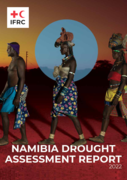
750,000 people are estimated to be food insecure. This number may magnify as households continue to recover from impacts of COVID-19.
Over 63% of household surveys were responded to by female heads and 37.5% of the Key informant respondents were women. Women and children continue to be more dispr
...
oportionally affected by the drought than men.
Communities continue to develop negative coping strategies as drought conditions persist.
Increase in nomadic and cross border population movements. Over 1,792 Angolan nationals were repatriated from Namibia in January 2022 whilst others remain integrated in the Namibian communities.
more

Namibia has, for many years, had a strong legislative and policy framework for the protection of children. These policies and laws have been developed through the combined expertise of those working in the field of child protection who have ensured Namibia has a robust legal framework that is in li
...
ne with international best practices.
more

Men lag behind women regarding use of HIV services and represent the majority of individuals living with uncontrolled HIV, advanced HIV, and who experience HIV-related mortality. Men (15+) globally are less likely than women (15+) to know their HIV status (83% for men vs 91% for women), be on antire
...
troviral treatment (ART) (72% for men vs 83% for women) and reach viral suppression (67% for men vs 78% for women).
more

The objectives of the research presented in this report were to identify case studies of community-led HIV-related health and social inclusion service delivery organizations in eastern and southern Africa; describe the typologies of the services provided; and identify evidence of their service deliv
...
ery and contribution beyond HIV, including advancing universal health coverage.
more

The indicators and questions in this document are designed for use by national AIDS programmes and partners to assess the state of a country’s HIV and AIDS response, and to measure progress towards achieving national HIV targets. Countries are encouraged to integrate these indicators and questions
...
into their ongoing monitoring efforts and to report comprehensive national data through the Global AIDS Monitoring (GAM) process. In this way they will contribute to improving understanding of the global response to the HIV epidemic, including progress that has been made towards achieving the commitments and global targets set out in the new United Nations Political Declaration on HIV and AIDS: Ending Inequalities and Getting on Track to End AIDS by 2030, adopted in June 2021, and the linked Sustainable Development Goals.
more

The South African WHO Country Cooperation Strategy (CCS) 2023–2027 focuses on four key strategic priorities based on the country’s health needs and disease epidemiology, while also considering the need for building resilient health systems for UHC and health security in the post pandemic period.
...
These include:
1. augment health systems strengthening reforms to accelerate progress towards universal health coverage.
2. address the quadruple burden of diseases and promote well-being across the life course in view of achieving global targets.
3. build health systems resilience and strengthen health emergency preparedness and response capacities.
4. enhance multisectoral collaboration and global partnerships for concerted action on health and its determinants.
In order to harness its expertise across its three levels, namely: the WHO Country Office (WCO), WHO Regional Office for Africa, and WHO headquarters, WHO will work closely and collaboratively with the Government of South Africa to implement the 2023–2027 strategic priorities.
more

PLoS ONE 18(5): e0285031. https://doi.org/10.1371/journal.pone.0285031
The study aims to integrate HPV vaccination into routine care in adolescent HIV clinics. To achieve success, we will co-design a package of implementation strategies using a previously successful implementation research approach
...
developed for cervical cancer prevention in LMICs: the Integrative Systems Praxis for Implementation Research (INSPIRE). INSPIRE is a novel, comprehensive approach to develop, implement, and evaluate implementation science efforts
more

The protracted humanitarian situation in northeastern Nigeria, particularly in Borno, Adamawa, and Yobe (BAY) States, remains a concern due to ongoing insecurity, displacement, food insecurity, disease outbreaks, and climate-related shocks. To address these complex challenges, the health sector has
...
developed a comprehensive humanitarian response strategy aligned with the three States Development plans, Durable Solutions for the Population Displacement Plan, and the Humanitarian Need Response Plan for 2025. This strategy aims to reduce morbidity and mortality among crisisaffected populations by ensuring timely, equitable, and effective delivery of lifesaving health services, while strengthen the resilience of health system and enhancing local and national capacities for sustainable health response in protracted emergency.
Supported by an in-depth analysis of the ongoing health humanitarian response using the Strengths, Weaknesses, Opportunities, and Threats (SWOT) methodology, the strategy is guided by three key objectives:
1. Provide access to lifesaving interventions and sustain an effective response to the prolonged health emergency.
2. Prevent, mitigate, and prepare for health risks from all hazards and respond to all health emergencies.
3. Advance the primary health care approach and essential health system capacities for universal health coverage.
To achieve these objectives, the strategy employs the “Five C” framework which refers to:
• Collaborative Surveillance: Enhancing collaborative efforts for effective monitoring.
• Community Protection: Implementing community-based protection measures.
• Safe and Scalable Care: Ensuring care that is both secure and scalable.
• Access to Countermeasures: Facilitating access to necessary countermeasures.
• Emergency Coordination: Coordinating emergency responses efficiently.
These proactive approaches are designed to be more anticipatory and preemptive rather than reactive, aiming to meet the needs of the crisis-affected population by providing lifesaving interventions, enhancing preventive and anticipatory actions, and ensuring the resilience of the health system. All actions are guided by International Humanitarian Standards and the Humanitarian Principles.
The implementation of the health humanitarian response strategy will involve collaboration with local authorities, non-governmental organizations (NGOs), and international organizations. The strategy emphasizes localization and resource mobilization, efficient logistics and supply chain management, mainstreaming protection, and the deployment and training of healthcare workers. Continuous monitoring and periodic evaluation will ensure the effectiveness of the response. Cross-sector collaboration with sectors such as WASH, Nutrition, Education, and Protection will be crucial to enhance the quality and reach of health interventions. Additionally, sustainability and transition approaches will ensure long-term health outcomes and benefits, bridging the gap from humanitarian to development efforts.
By adopting this comprehensive approach, the humanitarian response in northeastern Nigeria, particularly in BAY States, can be effectively guided, ultimately reducing the suffering of affected populations.
more

Trachoma is the world’s leading infectious cause of blindness. It is one of 18 neglected
tropical diseases (NTDs) that affect over one billion of the world’s poorest people.
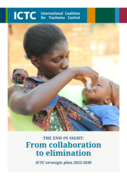
ICTC’s 2022-2030 strategic plan spans the critical period running to the end of 2030, the year by which we are striving to achieve the elimination of trachoma as a public health problem. This strategic plan is in alignment with the NTD road map, Ending the neglect to attain the Sustainable Develop
...
ment Goals: a road map for neglected tropical diseases 2021−2030.
more

Antimicrobial resistance (AMR) is a global public health crisis that resulted in 1.14 million deaths in 2021. According to the Institute for Health Metrics and Evaluation estimates, 96 416 of these deaths occurred in the World Health Organization (WHO) Eastern Mediterranean Region. All 22 countr
...
ies/territories in the Eastern Mediterranean Region are enrolled in the global AMR
surveillance system, and 17 countries/territories reported data in 2024 (for the year 2023). The total number of isolates reported to the system increased sixfold between 2017 and 2022, but the proportion of blood isolates is relatively very low. Most of the data come from public sector laboratories or hospitals, although the private sector has increased its participation in some countries/territories recently. Three pathogens account for three quarters of all the reported pathogens – Escherichia coli
(26%), Klebsiella pneumoniae (23%), and Staphylococcus aureus (22%).
more

he National Department of Health (NDOH) presents this Malaria Elimination Strategic
Plan 2019-2023 for the Republic of South Africa. The strategy comes at an important time
as the Southern African Development Community (SADC) heads of state have recently
renewed the commitment to eliminate malari
...
a in Botswana, Eswatini, Namibia and South
Africa by 2020 and in the whole SADC region by 2030, with the target of zero local malaria
cases and deaths. South Africa has made steady progress towards this elimination goal
through the implementation of evidence-based malaria policies aligned to the World Health
Organization’s (WHO) Global Technical Strategy.
more

To meet our Strategy objectives and get within reach
of the 2030 SDG 3 target related to the three diseases,
the Global Fund needs to raise US$18 billion for the
Eighth Replenishment. That sum is essential to drive the
required pace of progress in the fight against HIV, TB
and malaria, and to m
...
aintain the necessary investments
in health and community systems.
more

To deliver on the Global Fund Strategy milestones
for 2028 and ensure we keep the SDG 3 target
within reach, we need to raise US$18 billion to
fund the Global Fund’s next three-year grant cycle.

This paper was commissioned by N´weti and Wemos as part
of the project “Equitable health financing for a strong health
system in Mozambique”. Its purpose is to contribute to the
debate of the Mozambican Ministry of Health’s draft Health
Sector Financing Strategy (HSFS) 2025 – 2034

To realize Agenda 2030, aid agencies, private philanthropies, and their partners in the Global South need better data to monitor how official development finance (ODF) dollars advance the Sustainable Development Goals (SDGs) and avoid missing the mark. In this report, we summarize the results of a n
...
ovel effort to tag and analyze 2.7 million ODF projects between 2010-2021 using machine learning to understand their contributions to the SDG thematic areas at a goal
and target level. This time frame is instructive: it compares the last six years of the Millennium Development Goals era and the first six years of the new SDG age, from early optimism to later uncertainty about the resilience of the agenda to drive collective commitments amid unanticipated global shocks.
more

In contrast to bilateral aid, aid disbursed from
multilateral institutions increased significantly at the onset
of the COVID-19 pandemic. Yet, at a time when a coherent
and effective multilateral response is needed most, the
COVID-19 pandemic revealed a shifting landscape of donor
agencies that
...
struggle with basic functions, such as crossnational coordination. While multilaterals are uniquely
positioned to transcend national priorities and respond
to pandemics, functionally we find official development
assistance (ODA) from these entities may increasingly
mimic the attributes of bilateral aid. We explore three
important, but not comprehensive, attributes of aid leading
up to and during the COVID-19 pandemic: (1) earmarking,
(2) donor concentration and (3) aid modality.
more
