
Filter
1384
Text search:
antibiotic
use
Featured
201
340
Language
Document type
516
312
267
82
59
58
41
13
11
8
7
7
2
Countries
117
41
39
39
37
31
23
21
21
21
19
19
18
18
16
14
11
10
10
9
9
8
7
7
6
6
6
6
5
5
5
5
4
4
4
4
4
4
4
3
3
3
3
3
3
3
3
3
3
3
3
3
3
3
2
2
2
2
2
2
2
2
2
2
2
2
2
2
2
2
1
1
1
1
1
1
1
1
1
1
1
1
1
1
1
1
1
1
1
1
1
1
1
1
1
1
1
1
1
1
1
1
1
1
1
1
1
1
1
1
1
1
1
Authors & Publishers
Publication Years
Category
479
211
113
65
45
36
19
Toolboxes
355
83
69
67
64
40
35
33
25
25
22
22
19
16
16
16
12
9
8
7
6
4
2
The escalating antimicrobial resistance (AMR) pandemic is a global public health threat with extensive health, economic and societal implications. Resistance emerges because of selection pressure from rational and indiscriminate antimicrobial use in
...

COTS (Cholera Outbreak Training and Shigellosis) Program Health Promotion Worker Pocket Card
recommended
The COTS Cholera Outbreak Training and Shigellosis Program Pocket Card provides essential guidelines for health promotion workers to prevent and manage cholera and shigellosis outbreaks. It emphasizes proper sanitation, hygiene practices, safe water handling, and food safety as the primary methods f
...
Evidence for technical update of pocket book recommendations. Newborn conditions, dysentery, pneumonia, oxygen use and delivery, common causes of fever, severe acute malnutrition and supportive care

The Antimicrobial Resistance Benchmark has evaluated for the second time how the most important players in the antibiotic market are addressing the rise of resistance and the global need for appropriate access to antibiotics. Although we can see pro
...

Antibiotics are only needed for treating certain infections caused by bacteria. Viral illnesses cannot be treated with antibiotics. When an antibiotic is not prescribed, ask your healthcare professional for tips on how to relieve symptoms and feel b
...

Although 10% of the population in the U.S. reports a penicillin allergy, less than 1% of the population is truly penicillin allergic. Correctly identifying if your patient is penicillin allergic can decrease the unnecessary use of broad spectrum ant
...

23 April 2020EMA/202483/2020 Rev
Chloroquine and hydroxychloroquine are known to potentially cause heart rhythm problems, and these could be exacerbated if treatment is combined with other medicines, such as the antibiotic azithromycin, that have s
...

This manual details a collaboratively developed intervention to detect and refer Buruli ulcer, Hydrocele, Leprosy
and Lymphedema cases through the use of integrated approaches at community levels. This intervention has
been developed as part of th
...

Buruli ulcer caused by Mycobacterium ulcerans is a neglected tropical disease characterized by extensive ulceration involving predominantly the upper and lower limbs of patients. The disease is common in rural tropical communities in West and Central Africa, where access to proper health care is lim
...
Since 1996, trachoma has been targeted for elimination as a public health problem worldwide. The active trachoma criterion for national elimination as a public health problem is a TF1–9 < 5%, sustained for at least two years in the absence of antibiotic
...
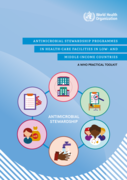
Stewardship is defined as “the careful and responsible management of something entrusted to one’s care”. It was originally applied in the health-care setting as a tool for optimizing antimicrobial use, termed “antimicrob
...
Fever Diagnostic Technology Landscape
recommended
1st edition.
Unitaid’s report describes a slate of new devices that can more efficiently identify dangerously ill children so that they can be treated immediately. These tools make it easier to recognize danger signs, and support integrated approaches to reducing childhood deaths from the three
...

Comprehensive Reviews in Food Science and Food Safety, Vol.12 (2013) pp.234-248
In 2006, the Institute of Food Technologists (IFT) published an Expert Report entitled “Antimicrobial Resistance: Implications for the Food System” (IFT 2006). That report summarized current scientific knowledge pe
...

Nepal has only recently started its journey on the path to an integrated response to the challenge of antimicrobial resistance (AMR). Despite this, it is notable that the Nepal Health Sector Strategy Plan (HSSP)-2 mentions growing antibiotic resista
...

A regional guide for governments in Asia and the Pacific to review, update and develop policies to address antimicrobial resistance and antimicrobial use in animal production
An essential participant in antimicrobial stewardship who has been unrecognized and underutilized is the“staff nurse.”Although the role of staff nurses has not formally been recognized in guidelines for implementing and operating antimicrobial stewardship programs (ASPs) or defined in the medica
...
Issue Brief 31: Antimicrobial resistance (AMR) can occur when viruses, bacteria, parasites and fungi change over time. There is no longer a response to medicines, and the infection treatment gets really difficult which increases the risk of a disesase spread, which can lead to severe health problems
...
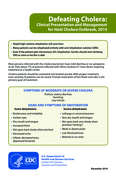
Clinical Presentation and Management for Haiti Cholera Outbreak, 2010
The document provides detailed guidelines for diagnosing and managing cholera cases, with a focus on rehydration therapy and preventing dehydration-related fatalities. It outlines the
...
Laboratory diagnosis of Buruli ulcer
recommended
A manual for health care providers.
This manual provides expert guidance on the laboratory techniques and procedures used in the diagnosis of Buruli ulcer, a disease caused by Mycobacterium ulcerans. Aimed at laboratory technicians and scientists working on this disease, the manual details the exac
...
This implementation guide has been developed to help birth attendants and health-care leaders successfully launch and sustain use of the WHO Safe Childbirth Checklist. Development, use and implement
...
