
Filter
1298
Text search:
UNICEF,
WHO
and
Save
the
Children
Featured
119
425
Language
Document type
774
192
119
81
60
22
21
17
5
3
2
2
Countries / Regions
75
46
42
37
36
35
32
30
30
29
29
27
25
22
20
16
16
15
14
13
13
13
12
12
12
11
10
10
9
8
8
8
8
8
7
7
7
6
6
6
5
5
5
5
5
5
5
5
5
4
4
4
4
4
4
4
3
3
3
3
3
2
2
2
2
2
2
2
2
2
2
2
2
2
2
2
2
1
1
1
1
1
1
1
1
1
1
1
1
1
1
1
1
1
1
Authors & Publishers
Publication Years
Category
495
176
138
62
44
24
5
Toolboxes
135
77
76
75
51
47
47
37
34
34
19
16
16
14
13
12
11
9
9
6
5
5
4
2
2

Child protection psychosocial training manual
recommended
The Terre des hommes Child Protection Psychosocial Training Manual has been developed for use in the field
in order to train animators who work wi
...

Demographic and Health Surveys, Working Paper
Sphere Handbook in Haitian Creole
recommended
The Sphere Handbook "Humanitarian Charter and Minimum Standards in Disaster Response" is now available in Haitian Creole.
This translation has been coordinated by Oxfam Canada
...
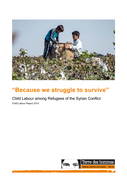
“Because we struggle to survive” Child Labour among Refugees of the Syrian Conflict | This study provides pertinent first-hand information on the reality facing Syrian
...

The Ethiopia Multi-Sectorial Cholera Elimination Plan (2022-2028) outlines a national strategy to eliminate cholera in Ethiopia by 2028. The plan follows
...
This report documents severe overcrowding, unsanitary conditions, malnutrition, and lack of adequate health care. Human Rights Watch found violent abuse by guards in four official detention centers in western Libya, including beatings
...
Progress Report


The principle of “the best interest of the child” should guide decisions by politicians whenever
c
...
The WHO Global Health Estimates show that nearly half a million deaths (493 471) occurred in the WHO
...
Children without access to safe water are more likely to die in infancy -- and throughout childhood -- from diseases caused by
water-borne bacteria, to which their small bodies are more vulnerable.
...

Education in emergencies is a young area; the evidence of its impact is often anecdotal, and although its status as a humanitarian concern has gained legitimacy in recent years, it has yet to be ac
...
Innocenti Digest No. 13
