
Filter
2496
Text search:
Child
Protection
Area
of
Responsibility
Featured
280
748
Language
2452
53
51
29
25
19
15
15
7
7
6
6
6
5
5
5
4
4
4
4
4
3
3
3
3
3
3
3
3
3
3
2
2
2
2
2
2
2
2
2
2
2
2
1
1
1
1
1
1
1
1
1
1
Document type
1473
358
299
173
100
54
15
9
6
4
4
1
Countries / Regions
107
91
68
61
59
56
51
51
51
48
48
46
44
44
37
31
31
31
28
28
27
27
24
22
20
19
18
18
16
16
16
16
16
15
15
14
11
11
11
11
10
10
9
8
8
8
8
7
7
7
6
6
6
6
6
5
5
5
5
5
5
5
4
4
4
4
4
3
3
3
3
3
3
3
3
3
2
2
2
2
2
2
2
2
2
2
2
2
2
2
2
2
2
2
1
1
1
1
1
1
1
1
1
1
1
1
1
1
1
1
1
1
1
1
1
1
1
1
1
1
1
1
Authors & Publishers
366
131
73
73
71
71
46
37
32
29
22
16
16
16
15
15
14
13
13
13
13
12
11
11
11
11
10
10
10
9
9
9
9
8
8
8
8
8
8
8
8
8
7
7
7
7
7
7
7
6
6
6
6
6
6
6
5
5
5
5
5
5
5
5
5
5
5
5
5
5
5
5
4
4
4
4
4
4
4
4
4
4
4
4
4
4
4
4
4
4
4
4
4
4
4
4
4
4
4
4
4
3
3
3
3
3
3
3
3
3
3
3
3
3
3
3
3
3
3
3
3
3
3
3
3
3
3
3
3
3
3
3
3
3
3
3
3
3
3
3
3
3
3
3
2
2
2
2
2
2
2
2
2
2
2
2
2
2
2
2
2
2
2
2
2
2
2
2
2
2
2
2
2
2
2
2
2
2
2
2
2
2
2
2
2
2
2
2
2
2
2
2
2
2
2
2
2
2
2
2
2
2
2
2
2
2
2
2
2
2
2
2
2
2
2
2
2
2
2
2
2
2
2
2
2
2
2
2
2
2
2
2
2
2
2
2
2
2
2
2
2
2
2
2
2
2
2
2
2
2
2
2
2
2
2
2
2
2
2
2
2
2
2
2
2
2
2
2
2
2
2
2
2
2
2
2
2
2
2
2
2
2
2
2
2
2
2
2
2
2
2
2
2
2
2
2
2
2
2
2
2
2
2
1
1
1
1
1
1
1
1
1
1
1
1
1
1
1
1
1
1
1
1
1
1
1
1
1
1
1
1
1
1
1
1
1
1
1
1
1
1
1
1
1
1
1
1
1
1
1
1
1
1
1
1
1
1
1
1
1
1
1
1
1
1
1
1
1
1
1
1
1
1
1
1
1
1
1
1
1
1
1
1
1
1
1
1
1
1
1
1
1
1
1
1
1
1
1
1
1
1
1
1
1
1
1
1
1
1
1
1
1
1
1
1
1
1
1
1
1
1
1
1
1
1
1
1
1
1
1
1
1
1
1
1
1
1
1
1
1
1
1
1
1
1
1
1
1
1
1
1
1
1
1
1
1
1
1
1
1
1
1
1
1
1
1
1
1
1
1
1
1
1
1
1
1
1
1
1
1
1
1
1
1
1
1
1
1
1
1
1
1
1
1
1
1
1
1
1
1
1
1
1
1
1
1
1
1
1
1
1
1
1
1
1
1
1
1
1
1
1
1
1
1
1
1
1
1
1
1
1
1
1
1
1
1
1
1
1
1
1
1
1
1
1
1
1
1
1
1
1
1
1
1
1
1
1
1
1
1
1
1
1
1
1
1
1
1
1
1
1
1
1
1
1
1
1
1
1
1
1
1
1
1
1
1
1
1
1
1
1
1
1
1
1
1
1
1
1
1
1
1
1
1
1
1
1
1
1
1
1
1
1
1
1
1
1
1
1
1
1
1
1
1
1
1
1
1
1
1
1
1
1
1
1
1
1
1
1
1
1
1
1
1
1
1
1
1
1
1
1
1
1
1
1
1
1
1
1
1
1
1
1
1
1
1
1
1
1
1
1
1
1
1
1
1
1
1
1
1
1
1
1
1
1
1
1
1
1
1
1
1
1
1
1
1
1
1
1
1
1
1
1
1
1
1
1
1
1
1
1
1
1
1
1
1
1
1
1
1
1
1
1
1
1
1
1
1
1
1
1
1
1
1
1
1
1
1
1
1
1
1
1
1
1
1
1
1
1
1
1
1
1
1
1
1
1
1
1
1
1
1
1
1
1
1
1
1
1
1
1
1
1
1
1
1
1
1
1
1
1
1
1
1
1
1
1
1
1
1
1
1
1
1
1
1
1
1
1
1
1
1
1
1
1
1
1
1
1
1
1
1
1
1
1
1
1
1
1
1
1
1
1
1
1
1
1
1
1
1
1
1
1
1
1
1
1
1
1
1
1
1
1
1
1
1
1
1
1
1
1
1
1
1
1
1
1
1
1
1
1
1
1
1
1
1
1
1
1
1
1
1
1
1
1
1
1
1
1
1
1
1
1
1
1
1
1
1
1
1
1
1
1
1
1
1
1
1
1
1
1
1
1
1
1
1
1
1
1
1
1
1
1
1
1
1
1
1
1
1
1
1
1
1
1
1
1
1
1
1
1
1
1
1
1
1
1
1
1
1
1
1
1
1
1
1
1
1
1
1
1
1
1
1
1
1
1
1
1
1
1
1
1
1
1
1
1
1
1
1
1
1
1
1
1
1
1
1
1
1
1
1
1
1
1
1
1
1
1
1
1
1
1
1
1
1
1
1
1
1
1
1
1
1
1
1
1
1
1
1
1
1
1
1
1
1
1
1
1
1
1
1
1
1
1
1
1
1
1
1
1
1
1
1
1
1
1
1
1
1
1
1
1
1
1
1
1
1
1
1
1
1
1
1
1
1
1
1
1
1
1
1
1
1
1
1
1
1
1
1
1
1
1
1
1
1
1
1
1
1
1
1
1
1
1
1
1
1
1
1
1
1
1
1
1
1
1
1
1
1
1
1
1
1
1
1
1
1
1
1
1
1
1
1
1
1
1
1
1
1
1
1
1
1
1
1
1
1
1
1
1
1
1
1
1
1
1
1
1
1
1
1
1
1
1
1
1
1
1
1
1
1
1
1
1
1
1
1
1
1
1
1
1
1
1
1
1
1
1
1
1
1
1
1
1
1
1
1
1
1
1
1
1
1
1
1
1
1
1
1
1
1
1
1
1
1
1
1
1
1
1
1
1
1
1
1
1
1
1
1
1
1
1
1
1
1
1
1
1
1
1
1
1
1
1
1
1
1
1
1
1
1
1
1
1
1
1
1
1
1
1
1
1
1
1
1
1
1
1
1
1
1
1
1
1
1
1
1
1
1
1
1
1
1
1
1
1
1
1
1
1
1
1
1
1
1
1
1
1
1
1
1
1
1
1
1
1
1
1
1
1
1
1
1
1
1
1
1
1
1
1
1
1
1
1
1
1
1
1
1
1
1
1
1
1
1
1
1
1
1
1
1
1
1
1
1
1
1
1
1
1
1
1
1
1
1
1
1
1
1
1
1
1
1
1
1
1
1
1
1
1
1
1
1
1
1
1
1
1
1
1
1
1
1
1
1
1
1
1
1
1
1
1
1
1
1
1
1
1
1
1
1
1
1
1
1
1
1
1
1
1
1
1
1
1
1
1
1
1
1
1
1
1
1
1
1
1
1
1
1
1
1
1
1
1
1
1
1
1
1
1
1
1
1
1
1
1
1
1
1
1
1
1
1
1
1
1
1
1
1
1
1
1
1
1
1
1
1
1
1
1
1
1
1
1
1
1
1
1
1
1
1
1
1
1
1
1
1
1
1
1
1
1
1
1
1
1
1
1
1
1
1
1
1
1
1
1
1
1
1
1
1
1
1
1
1
1
1
1
1
1
1
1
1
1
1
1
1
1
1
1
1
1
1
1
1
1
1
1
1
1
1
1
1
1
1
1
1
1
1
1
1
1
1
1
1
1
1
1
1
1
1
1
1
1
1
1
1
1
1
1
1
1
1
1
1
1
1
1
1
1
1
1
1
1
1
1
1
1
1
1
1
1
1
1
1
1
1
1
1
1
1
1
1
1
1
1
1
1
1
1
1
1
1
1
1
1
1
1
1
1
1
1
1
1
1
1
1
1
1
1
1
1
1
1
1
1
1
1
1
1
1
1
1
1
1
1
1
1
1
1
1
1
1
1
1
1
1
1
1
1
1
1
1
1
1
1
1
1
1
1
1
1
1
1
1
1
1
1
1
1
1
1
1
1
1
1
1
1
1
1
1
1
1
1
1
1
1
1
1
1
1
1
1
1
1
1
1
1
1
1
1
1
1
1
1
1
1
1
1
1
1
1
1
1
1
1
1
1
1
1
1
1
1
1
1
1
1
1
1
1
1
1
1
1
1
1
1
1
1
1
1
1
1
1
1
1
1
1
1
1
1
1
1
1
1
1
1
1
1
1
1
1
1
1
1
1
1
1
1
1
1
1
1
1
1
1
1
1
1
1
1
1
1
1
1
1
1
1
1
1
1
1
1
1
1
1
1
1
1
1
1
1
1
1
1
1
1
1
1
1
1
1
1
1
1
1
1
1
1
1
1
1
1
1
1
1
1
1
1
1
1
1
1
1
1
1
1
1
1
1
1
1
1
1
1
1
1
1
1
1
1
1
1
1
1
1
1
1
1
1
1
1
1
1
1
1
1
1
1
1
1
1
1
1
1
1
1
1
1
1
1
1
1
1
1
1
1
1
1
1
1
1
1
1
1
1
1
1
1
1
1
1
1
1
1
1
1
1
1
1
1
1
1
1
1
1
1
1
1
1
1
1
1
1
1
1
1
1
1
1
1
1
1
1
1
1
1
1
1
1
1
1
1
1
1
1
1
1
1
1
1
1
1
1
1
1
1
1
1
1
1
1
1
1
1
1
Publication Years
631
1573
278
13
1
Category
915
233
210
172
149
73
17
Toolboxes
224
158
144
131
120
99
95
82
70
62
53
41
40
28
28
24
23
22
20
15
15
14
14
11
8
1
1

Community-Based Management of Acute Malnutrition (CMAM) is a decentralised community-based approach to treating acute malnutrition. Treatment is matched to the nutritional and clinical needs of the
...
child, with the majority children receiving treatment at home using ready-to-use foods. In-patient care is provided only for complicated cases of acute malnutrition. CMAM consists of four components: (1) stabilisation care for acute malnutrition with complications, (2) out-patient therapeutic care for severe acute malnutrition without complications, (3) supplementary feeding for moderate acute malnutrition and (4) community mobilisation.
more
Since the beginning of the Ukraine crisis on 24 February 2022, WHO has supported Government-led efforts and initiatives alongside key partners on the ground. Building on efforts to date, and working alongside Bulgaria’s health authorities to bring
...
added value to existing mechanisms, the WHO Country Office Bulgaria, the WHO Regional Office for Europe and the WHO Health and Migration Programme, in close collaboration with the Ministry of Health of Bulgaria and key partners, undertook a joint review mission to support Bulgaria, with a focus on addressing the health system needs of refugees, migrants, asylum seekers and vulnerable host populations in Bulgaria.
The assessment team developed this report on the key findings and a package of potential interventions based on the opportunities identified and the need for technical support and assistance. The report summarizes concrete areas of work for which collaborations can be further strengthened. The joint review team identified key recommendations for consideration across 8 priority areas. The report and the outcomes of the review mission serve as a basis for future technical collaboration in the area of refugee health, to address the health needs of refugees and third-country nationals fleeing from Ukraine.
more

In 2015, 5.9 million children under age five died (1). The major causes of child deaths globally are pneumonia, prematurity, intrapartum-related complications, neonatal sepsis, congenital anomalies,
...
diarrhoea, injuries and malaria (2). Most of these diseases and conditions are at least partially caused by the environment. It was estimated in 2012 that 26% of childhood deaths and 25% of the total disease burden in children under five could be prevented through the reduction of environmental risks such as air pollution, unsafe water, sanitation and inadequate hygiene or chemicals.
more

Healthy maternal nutrition, exclusive breastfeeding, and optimal infant and young child nutrition are critical for appropriate growth and development, as well as reducing the risk of developing nonc
...
ommunicable diseases (NCDs), for both mothers and children. On 7–8 November 2018 the WHO Regional Office for Europe convened an international conference of key stakeholders to discuss good practices and share experiences on these important issues.
more
Almost 25% of deaths worldwide could be prevented if the actions in the compendium were fully implemented
This compendium provides a systematic compilation of published guidance from WHO and other
...
UN organizations on health and environment. Guidance on policies and actions as well as awareness raising and capacity building interventions is presented for all major areas of health and environment. Guidance referring to priority settings for action such as cities and other urban settlements, housing, workplaces and health care facilities is also listed.
For greater practical relevance, each guidance is classified according to principally involved sectors, level of implementation and instruments for implementation.
The compilation of guidance for each area of health and environment or priority setting for action is accompanied, as available, by information on main sources, exposure assessment and existing guideline values. Important tools and further resources are presented alongside.
more

WHO Recommendations 2018 Update
The primary audience for these recommendations includes health professionals who are responsible for developing national and local health care guidelines and protocols (particularly those related to PPH prevention and treatment) and those involved in the provision
...
of care to women and their newborns during labour and childbirth, including midwives, nurses, general medical practitioners and obstetricians, as well as managers of maternal and child health programmes, and relevant staff in ministries of health and training institutions, in all settings.
more
This report summarizes the latest scientific knowledge on the links between exposure to air pollution and adverse health effects in children. It is intended to inform and motivate individual and collective action by health care professionals to prevent damage to children’s health from exposure to
...
air pollution.
Air pollution is a major environmental health threat. Exposure to fine particles in both the ambient environment and in the household causes about seven million premature deaths each year. Ambient air pollution alone imposes enormous costs on the global economy, amounting to more than US$ 5 trillion in total welfare losses in 2013.
This public health crisis is receiving more attention, but one critical aspect is often overlooked: how air pollution affects children in uniquely damaging ways. Recent data released by the World Health Organization (WHO) show that air pollution has a vast and terrible impact on child health and survival. Globally, 93% of all children live in environments with air pollution levels above the WHO guidelines (see the full report, Air pollution and child health: prescribing clean air. More than one in every four deaths of children under 5 years of age is directly or indirectly related to environmental risks. Both ambient air pollution and household air pollution contribute to respiratory tract infections that resulted in 543 000 deaths in children under the age of 5 years in 2016.
more

As of 12 December 2022, over 645 million people worldwide have been diagnosed with COVID-19, with over 6.6 million deaths (4).
The Omicron variant, which emerged in late November 2021, and its subvariants, are now the dominant circulating viruses,
...
contributing to the ongoing surge in several countries (4). Vaccination has substantially reduced case numbers and hospitalizations in many countries,but limitations in global access to vaccines mean that many populations, including those in low- and middle-income countries, remain vulnerable. Even in vaccinated individuals, uncertainties remain about duration of protection and efficacy, and the degree of crossprotection with new variants.
There remains a need for more effective treatment and management for those affected by COVID-19. The pandemic – and the
explosion of both research and misinformation – has highlighted the need for trustworthy, accessible and regularly updated living
guidelines to place emerging findings into context and provide clear recommendations for clinical practice
more
The report examines how people with mental health conditions are often shackled by families in their own homes or in overcrowded and unsanitary institutions, against their will, due to widespread stigma and a lack of mental health services.
Many a
...
re forced to eat, sleep, urinate, and defecate in the same tiny area. In state-run or private institutions, as well as traditional or religious healing centers, they are often forced to fast, take medications or herbal concoctions, and face physical and sexual violence. The report includes field research and testimonies from Afghanistan, Burkina Faso, Cambodia, China, Ghana, Indonesia, Kenya, Liberia, Mexico, Mozambique, Nigeria, Sierra Leone, Palestine, the self-declared independent state of Somaliland, South Sudan, and Yemen.
more

The Call to Action on Protection from GBV in Emergencies, formally launched in 2013 by the United Kingdom and Sweden, aims to fundamentally transform the way GBV is addressed in humanitarian operations via the collective action
...
of numerous partners, each bringing our various strengths and capacities to the table. Our goal is to drive change and foster accountability within the humanitarian sphere. The commitment to act and to hold ourselves accountable for action is what binds us together under the Call to Action.
more
Reducing the humanitarian impact of the use of explosive weapons in populated areas is a key priority for the United
Nations, the International Committee
...
of the Red Cross (ICRC), civil society and an increasing number of Member States.
The United Nations Secretary-General has expressly called on parties to conflict to avoid the use in populated areas of
explosive weapons with wide-area effects.
While the use of explosive weapons in populated areas may in some circumstances be lawful under international
humanitarian law (IHL), empirical evidence reveals a foreseeable and often widespread pattern of harm to civilians,
particularly from explosive weapons with wide-area effects.
Many types of explosive weapons exist and are currently in use. These include air-delivered bombs, artillery projectiles,
missiles and rockets, mortar bombs, and improvised explosive devices (IEDs). Some are launched from the air and
others are surface launched. Whilst different technical features dictate their accuracy of delivery and explosive effect,
these weapons generally create a zone of blast and fragmentation with the potential to kill, injure or damage anyone
or anything within that zone. This makes their use in populated areas – such as towns, cities, markets and camps for
refugees and displaced persons or other concentrations of civilians – particularly problematic. The problems increase
further if the effects of the weapon extend across a wide-area either because of the scale of blast that they produce; their
inaccuracy; the use of multiple munitions across an area; or a combination thereof.
more
A comprehensive briefing by Half of Syria
April 2020
A comprehensive briefing on the critical challenges of the COVID-19 pandemic to Syrians, as reported by Syrian civil society organisations. T
...
hese challenges have been collated following extensive interviews with the teams of member and partner organisations working in the field in various sectors: health, child care, education, women’s empowerment, media and culture, research, human rights and accountability, relief and social services, and local governance.
This comprehensive briefing also include concrete recommendations formulated by the Syrian civil society.
more
The articles in this compendium elaborate on some of the ideas shared at the symposium. Together, they provide a broad view of the dynamic interactions among physical, sexual and brain development t
...
hat take place during adolescence. They highlight some of the risks to optimal development – including toxic stress, which can interfere with the formation of brain connections, and other vulnerabilities unique to the onset of puberty and independence. They also point to the opportunities for developing interventions that can build on earlier investments in child development – consolidating gains and even offsetting the effects of deficits and traumas experienced earlier in childhood.
more
A Policy Guide for Implementing Essential Interventions for Reproductive, Maternal, Newborn and Child Health (RMNCH)
World Health Organization
(2014)
The Compendium brings together for the first time key consensus-based policy recommendations and guidance to improve the delivery of proven interventions to women and children. The user-friendly format incorporates icons and tabs to present key heal
...
th-related policies that support the delivery of essential RMNCH interventions. It also includes multisectoral policies on the economic, social, technological and environmental factors that influence health outcomes and service delivery. The Policy Compendium is a companion document to the Essential Interventions, Commodities and Guidelines for RMNCH.
more
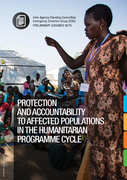
This note sets out actions to be undertaken throughout the humanitarian programme cycle (HPC) to fulfill commitments on Accountability to Affected Populations (AAP) and to ensure that protection is central to humanitarian response. It sets out the f
...
undamental link between accountability systems and protection in humanitarian action, and then describes, for each stage of the HPC, the accountability mechanisms that should be established and actions required at country-level.
more
This thematic brief accompanies the Working for Health 2022–2030 Action Plan, serving as a rationale to the related actions of the Working for Health progression model (see Annex). The brief aims to inform Member States, non-state actors and othe
...
r users of the Action Plan to guide action on investments on strengthening protection and performance of the health and care workforce, including the relevant policy landscape, key challenges and future directions.
In doing so, it provides an expanded exploration of the themes beyond what is provided in the Action Plan itself and reflects the topical issues and considerations that shaped its design, including those issues identified in the World Health Assembly Resolution WHA74.14 to protect, safeguard and invest in the health and care workforce (1). The importance of these themes was again emphasized at the Seventy-fifth World Health Assembly, when Resolution WHA75.17: Human resources for health was co-sponsored by over 100 Member States, calling for the adoption and implementation of the Working for Health 2022–2030 Action Plan and utilization of the related Global Health and Care Worker Compact
more
The Infant and young child feeding counselling: an integrated course includes this Director’s guide, a Trainer’s guide and Participant’s manual. Additional tools include: Course handouts; Guidelines for follow-up after training; Supportive sup
...
ervision/mentoring and monitoring and an accompanying toolkit; a slide set for the trainer; a set of 24 Counselling cards and Guidance on the use of counselling cards. The course includes 79 sessions arranged within 8 modules, covering a range of topics, including breastfeeding, complementary feeding, growth assessment and monitoring, HIV and infant feeding, and infant and young child feeding counselling. Course facilitators can decide which sessions to cover, depending on the specific learning needs of the health workers in your community.
more
The Director’s guide contains all the information that the course director needs in order to plan and prepare for the course, to decide which modules and sessions will be included in the training, and to select trainers and participants, starting several months before the actual training. It conta
...
ins lists of the materials and equipment needed, and sample timetables. Copies of the forms to be photocopied and used during the course can be found in the Course handouts. The Director’s guide also describes the director’s role during the course itself.
more


The World Health Organization (WHO) is releasing the second edition of its Global Accelerated Action for the Health of Adolescents (AA-HA!) guidance. The document aims to equip governments to respon
...
d to the health and well-being challenges, opportunities and needs of adolescents.
The guidance provides the latest available data on adolescent health and well-being. It also outlines an updated list of core indicators that data should be collected on. Globally, road injury was the top cause of death for adolescent males in 2019. Among female adolescents, the leading causes of death were diarrhoeal diseases among the younger group (10-14 years) and tuberculosis (TB) in the older group (15-19 years).
Over the last 20 years, mortality rates have declined among adolescents globally, with the largest decline in older (15–19 years) adolescent girls. For non-fatal diseases, the burden has not improved over the past two decades, with the main causes of ill health in this category being: mental health conditions (depressive and anxiety disorders, childhood behavioural disorders), iron deficiency anaemia, skin diseases and migraine.
Adolescent well-being depends on a range of factors, including healthy food, education, life skills and employability, connectedness, feeling valued by society, safe and supportive environments, resilience, and the freedom to make choices. To take an appropriately holistic approach, the guidance outlines how to take crosscutting action to support adolescent health and well-being, with mutually reinforcing interventions across sectors, such as health, education, social protection, and telecommunications. Targeted efforts are also required to engage adolescents, as they trust health systems less than adults do and are especially vulnerable to modern-day trends, like online bullying and gaming.
more
