
Filter
2098
Text search:
epidemic
indicators
Featured
Recommendations
172
New Publications
641
Language
Document type
No document type
1286
Studies & Reports
348
Guidelines
223
Strategic & Response Plan
100
Manuals
90
Training Material
16
Fact sheets
16
Situation Updates
13
Infographics
4
Online Courses
1
Countries / Regions
Global
106
Sierra Leone
78
Liberia
71
India
68
Kenya
63
Ethiopia
58
Uganda
54
Zambia
52
South Africa
52
Nigeria
48
Nepal
48
Latin America and the Carribbean
45
Africa
44
Tanzania
42
Western and Central Europe
40
Namibia
39
Rwanda
35
Ghana
32
Malawi
30
Lesotho
30
Bangladesh
28
Myanmar / Burma
28
Guinea
27
Congo, Democratic Republic of
26
Zimbabwe
24
Eastern Europe
24
Asia
21
South–East Asia Region
20
Ukraine
17
Botswana
17
Cambodia
16
Senegal
14
East and Southern Africa
14
Philippines
12
South Sudan
11
Syria
11
Indonesia
11
Mozambique
10
Eswatini/ Swaziland
10
Yemen
10
West and Central Africa
10
Russia
10
Cameroon
9
Brazil
9
Burkina Faso
8
Pakistan
8
Haiti
7
Thailand
7
Somalia
6
Georgia
6
Sudan
5
Colombia
5
Middle East and North Africa
5
Côte d’Ivoire / Ivory Coast
4
Western Pacific Region
4
Eastern Europe and Central Asia
4
Albania
4
Tajikistan
4
Moldova
4
Iraq
3
Jordan
3
Afghanistan
3
Germany
3
Lebanon
3
Turkey
3
Argentina
3
Burundi
3
Southern Africa
3
Vietnam
3
North America
3
Mali
2
USA
2
China
2
Papua New Guinea
2
Benin
2
North Macedonia
2
Madagascar
2
Sri Lanka
2
Chile
2
Paraguay
2
Venezuela
2
Armenia
2
Laos
2
Timor Leste/ East Timor
2
Kazakhstan
2
Jamaica
2
Morocco
1
Saudi Arabia
1
Niger
1
Togo
1
Egypt
1
Chad
1
Gambia
1
Singapore
1
Central African Republic
1
Dominican Republic
1
Peru
1
Honduras
1
Ecuador
1
Bolivia
1
Greece
1
Angola
1
Other region
1
Bhutan
1
Poland
1
Bulgaria
1
Estonia
1
Lithuania
1
Iran
1
Kyrgyzstan
1
Turkmenistan
1
France
1
Mauritius
1
Tunisia
1
United Kingdom
1
Portugal
1
Spain
1
Authors & Publishers
Publication Years
Category
Countries
931
Public Health
130
Key Resources
109
Clinical Guidelines
103
Women & Child Health
43
Capacity Building
23
Pharmacy & Technologies
11
Toolboxes
HIV
345
TB
168
COVID-19
132
Ebola & Marburg
77
Rapid Response
58
Planetary Health
55
2.0 Rapid Response
51
Mental Health
49
NCDs
42
Conflict
35
Health Financing Toolbox
33
NTDs
31
Global Health Education
30
AMR
29
Caregiver
28
Malaria
27
Cholera
21
Polio
20
Zika
18
Refugee
17
Disability
13
Natural Hazards
13
Pharmacy
9
Specific Hazards
2
Social Ethics
2

Growing emergencies and displacements across the world demand increasingly complex interventions and responses. The World Health Organization (WHO) has developed Malaria control in emergencies: a field manual to provide technical guidance to help partners respond effectively to malaria in emergency
...

This publication provides an overview of evidence and guidance on the growing challenge of workplace heat stress in the context of climate change. It highlights the health and productivity risks faced by billions of workers, especially in manual labor sectors. The report details the physiological, s
...

Malaria remains a significant public health concern in the SADC region, accounting for 20% of childhood deaths, as well as prompting numerous outpatient visits and hospitalisations. Around three-quarters of the population, including 35 million children under the age of five and 8.5 million pregnant
...
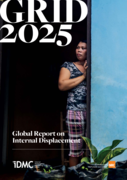
IDMC's Global Report on Internal Displacement (GRID) is the authoritative source for data and analysis on the state of internal displacement for the previous year.
The global cholera statistics for 2024, showing an increase in both the number of people who fell sick and died from the disease.
Reported cholera cases rose by 5% and deaths by 50% in 2024 compared to 2023, with more than 6000 people dying from a disease that is both preventable and treatable. Whi
...

WHO, as the coordinating authority on international health, supports countries in protecting public health through evidence-based policies and actions. Considering the significant health burden and the multiple potential benefits of interventions, the WHO Air Quality, Energy and Health Unit aims to
...

Building on the WHO guidelines for disclosure to children up to age 12 in 2011, this implementation guidance provides evidence on existing interventions that support children and adolescents living with HIV in the process of disclosure. It includes interventions that focuses on safe disclosure, as w
...

Strengthening global health security to protect the world against future epidemics and pandemics requires well-tested and decentralized capacities for the local detection and rapid containment of outbreaks of infectious disease. For such capacities to translate into effective response actions, ind
...

In an era of constrained resources and tightening budgets, strategic prioritization in tuberculosis (TB) programming is more critical than ever. Countries must make informed decisions to allocate limited resources effectively - maximizing impact, preventing avoidable deaths, and sustaining progress
...
Adapting HIV testing services in the context of reduced and declining funding. Presentation May 2025

Developed through broad and inclusive consultation, and aligned with the WHO Global Health Sector Strategies and the Sustainable Development Goals, the framework promotes a people-centred approach and antimicrobial stewardship across 5 key domains: prevention and response, surveillance, research and
...

World malaria report 2025
recommended
Addressing the threat of antimalarial drug resistance. This year’s report spotlights the growing threat of antimalarial drug resistance. Partial resistance to artemisinin derivatives – the backbone of malaria treatments after failures of chloroquine and sulfadoxine-pyrimethamine – has now b
...

Measles is one of the most contagious diseases for humans. It is caused by a paramyxovirus virus, manifesting as a febrile rash illness. The incubation period for measles usually is 10–14 days (range 7–23 days) from exposure to symptom onset. Initial symptoms (prodrome) generally consist of feve
...
This plan is a milestone in the country's response to HIV, AIDS, STIs, and TB for LESBIAN, GAY, BISEXUAL, TRANSGENDER, INTERSEX People

A practical toolkot

National Guidelines
Archives of Medicine vo.7 no.5:10
Individuals infected with human immunodeficiency virus (HIV) often develop
multiple complications and comorbidities, among them, opportunistic infections.
The highest incidence of opportunistic infections was reported in the group
of patients with CD4 lymphocyte
...

Lessons learned from recent public health events such as the COVID-19 pandemic, Ebola virus disease, Zika virus disease outbreaks, and other public health threats, including earthquakes and floods, have highlighted the need for countries to continuously develop, strengthen, and maintain capacities r
...
