
Filter
776
Text search:
livelihood
vulnerability
Featured
60
294
Language
Document type
459
153
53
44
36
13
11
5
1
1
Countries
53
34
31
29
25
25
25
23
22
19
19
18
15
14
13
12
11
10
10
10
10
9
9
8
8
8
7
7
6
6
6
6
6
6
5
5
5
4
4
4
4
4
4
4
4
3
3
3
3
3
3
3
3
2
2
2
2
2
2
2
2
2
2
2
2
2
2
1
1
1
1
1
1
1
1
1
1
1
1
1
1
1
1
1
1
1
1
1
Authors & Publishers
Publication Years
Category
345
117
27
18
7
5
Toolboxes
83
79
69
57
51
37
28
28
20
18
11
7
6
5
4
3
2
1
1
1
1
1

This paper, originally presented as a Sussex Development Lecture, asks how the Ebola crisis might offer a lens to reflect on interlaced challenges around curbing inequalities, accelerating sustainability, and building inclusive, secure societies, and why these matter so much. And it discusses why ad
...
This real-time learning process was carried out in order to identify the gaps and needs within World Vision’s current Ebola Virus Disease (EVD) response in Sierra Leone and to inform World Vision on how other surrounding countries (specifically those with national offices such as Mali, Ghana, Nig
...

In response to a call by the United Nations Secretary-General and the Governments of Guinea, Liberia and Sierra Leone, an international team conducted an Ebola Recovery Assessment.The aim was to contribute towards laying the foundation for short-, medium- and long-term recovery while the medical eme
...
An international field study by African and German theologicans and health workers.

- Regional analysis of acute food insecurity: Current situation (February-March 2015)
The number of new Ebola infections in Sierra Leone is declining, despite the outbreak continuing to claim lives. New cases have dropped to around 9-12 per week, according to recent WHO figures. There were over 500 cases per week at the height of the crisis around late November 2014.
The impact on t
...
Disaster Recovery Toolkit
The building damage assessment, conducted between March 2010 and February 2011 by the Government of Haiti and the United Nations system, showed that more than 400,000 buildings were damaged or destroyed, of which approximately 218,000 could be occupied without repairs (green category), 105,000 were
...
This publication by UNAIDS, UNDP and the International Organisation for Migration examines various dimensions related to migration and HIV and AIDS.


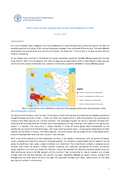
On 3 October 2016, Category 4 Hurricane Matthew cut a path of destruction across the Republic of Haiti. Its devastating winds and heavy rainfall caused widespread damage in the southwest of the country. The most affected departments are Grande-Anse, Sud, Sud-Est and Nippes. The death toll in the cou
...
The magnitude of urban disasters, high population densities, and a complex social, political and institutional environment has challenged the manner in which humanitarian agencies are used to working. Humanitarian agencies are now grappling with how to change their approaches to this reality. This d
...

The Global Early Warning – Early Action (EWEA) report on food security and agriculture is developed by the Food and Agriculture Organization of the United Nations (FAO). The report is part of FAO’s EWEA system, which aims to translate forecasts and early warnings into anticipatory action.
