
Filter
1499
Text search:
gestión
Featured
130
308
Language
Document type
629
286
232
116
91
64
43
16
7
5
5
2
Countries
153
143
87
86
61
47
44
40
39
37
34
34
30
27
22
20
19
17
15
9
9
9
8
7
5
5
4
4
4
4
4
4
3
3
3
3
3
3
3
3
3
3
3
3
2
2
2
2
2
2
2
1
1
1
1
1
1
1
1
1
1
1
1
1
1
1
1
1
1
1
1
1
1
1
1
1
1
1
Authors & Publishers
Publication Years
Category
673
118
77
69
45
22
21
Toolboxes
207
106
68
62
51
50
43
42
38
35
34
33
33
23
18
15
14
13
8
6
4
3
2
1
1

Le Plan Stratégique National de Lutte contre le Paludisme 2023–2026 du Togo définit les grandes orientations pour réduire de 65 % l’incidence et la mortalité liées au paludisme d’ici 2026, en comparaison avec les niveaux de 2022. Élaboré par le Programme National de Lutte contre le Pa
...

Le document « Directives nationales pour la prise en charge du paludisme en RDC », publié en 2023 par le PNLP et le Ministère de la Santé, définit les protocoles officiels pour diagnostiquer et traiter le paludisme sur l’ensemble du territoire. Il recommande l’usage systématique du te
...
Le Plan Stratégique National de Lutte contre le Paludisme 2023–2027 de la Guinée vise à réduire de 80 % l’incidence et la mortalité liées au paludisme d’ici 2027, en s’appuyant sur les leçons des années précédentes. Il prévoit des actions renforcées de prévention (moustiquaire
...
Le Plan Stratégique National de Lutte contre le Paludisme au Sénégal 2021–2025 a pour objectif de réduire l’incidence et la mortalité liées au paludisme d’au moins 75 % par rapport à 2019 et d’interrompre la transmission locale dans au moins 80 % des districts éligibles. Il repos
...
Todos los países de la Región de las Américas en los que la malaria es endémica han asumido el reto de eliminar la enfermedad y de poner en marcha medidas para orientar sus programas y estrategias de salud en esa dirección. En este manual se explica cómo ejecutar las medidas con vistas a logra
...
This document explains the scope of the logistics services provided by the National Logistics Cluster, in support of the COVID-19 response in Nepal, how humanitarian actors and Nepal Government may access these services, and the conditions under which these services will be provided. The objective o
...

Prevention of and Response to Sexual Exploitation, Abuse and Harassment (PRSEAH) is a core action to be implemented as a part of WHO’s mandate in the countries in which it has activated the incident management system.

A Public Health Emergency Operations Centre (PHEOC) is a physical location for the coordination of information and resources to support incident management activities. PHEOCs are also referred to as “operations centres”, “situation rooms” and “command centres”. Experience has shown that
...

This channel is an introduction to simulation exercises and their value as part of wider emergency preparedness to raise awareness among a non-technical audience.
The document “Hospital Preparedness for Epidemics” published by the World Health Organization (WHO) provides guidance on how hospitals and healthcare facilities can prepare for and respond effectively to infectious disease outbreaks. It outlines key components of epidemic preparedness, including
...
Disease Commodity Packages
recommended
The DCPs are a series of disease specific datasheets that list the critical commodities and the technical specifications for each commodity per disease. The DCPs inform Member States and operational partners of commodity requirements and potential gaps in the health emergency supply chain. From an o
...
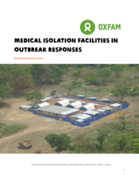
This technical briefing paper details the construction and setup of medical isolation facilities in support of infectious disease outbreak responses.

The document “Guidance on Law and Public Health Emergency Preparedness and Response” provides recommendations for governments on how laws and policies can support effective preparation for and response to public health emergencies such as epidemics or pandemics. It explains the role of legal fra
...
This review article provides a comprehensive overview of Ebola Virus Disease (EVD), covering its epidemiology, clinical presentation, diagnosis, treatment, and prevention. It explains that Ebola is a severe zoonotic infection caused by the Ebola virus, most likely originating from fruit bats and tra
...
The Communication Toolbox offers practical guidance for program managers who want to communicate more effectively with program participants and community member . For emergency programs and development programs
Emergency Capacitiy Building Project agencies, led by CARE, have developed the Shelter Accountability Resources for project managers and decision-makers in humanitarian shelter programs.
As a guide it is also intended to be useful for Shelter Cluster coordinators, and other staff who would like t
...
Accessed November 2014
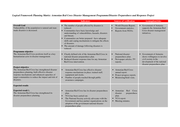
This note sets out actions to be undertaken throughout the humanitarian programme cycle (HPC) to fulfill commitments on Accountability to Affected Populations (AAP) and to ensure that protection is central to humanitarian response. It sets out the fundamental link between accountability systems and
...
