
Filter
1060
Text search:
enfermedades
no
transmisibles
Featured
60
89
Language
Document type
329
188
180
92
84
53
39
26
16
14
14
10
10
3
1
Countries
373
67
66
41
22
19
18
17
16
16
13
13
11
9
8
8
8
6
5
4
4
3
3
3
3
3
3
3
2
2
2
2
2
2
2
2
2
2
1
1
1
1
1
1
1
1
1
1
1
1
1
1
1
1
1
1
1
1
1
1
1
1
1
1
1
1
1
1
Authors & Publishers
Publication Years
Category
624
203
137
27
24
19
2
Toolboxes
550
78
44
42
38
22
20
12
10
10
10
10
8
6
5
5
4
4
3
3
3
2
1

Diabetes is not new to South-East Asia, since this condition was first described by Indian and Egyptian physicians three and a half thousand years ago. Diabetes is a serious, chronic disease characterized by chronic elevation of blood glucose and disturbance of carbohydrate, fat and protein metaboli
...

The epidemiology of adult-onset type 1 diabetes (T1D) incidence is not well-characterized due to the historic focus on T1D as a childhood-onset disease.
Disease epidemiology has a deeper relationship with the dynamic nature of culture. Health behaviors in general are largely shaped by the cultural norms and customs in a society. A mere identification of a behavior could be only a layer on the outer sphere of a particular disease epidemiology and the
...
Objectives Our study aimed to systematically review the literature and synthesise findings on potential associations of built environment characteristics with type 2 diabetes (T2D) in Asia.
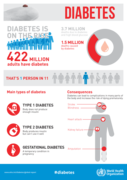
Infograpth from 2016, Diabetes is on the rise. Risk factors for type 2 diabetes. Genetics, age and family history of diabetes can increase the likelihood of becoming diabetic and cannot be changed.
Given that only 1.52 million of the 8.75 million people living with type 1 diabetes around the world in 2022 were less than 20 years old, the lack of data available for adult populations presents a stark gap in the research. Without rapid diagnosis and appropriate treatment, type 1 diabetes leads to
...

Does Diabetes make someone vulnerable to getting COVID-19:
People with Diabetes are not more likely to get the virus compared to the general public.
However, if they contact CoVID-19, people with diabetes are more likely to have serious complications and become seriously ill from COVID-19, than t
...

The IDF Guide for Diabetes Epidemiology Studies has been developed to create standardized epidemiological methods in diabetes studies to enable researchers to conduct high-quality studies that generate robust data

The document "Global Report on Diabetes" by the World Health Organization (WHO) provides an in-depth analysis of diabetes as a global health challenge. It covers the rising prevalence of the disease, the associated risk factors, and the increasing burden on healthcare systems, particularly in low- a
...

Diabetes is a serious, chronic disease that occurs either when the pancreas does not produce enough insulin (a hormone that regulates blood sugar, or glucose), or when the body cannot effectively use the insulin it produces. Diabetes is an important public health problem, one of four priority noncom
...
Brazzaville – Africa is expected to experience the highest increase in diabetes globally. The number of people suffering from the disease is predicted to rise to 55 million by 2045—a 134% spike compared with 2021. At 70%, the continent also has the world’s highest number of people who do not k
...
The number of people with diabetes has risen from 108 million in 1980 to 422 million in 2014.
The global prevalence of diabetes* among adults over 18 years of age has risen from 4.7% in 1980 to 8.5% in 2014.
Diabetes prevalence has been rising more rapidly in middle- and low-income countries.
Dia
...
This short guide to the Global Diabetes Compact explains what diabetes is and why action to improve prevention efforts, diagnosis and treatment is so urgent. It outlines the key asks associated with the Compact and emphasizes that increasing access to insulin, strengthening health systems and meanin
...

This two-site randomised trial compared the effectiveness of a voluntary sector-led, community-based diabetes prevention programme to a waiting-list control group at 6 months, and included an observational follow-up of the intervention arm to 12 months.
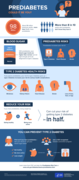
96 million American adults - more than 1 - 3 - have prediabetes

The Resolution Population and Individual Approaches to the Prevention and Management of Diabetes and Obesity was approved by the 48th Directing Council of the Pan American Health Organization, September 29- October 3, 2008, in response to the epidemic of obesity and diabetes currently affecting the
...
The evolving epidemic of type 2 diabetes mellitus has challenged health-care professionals. It stands among the leading causes of mortality in the present world. It warrants new and versatile approaches to improve mortality and the associated huge quality-adjusted life years lost to it once diagnose
...
Diabetes is a major public health problem in the Americas and worldwide, demanding special attention and integrated response. It is estimated that more than 62 million adults are living with diabetes in the Americas. The projections show that diabetes prevalence will continue to increase to at least
...
If you’re interested in preventing type 2 diabetes, this guide can help you get started. Congratulations on taking the first step! By reading this, you’re already on your way. Prediabetes puts you on the road to possibly getting type 2 diabetes. Find out now, in less than 1 minute, if you may ha
...
Diabetes is a serious, chronic disease that occurs either when the pancreas does not produce enough insulin (a hormone that regulates blood sugar, or glucose), or when the body cannot effectively use the insulin it produces. Diabetes is an important public health problem, one of four priority noncom
...
