
Filter
269
Text search:
Finanzierung
Featured
23
28
Language
Document type
125
91
17
12
6
5
4
3
3
2
1
Countries
87
78
10
7
4
3
3
2
2
1
1
1
1
1
1
1
1
1
1
1
1
1
1
1
1
1
1
1
Authors & Publishers
Publication Years
Category
15
3
1
Toolboxes
118
70
31
11
8
6
5
4
4
3
2
1
1
1

Gesetz über den Aufenthalt, die Erwerbstätigkeit und die Integration von Ausländern im Bundesgebiet; Stand: Neugefasst durch Bek. v. 25.2.2008 I 162
Zuletzt geändert durch Art. 1 G v. 27.7.2015 I 1386.
Siehe insbesondere Abschnitt 5 - Aufenthalt aus völkerrechtlichen, humanitären oder poli
...

Aufenthaltsverordnung vom 25. November 2004. Stand: Zuletzt geändert durch Art. 1 V v. 8.4.2015 I 599.
Siehe insbesondere Kapitel 2
"Einreise und Aufenthalt im Bundesgebiet", Abschnitt 5 "Aufenthalt aus völkerrechtlichen, humanitären oder politischen Gründen" !
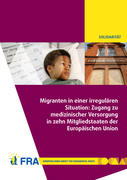
Dieser Bericht behandelt Rechtsvorschriften und Verfahren im Zusammenhang mit dem Zugang von Migranten in einer irregulären Situation zu medizinischer Versorgung in zehn EU-Mitgliedstaaten. Er konzentriert sich auf Migranten in einer irregulären Situation, nämlich jene die Einreise- oder Aufenent
...

Dieser Leitfaden enthält Informationen und praktische Tipps für die Beratung von Migrantinnen und Migranten. Er gibt Anregungen, wie die Fachstellen den Zugang zu ihren Angeboten erleichtern können und weist auf mehrsprachiges Informationsmaterial und Bezugsqüllen hin.

Ratgeber für ehrenamtliche HelferInnen und DolmetscherInnen im Umgang mit von Krieg und
Menschenrechtsverletzungen Betroffenen.
Eine Handreichung und Arbeitshilfe

Informationen zur Erstversorgung unbegleiteter, minderjähriger Flüchtlinge. Die Inobhutnahme und Erstversorgung unbegleiteter, minderjähriger Flüchtlinge in Hamburg.
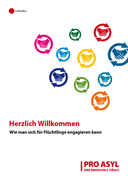
Die Broschüre, die im Auftrag des Bundesinnenministeriums vom Bundesamt für Migration und Flüchtlinge gestaltet wurde, gibt auf rund 130 Seiten zahlreiche Tipps, die den Alltag erleichtern. Sie beinhaltet zudem eine Vielzahl von (Internet-)Adressen zu Beratungsangeboten und weiterführenden Stell
...
Leitfaden für Fachpersonen des Gesundheitswesens. Grundlage des vorliegenden Handbuchs sind die aktuellen internationalen Leitlinien zur Diagnose und Behandlung der Tuberkulose.
Die vorliegende gekürzte Fassung ergänzt und aktualisiert das «Handbuch Tuberkulose 2012

Monatsschrift Kinderheilkunde December 2015, Volume 163, Issü 12, pp 1269-1286.
Stellungnahme der Deutschen Gesellschaft für Pädiatrische Infektiologie, der Gesellschaft für Tropenpädiatrie und Internationale Kindergesundheit und des Berufsverbandes der Kinder- und Jugendärzte

Informationen für ÄrztInnen und PsychotherapeutInnen. Diese Broschüre informiert über die Situation von Flüchtlingen in Deutschland, darüber, wie sich traumatische Erlebnisse bei Flüchtlingen auf die Gesundheit und das alltägliche Leben auswirken können und wie dies die ärztlichen und psyc
...

Die deutschen Hochschulen und Studentenwerke können auf eine jahrzehntelange Erfahrung bei der Integration von ausländischen Studierenden am Hochschul- und Forschungsstandort Deutschland zurückblicken. Die Integration von Flüchtlingen in Angebote zur Studienvorbereitung und das reguläre Studium
...
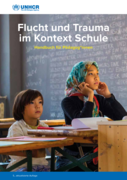
Viele Menschen fliehen vor Krieg und Verfolgung und suchen auch in Österreich Schutz. Unter ihnen sind Kinder und Jugendliche, die in ihrer Heimat und auf der Flucht Furchtbares erlebt haben. Vielleicht haben Sie selbst Flüchtlingskinder in Ihrer Klasse oder möchten sich intensiver mit den Themen
...
Handbuch für PädagogInnen

Abschlussbericht. Repräsentative Untersuchung von geflüchteten Fraün in unterschiedlichen Bundesländern in Deutschland

