
Filter
1373
Text search:
Acquired
causes
Featured
179
369
Language
Document type
767
216
209
79
37
34
15
8
2
2
2
1
Countries
76
39
37
35
34
34
29
27
27
27
26
25
25
23
22
22
21
21
17
16
15
12
11
10
9
8
8
8
8
6
6
6
6
5
5
5
4
4
4
4
4
4
4
4
4
4
4
3
3
3
3
2
2
2
2
2
2
2
2
2
1
1
1
1
1
1
1
1
1
1
1
1
1
1
1
1
1
1
1
1
1
Authors & Publishers
Publication Years
Category
567
136
72
70
54
38
13
Toolboxes
100
94
85
73
65
54
51
37
35
30
29
23
21
20
17
17
16
14
12
9
6
6
5
5
4
1

Pakistan Global Antibiotic Resistance Partnership (GARP) was formed in the wake of international and national efforts for AMR curtailment. A group of experts from microbiology, infectious diseases and veterinary medicine formed a core group at the organizational meet
...
Clinical care for severe acute respiratory infection: toolkit: COVID-19 adaptation
Sepsis remains a leading cause of mortality and morbidity, especially during the first five days of life and in low and middle-income countries (LMIC) [1]. Hospital infection also remains a major cause of mortality in children despite progress encountered in the last decades.
Detailed clinical guidelines focusing on dolutegravir-based regimens.

Nutrition training of health and agriculture workers can help to reduce child undernutrition. Specifically, trained health extension workers cancontribute through frequent nutrition counselling of caregivers. Evidence from systematic reviews has showed that providing nutrition training targeting hea
...

This publication provides managers with guidance on how to create basic HIV prevention cascades as a starting point to enhance their ability to monitor and improve their programming and to facilitate comparisons of programme effectiveness across sites.
Eastern and Southern Africa
English Manual and Guideline on World about Food and Nutrition, Health and Epidemic; published on 30 Nov 2021 by USAID
The Fourth National Climate Assessment (NCA4) fulfills that mandate in two volumes. This report, Volume II, draws on the foundational science described in Volume I, the Climate Science Special Report (CSSR).2 Volume II focuses on the human welfare, societal, and environmental elements of climate cha
...
Globally, approximately 56.8 million people are in need of palliative care
services; 78% of them living in low and middle-income country yet only
about 12% have their needs being met causing great suffering for many.


This Commission report aims to contribute to a new era of multilateral cooperation based on strong UN institutions to reduce the dangers of COVID-19, forestall the next pandemic, and enable the world to achieve the agreed goals of sustainable development, human rights, and peace that governments are
...

Nat Commun 9, 5370 (2018). https://doi.org/10.1038/s41467-018-07804-8. Mycobacterium ulcerans is the causative agent of Buruli ulcer, a neglected tropical skin disease that is most commonly found in children from West and Central Africa. Despite the severity of the infection, therapeutic options are
...

The WHO Global Antimicrobial Resistance and Use Surveillance System (GLASS) was launched in 2015 to foster AMR surveillance and inform strategies to contain AMR. The system started with surveillance of AMR in bacteria causing common human infections and has expanded its scope to include surveillance
...

Obesity in all age groups, including children and adolescents, is a public health challenge across all settings. Obesity is now classified as a complex multifactorial chronic disease and not just a risk factor for other noncommunicable diseases and comorbidities. Recognizing the significance of prim
...
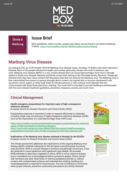
Issue Brief Marburg virus disease (MVD)
recommended
Issue Brief No. 40 provides healthcare professionals with the most relevant treatment guidelines, prevention measures and training material on MVD
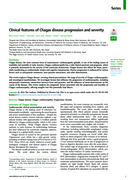
The Lancet Regional Health Americas Volume 37100832 September 2024

Trop. Med. Infect. Dis. 2022, 7, 152. https://doi.org/10.3390/tropicalmed7080152

ATIC Newsletter, Vol 15, Issue 1,
February 2022.
