
Filter
1296
Text search:
prolonged
exposure
Featured
186
331
Language
Document type
656
284
190
79
36
26
15
5
3
2
Countries
96
52
41
31
26
24
23
23
21
18
17
17
17
16
15
13
12
12
11
11
10
10
9
9
8
8
7
7
7
6
6
6
6
5
5
5
5
5
5
5
4
4
3
3
3
3
3
3
3
3
2
2
2
2
2
2
2
2
2
1
1
1
1
1
1
1
1
1
1
1
1
1
1
1
1
1
1
1
1
1
1
1
1
1
1
1
1
1
1
1
Authors & Publishers
Publication Years
Category
424
136
77
76
52
17
16
Toolboxes
132
122
111
60
49
47
41
40
36
36
29
28
26
24
23
19
18
17
15
12
9
9
6
1
Extreme heat events (EHEs) are a leading cause of weather-related injury and death in the United States, and under a changing climate, these meteorological episodes are predicted to increase in both frequency and intensity. Prolonged heat
...
Abstract: Posttraumatic stress disorder (PTSD) is a chronic psychological disorder that can develop after exposure to a traumatic event. This review summarizes the literature on the epidemiology, assessment, and treatment of PTSD. We provide a revie
...

A WHO-ITU Standard.
Nearly 50% of people aged 12-35 years – or 1.1 billion young people – are at risk of hearing loss due to prolonged and excessive exposure to loud sounds, including music the
...
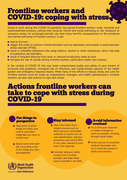
Going to work during this COVID-19 pandemic has placed frontline workers under immense and unprecedented pressure, putting their physical, mental and social well-being at risk. Exposure to excessive stress, for
...

Going to work during this COVID-19 pandemic has placed frontline workers under immense and unprecedented pressure, putting their physical, mental and social well-being at risk. Exposure to excessive stress, for
...

Recovery from COVID-19 has been challenging in Guatemala. As a result of the prolonged socio-economic impact of the pandemic, the average poverty rate nationwide has increased by almost 5%. This rise in the poverty level further exacerbates preexist
...
Interim guidance 2 February 2021 . Available in Arabic, Chinese, English, French, Ukranian, Russian
Health workers are at the front line of the COVID-19 outbreak response and as such are exposed to different hazards that put them at risk. Occupational hazards include
...
COVID-19: occupational health and safety for health workers: interim guidance, Interim guidance 2 February 2021
Health workers are at the front line of the COVID-19 outbreak response and as such are exposed to different hazards that put them at risk. Occupational hazards include
...
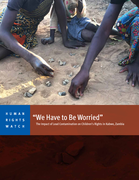
Children in Kabwe are especially at risk because they are more likely to ingest lead dust when playing in the soil, their brains and bodies are still developing, and they absorb four to five times as much lead as adults. The consequences for children who are exposed to high levels of lead and are no
...
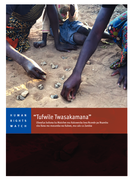
Children in Kabwe are especially at risk because they are more likely to ingest lead dust when playing in the soil, their brains and bodies are still developing, and they absorb four to five times as much lead as adults. The consequences for children who are exposed to high levels of lead and are no
...

The article "The silent epidemic of COPD in Africa" discusses the under-recognized yet significant prevalence of chronic obstructive pulmonary disease (COPD) in Africa. Despite being the third leading cause of death worldwide, COPD remains poorly studied and largely unknown in sub-Saharan Africa. Th
...

The webpage provides detailed information about asbestosis, a lung disease caused by inhaling asbestos fibers. It outlines various asbestos-related diseases, including benign and malignant pleural conditions as well as lung cancer. Asbestosis is described as a diffuse fibrotic disease of lung tissue
...
Interim guidance 2 February 2021 . Available in Arabic, Chinese, English, French, Ukranian, Russian
Health workers are at the front line of the COVID-19 outbreak response and as such are exposed to different hazards that put them at risk. Occupational hazards include
...

When a person is infested with scabies mites the first time, symptoms typically take 4-8 weeks to develop after being infested. However, an infested person can transmit scabies, even if they do not have symptoms. Scabies usually is passed by direct, prolon
...

A Product of the Asian American Psychological Association Leadership Fellows Program | Information about: What is a traumatic event? | Types of traumatic events | Complex trauma | Common symptoms of childhood exposure to trauma and violence | Popul
...

Exposure to air pollution has significant adverse health effects, leading to nearly 1 in every 8 deaths globally. Air pollution affects all age groups, from unborn children to older people, in both high- and low-income nations.
Education material for teachers of midwifery
Midwifery education modules - second edition

WHO recommends that pre-exposure prophylaxis (PrEP) be offered as an additional prevention choice for HIV-negative individuals at substantial risk of HIV infection as part of combination prevention approaches.
HIV drug resistance has been rarely
...
Air pollution is one of the leading causes of health complications and mortality worldwide, especially affecting lower-income groups, who tend to be more exposed and vulnerable. This study documents the relationship between ambient air pollution exposure
...
