
Filter
702
Text search:
postpartum
family
planning
Featured
67
270
Language
Document type
489
97
47
29
19
12
3
2
2
1
1
Countries
42
41
39
33
29
25
23
20
20
19
18
17
17
17
16
14
11
11
8
7
7
6
6
6
5
5
4
3
3
3
3
3
3
3
2
2
2
2
2
2
2
2
2
2
2
2
1
1
1
1
1
1
1
1
1
1
1
1
1
1
Authors & Publishers
Publication Years
Category
415
145
60
34
26
19
Toolboxes
43
28
20
12
9
8
7
7
6
6
5
3
1
1
1
1
1
1
1
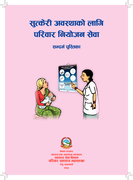
-By Nepal government, Ministry of Population and Health, Health Service Department, Family Health Section. Location: Teku, Kathmandu.
Contents include:
- Current situation in Nepal regarding postnatal care and
...
This publication is designed to be used by programme planners and managers as a resource when designing interventions to integrate postpartum family plann
...
DHS Working Paper No. 133

Updated to Reflect the 2009 Medical Eligibility Criteria of the World Health Organization
The Government of Malawi’s Health Sector Strategic Plan II highlights the importance of service integration; however, in practice, this has not been fully realized. We conducted a mixed methods evaluation of efforts to systematically implement integrated
...
This landscape analysis aims to:
1. Identify and document supportive policies and best practices in family planning program implementation
2. Assess the quality of ...
1. Identify and document supportive policies and best practices in family planning program implementation
2. Assess the quality of ...
Advance Family Planning - Advocacy Portfolio
recommended
Adapted from well-established decision-making concepts and honed through practical application in resource-limited settings, the AFP Advocacy Portfolio includes:
1. Advocate for Family Planning, an
...
his course provides an overview of the basic information relevant to FP programs and services, including rationale for voluntary FP, contraceptive method considerations, contraceptive options (including short-acting, long-acting, and permanent methods), and FP for clients with special needs. It also
...
The Blueprint is intended to guide programming, resource allocation, and commitments to achieve the national objective of a contraceptive prevalence rate (CPR) of 36 percent by 2018.
Notre objectif est d’augmenter l’investissement financier et l’engagement politique nécessaires à l’accès pour tous à la planification familiale volontaire de qualité, à travers des techniques de plaidoyer fondées sur des résultats de recherche.

This policy will serve as a cornerstone from which to address the accessibility of Family Planning services and to encourage its integration with services for HIV/AIDS, maternal health, child health
...





Policy briefs produced for FP2020 and other countries, presenting analysis of Family Planning Effort (FPE) scores from the current and previous rounds. Research and policy implications based on the
...
