
Filter
1232
Text search:
mass
vaccination
Featured
139
319
Language
Document type
536
234
208
103
79
25
23
13
5
3
2
1
Countries
62
54
31
30
30
30
27
26
26
22
22
20
19
18
18
17
16
15
15
15
15
13
13
13
13
12
12
11
11
11
10
9
9
9
8
8
8
7
7
7
6
6
6
5
5
5
5
5
4
4
4
4
4
4
4
4
4
3
3
3
3
2
2
2
2
2
2
2
2
2
2
2
2
2
1
1
1
1
1
1
1
1
1
1
1
1
1
1
1
1
1
1
1
1
1
1
1
1
1
1
1
1
1
1
Authors & Publishers
Publication Years
Category
539
117
76
76
53
10
8
1
Toolboxes
190
54
51
44
39
38
36
36
36
34
29
28
25
23
22
20
17
12
12
11
10
7
6
3
3
1
Training material
10 points from field experience

Children are at high risk of dog bites and contracting rabies. Forty percent of reported rabies cases worldwide are children under the age of fifteen. In our project areas, the proportion of children dying is often even higher. Rabies most often persists in poor communities and rural regions of deve
...
This document provides guidance on interventions to prevent vaccine-preventable disease outbreaks in the context of mass population movement resulting from the ongoing crisis in Ukraine.

The WHO Guide on Oral Cholera Vaccines in Mass Immunization Campaigns provides guidance on the planning and implementation of oral cholera vaccine (OCV) campaigns. It covers key aspects such as when and where to use OCVs, vaccine specifications, and
...
Accessed on 13.05.2022
The Covid-19 pandemic has become Chile’s most consequential public health challenge in a century. Chile’s measures included guidance regarding, among other items, education, health (sick leaves, diagnoses, hospital capacity, partial and spatially targeted lockdowns),
...
Humanitarian emergencies result in a breakdown of critical health-care services and often make vulnerable communities dependent on external agencies for care. In resource-constrained settings, this may occur against a backdrop of extreme poverty, malnutrition, insecurity, low literacy and poor infra
...
Many of the countries in the European Region receiving refugees from Ukraine are already offering vaccination services to children and adults. This is important to mitigate the risk of COVID-19 transmission among people travelling or living in close
...

Emergency medical teams (EMTs) play an important role in strengthening health service networks in terms of their strategies and tactics for planning mass vaccination programs, especially in remote o
...
The technical note from the Global Task Force on Cholera Control (GTFCC) examines the risks and benefits of vaccinating pregnant women with WHO-prequalified oral cholera vaccines (OCVs) during mass vaccina
...

Mass vaccination campaigns to prevent coronavirus disease 2019 (Covid-19) are occurring in many countries; estimates of vaccine effectiveness are urgently needed
to support decision making. A coun
...
Herd immunity by mass vaccination offers the potential to substantially limit the continuing spread of COVID-19, but high levels of vaccine hesitancy threaten this goal. In a cross-country analysis
...
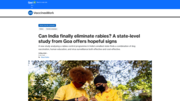
For more than 100 years, the clearest route to elimination of dog-mediated rabies has been via mass vaccination of the animal hosts. It’s worked in plenty of countries. Still, in others, like Indi
...
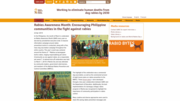
In the Philippines, the month of March is celebrated as Rabies Awareness Month (RAM) every year as decreed by presidential executive order. A massive information campaign around rabies prevention/control is conducted, along with a free, mass dog
...

The document presents Cameroon's National Response Plan for the 2018 cholera outbreak, covering August to October 2018. It highlights the epidemiological situation, with outbreaks reported in the North and Central regions and a total of 109 suspected cases and 9 deaths by July 2018. The plan outline
...

The Cholera Q&A Fact Sheet provides essential information about cholera, including its causes, symptoms, treatment, and prevention. Cholera is an acute diarrheal disease caused by Vibrio cholerae, which spreads through contaminated water and food. It leads to rapid dehydration and can be fatal if un
...

The larval stage of the parasite Taenia solium can encyst in the central nervous system causing neurocysticercosis, which is the main cause of acquired epilepsy in the countries in which the parasite is endemic. Endemic areas are those with the presence (or likely presence) of the full life cycle of
...

Int J Vaccines Vaccin 2016, 2(1): 00018, January 29, 2016
