Filter
885
Text search:
malnourished
Featured
91
345
Language
Document type
614
81
72
37
30
25
15
9
2
Countries
51
43
38
28
25
25
25
23
22
21
20
18
17
16
15
15
14
14
13
12
12
9
9
9
8
7
6
6
5
5
5
5
4
4
4
4
3
3
3
3
2
2
2
2
2
2
2
2
2
2
2
2
2
1
1
1
1
1
1
1
1
1
1
1
1
1
1
1
1
1
1
Authors & Publishers
Publication Years
Category
465
120
82
68
34
26
4
Toolboxes
58
49
35
29
27
26
24
23
21
17
14
13
11
7
6
6
5
4
4
3
2
1
1

This manual provides practical guidelines for the management of children with severe malnutrition. It seeks to promote the best available therapy so as to reduce the risk of death, shorten the length of time spent in hospital, and facilitate rehabilitation and full recovery. Emphasis is given to the
...

Despite improvements in recent years, the prevalence of undernutrition among women and children in Myanmar remains unacceptably high. One in three children are stunted and about 8% are acutely malnourished. Micronutrient deficiencies are common amon
...

Maternal and child malnutrition is a significant public health problem in South Sudan. Among children aged 6-59 months, 31% are stunted, 28% are underweight, and nearly 23% are acutely malnourished of which 13% are estimated to suffer from moderate
...
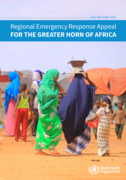
The Greater Horn of Africa is experiencing one of the worst food insecurity situations in decades. It is estimated
that more than 37 million people are in Integrated Food Security Phase Classification (IPC)1 phase 3 or above and approximately 7 million children under the age of five are acutely
...

According to the report:
More than 5,000 children have been killed or injured in the violence – an average of five children every day since March 2015.
More than 11 million children now need humanitarian assistance – nearly every child in Yemen.
More than half of the country’s
...
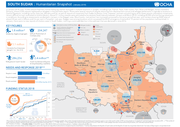
In January 2018, over 10,000 people fled their homes following clashes reported in multiple locations in Jonglei, including Yuai, Pultruk, Payai, Kuer-nyuon, Pieri, Waat and Walgak. Some crossed to
Ethiopia, where 2,300 people registered as refugees in the Gambela region. There were several report
...
This year’s MPI results show that more than two-thirds of the multidimensionally poor—886 millionpeople—live in middle-income countries. A further 440 million live in low-income countries. In both groups, data show, simple national averagescan hide enormous inequality inpatterns of povertywith
...
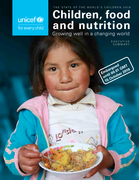
This 2019 edition of The State of the World’s Children (SOWC) examines the issue of children, food and nutrition, providing a fresh perspective on a rapidly evolving challenge. Despite progress in the past two decades, one third of children under age 5 are
...

After five consecutive below-average rains, the humanitarian crisis in the Horn of Africa is expanding and deepening.
Combined with insecurity and macroeconomic volatility, the impact of the drought on food and nutrition security has been devastating. Across Ethiopia, Kenya and Somalia, an estima
...


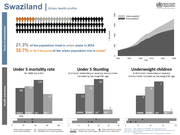
Accessed June 2015