
Filter
2327
Text search:
geographical
distribution
Featured
205
711
Language
2287
53
35
18
14
10
8
3
3
2
2
2
2
2
2
2
2
2
2
2
2
2
1
1
1
1
1
1
1
1
1
1
1
1
1
1
1
1
1
1
1
1
1
Document type
1210
473
286
153
127
27
19
16
6
4
3
1
1
Countries
130
100
66
63
59
54
50
48
44
43
43
42
42
41
40
34
32
32
31
30
22
21
20
19
18
18
18
17
16
16
15
14
14
13
13
13
13
12
12
11
10
9
9
8
8
8
7
7
6
5
5
5
5
5
5
5
5
4
4
4
4
4
4
3
3
3
3
3
3
3
3
3
3
3
2
2
2
2
2
2
2
2
2
2
2
2
2
2
2
2
1
1
1
1
1
1
1
1
1
1
1
1
1
1
1
1
1
1
1
1
1
1
1
1
1
1
1
1
Authors & Publishers
354
114
77
72
51
50
35
27
27
23
13
12
11
11
11
11
10
10
10
9
8
8
8
8
8
8
8
7
7
7
7
7
7
7
7
6
6
6
6
6
6
6
6
6
5
5
5
5
5
5
5
5
5
5
5
5
5
5
5
5
5
5
5
5
5
4
4
4
4
4
4
4
4
4
4
4
4
4
4
4
4
4
4
4
4
4
4
4
4
4
4
4
4
4
4
4
4
4
3
3
3
3
3
3
3
3
3
3
3
3
3
3
3
3
3
3
3
3
3
3
3
3
3
3
3
3
3
3
3
3
3
3
3
3
3
3
3
3
3
3
3
3
3
2
2
2
2
2
2
2
2
2
2
2
2
2
2
2
2
2
2
2
2
2
2
2
2
2
2
2
2
2
2
2
2
2
2
2
2
2
2
2
2
2
2
2
2
2
2
2
2
2
2
2
2
2
2
2
2
2
2
2
2
2
2
2
2
2
2
2
2
2
2
2
2
2
2
2
2
2
2
2
2
2
2
2
2
2
2
2
2
2
2
2
2
2
2
2
2
2
2
2
2
2
2
2
2
2
2
2
2
2
2
2
2
2
2
2
2
2
2
2
2
2
2
2
2
2
2
2
2
2
2
1
1
1
1
1
1
1
1
1
1
1
1
1
1
1
1
1
1
1
1
1
1
1
1
1
1
1
1
1
1
1
1
1
1
1
1
1
1
1
1
1
1
1
1
1
1
1
1
1
1
1
1
1
1
1
1
1
1
1
1
1
1
1
1
1
1
1
1
1
1
1
1
1
1
1
1
1
1
1
1
1
1
1
1
1
1
1
1
1
1
1
1
1
1
1
1
1
1
1
1
1
1
1
1
1
1
1
1
1
1
1
1
1
1
1
1
1
1
1
1
1
1
1
1
1
1
1
1
1
1
1
1
1
1
1
1
1
1
1
1
1
1
1
1
1
1
1
1
1
1
1
1
1
1
1
1
1
1
1
1
1
1
1
1
1
1
1
1
1
1
1
1
1
1
1
1
1
1
1
1
1
1
1
1
1
1
1
1
1
1
1
1
1
1
1
1
1
1
1
1
1
1
1
1
1
1
1
1
1
1
1
1
1
1
1
1
1
1
1
1
1
1
1
1
1
1
1
1
1
1
1
1
1
1
1
1
1
1
1
1
1
1
1
1
1
1
1
1
1
1
1
1
1
1
1
1
1
1
1
1
1
1
1
1
1
1
1
1
1
1
1
1
1
1
1
1
1
1
1
1
1
1
1
1
1
1
1
1
1
1
1
1
1
1
1
1
1
1
1
1
1
1
1
1
1
1
1
1
1
1
1
1
1
1
1
1
1
1
1
1
1
1
1
1
1
1
1
1
1
1
1
1
1
1
1
1
1
1
1
1
1
1
1
1
1
1
1
1
1
1
1
1
1
1
1
1
1
1
1
1
1
1
1
1
1
1
1
1
1
1
1
1
1
1
1
1
1
1
1
1
1
1
1
1
1
1
1
1
1
1
1
1
1
1
1
1
1
1
1
1
1
1
1
1
1
1
1
1
1
1
1
1
1
1
1
1
1
1
1
1
1
1
1
1
1
1
1
1
1
1
1
1
1
1
1
1
1
1
1
1
1
1
1
1
1
1
1
1
1
1
1
1
1
1
1
1
1
1
1
1
1
1
1
1
1
1
1
1
1
1
1
1
1
1
1
1
1
1
1
1
1
1
1
1
1
1
1
1
1
1
1
1
1
1
1
1
1
1
1
1
1
1
1
1
1
1
1
1
1
1
1
1
1
1
1
1
1
1
1
1
1
1
1
1
1
1
1
1
1
1
1
1
1
1
1
1
1
1
1
1
1
1
1
1
1
1
1
1
1
1
1
1
1
1
1
1
1
1
1
1
1
1
1
1
1
1
1
1
1
1
1
1
1
1
1
1
1
1
1
1
1
1
1
1
1
1
1
1
1
1
1
1
1
1
1
1
1
1
1
1
1
1
1
1
1
1
1
1
1
1
1
1
1
1
1
1
1
1
1
1
1
1
1
1
1
1
1
1
1
1
1
1
1
1
1
1
1
1
1
1
1
1
1
1
1
1
1
1
1
1
1
1
1
1
1
1
1
1
1
1
1
1
1
1
1
1
1
1
1
1
1
1
1
1
1
1
1
1
1
1
1
1
1
1
1
1
1
1
1
1
1
1
1
1
1
1
1
1
1
1
1
1
1
1
1
1
1
1
1
1
1
1
1
1
1
1
1
1
1
1
1
1
1
1
1
1
1
1
1
1
1
1
1
1
1
1
1
1
1
1
1
1
1
1
1
1
1
1
1
1
1
1
1
1
1
1
1
1
1
1
1
1
1
1
1
1
1
1
1
1
1
1
1
1
1
1
1
1
1
1
1
1
1
1
1
1
1
1
1
1
1
1
1
1
1
1
1
1
1
1
1
1
1
1
1
1
1
1
1
1
1
1
1
1
1
1
1
1
1
1
1
1
1
1
1
1
1
1
1
1
1
1
1
1
1
1
1
1
1
1
1
1
1
1
1
1
1
1
1
1
1
1
1
1
1
1
1
1
1
1
1
1
1
1
1
1
1
1
1
1
1
1
1
1
1
1
1
1
1
1
1
1
1
1
1
1
1
1
1
1
1
1
1
1
1
1
1
1
1
1
1
1
1
1
1
1
1
1
1
1
1
1
1
1
1
1
1
1
1
1
1
1
1
1
1
1
1
1
1
1
1
1
1
1
1
1
1
1
1
1
1
1
1
1
1
1
1
1
1
1
1
1
1
1
1
1
1
1
1
1
1
1
1
1
1
1
1
1
1
1
1
1
1
1
1
1
1
1
1
1
1
1
1
1
1
1
1
1
1
1
1
1
1
1
1
1
1
1
1
1
1
1
1
1
1
1
1
1
1
1
1
1
1
1
1
1
1
1
1
1
1
1
1
1
1
1
1
1
1
1
1
1
1
1
1
1
1
1
1
1
1
1
1
1
1
1
1
1
1
1
1
1
1
1
1
1
1
1
1
1
1
1
1
1
1
1
1
1
1
1
1
1
1
1
1
1
1
1
1
1
1
1
1
1
1
1
1
1
1
1
1
1
1
1
1
1
1
1
1
1
1
1
1
1
1
1
1
1
1
1
1
1
1
1
1
1
1
1
1
1
1
1
1
1
1
1
1
1
1
1
1
1
1
1
1
1
1
1
1
1
1
1
1
1
1
1
1
1
1
1
1
1
1
1
1
1
1
1
1
1
1
1
1
1
1
1
1
1
1
1
1
1
1
1
1
1
1
1
1
1
1
1
1
1
1
1
1
1
1
1
1
1
1
1
1
1
1
1
1
1
1
1
1
1
1
1
1
1
1
1
1
1
1
1
1
1
1
1
1
1
1
1
1
1
1
1
1
1
1
1
1
1
1
1
1
1
1
1
1
1
1
1
1
1
1
1
1
1
1
1
1
1
1
1
1
1
1
1
1
1
1
1
1
1
1
1
1
1
1
1
1
1
1
1
1
1
1
1
1
1
1
1
1
1
1
1
1
1
1
1
1
1
1
1
1
1
1
1
1
1
1
1
1
1
1
1
1
1
1
1
1
1
1
1
1
1
1
1
1
1
1
1
1
1
1
1
1
1
1
1
1
1
1
1
1
1
1
1
1
1
1
1
1
1
1
1
1
1
1
1
1
1
1
1
1
1
1
1
1
1
1
1
1
1
1
1
1
1
1
1
1
1
1
1
1
1
1
1
1
1
1
1
1
1
1
1
1
1
1
1
1
1
1
1
1
1
1
1
1
1
1
1
1
1
1
1
1
1
1
1
1
1
1
1
1
1
1
1
1
1
1
1
1
1
1
1
1
1
1
1
1
1
1
1
1
1
1
1
1
1
1
1
1
1
1
1
1
1
1
1
1
1
1
1
1
1
1
1
1
1
1
1
1
1
1
1
1
1
1
1
1
1
1
1
1
1
1
1
1
1
1
1
1
1
1
1
1
1
1
1
1
1
1
1
1
1
1
1
1
1
1
1
1
1
1
1
1
1
1
1
1
1
1
1
1
1
1
1
1
1
1
1
1
1
1
1
1
1
1
1
1
1
1
1
1
1
1
1
1
1
1
1
1
1
1
1
1
1
1
1
1
1
1
1
1
1
1
1
1
1
1
1
1
1
1
1
1
1
1
1
1
1
1
1
1
1
1
1
1
1
1
1
1
1
1
1
1
1
1
1
1
1
1
1
1
1
1
1
1
1
1
1
1
1
1
1
1
1
1
1
1
1
1
1
1
1
1
1
1
1
1
1
1
1
1
1
1
1
1
1
1
1
1
1
1
1
1
1
1
1
1
1
1
1
1
1
1
1
1
1
1
1
1
1
1
1
1
1
1
1
1
1
1
1
1
1
1
1
1
1
1
1
1
1
1
1
1
1
1
1
1
1
1
1
1
1
1
1
1
1
1
1
1
1
1
1
1
1
1
1
1
1
1
1
1
1
1
1
1
1
1
1
1
1
1
1
1
1
1
1
1
1
1
1
1
1
1
1
1
1
1
1
1
1
1
1
1
1
1
1
1
1
1
1
1
1
Publication Years
671
1415
220
20
1
Category
944
165
159
153
77
28
27
Toolboxes
161
150
144
108
87
71
65
64
64
60
59
52
51
48
45
42
31
30
25
24
22
20
17
13
5
2
1
ECDC Technical Report
In line with ECDC’s recommendations provided in the ’Risk Assessment of HTLV-1/2 transmission by tissue/cell transplantation’ dated 14 March 2012, this Directive replaces the term ‘incidence’ with ‘prevalence’ in the description of endemic areas of HTLV-1/2 i ... nfection. According to the new requirements ‘HTLV-1 antibody testing must be performed for donors living in, or originating from high-prevalence areas or with sexual partners originating from those areas or where the donor’s parents originate from those areas’ and this applies to both donors of non-reproductive tissues and cells and reproductive cells.
ECDC contracted experts from the Institut Pasteur in Paris to systematically review the published evidence on the distribution of HTLV-1 infection prevalence throughout the world and to identify high-prevalence countries and areas. more
In line with ECDC’s recommendations provided in the ’Risk Assessment of HTLV-1/2 transmission by tissue/cell transplantation’ dated 14 March 2012, this Directive replaces the term ‘incidence’ with ‘prevalence’ in the description of endemic areas of HTLV-1/2 i ... nfection. According to the new requirements ‘HTLV-1 antibody testing must be performed for donors living in, or originating from high-prevalence areas or with sexual partners originating from those areas or where the donor’s parents originate from those areas’ and this applies to both donors of non-reproductive tissues and cells and reproductive cells.
ECDC contracted experts from the Institut Pasteur in Paris to systematically review the published evidence on the distribution of HTLV-1 infection prevalence throughout the world and to identify high-prevalence countries and areas. more
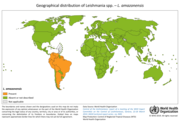
The boundaries and names shown and the designations used on this map do not imply
the expression of any opinion whatsoever on the part of the World Health Organization
concerning the legal status of any country, territory, city or area or of its authorites, or
concerning the delimitation of its f
...
rontiers or boundaries. Dotted lines on maps
represent approximate border lines for which there may not yet be full agreement.
more
Leishmaniasis is still considered to be a global health problem, which spreads in most countries in the world. Leishmania is an intracellular obligate protistan parasite that causes different clinical symptoms in infected humans and other animals. There are clinically different types of the disease
...
including: visceral, cutaneous or muco-cutaneous leishmaniasis. Approximately, two million new infections occurring annually; 0.7 to 1.2 million cases are recorded with cutaneous leishmaniasis and 200,000–400,000 cases return for visceral leishmaniasis. However, Cutaneous leishmaniasis considers one of uncontrolled wobbling endemic diseases, especially in Iraq, which occurs at the skin to cause a dermal lesion. Usually, the lesion is spontaneously healed to leave a colorless depressed scar and permanent immunity.
more
In order to target resources and drugs to reach trachoma elimination targets by the year 2020, data on the burden of disease are required. Using prevalence data in African countries derived from the Global Atlas of Trachoma (GAT), the distribution o
...
f trachoma continues to be focused in East and West Sub-Saharan Africa, North Africa and a few endemic countries in Central Sub-Saharan Africa. Currently, 129.4 million people are estimated to live in areas that are confirmed to be trachoma endemic and 98 million are known to require access to the SAFE strategy. The maps and information presented in this work highlight the GAT as important open-access planning and advocacy tool for efforts to finalize trachoma mapping and assist national programmes in planning interventions.
more
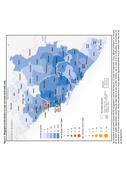
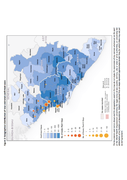



Buruli ulcer (BU), a neglected tropical disease (NTD), is an infection of the skin and subcutaneous tissue caused by Mycobacterium ulcerans. The disease has been documented in many South American, Asian, and Western Pacific countries and is widespread throughout much of Africa, especially in West
...
and Central Africa.
more
Discrete typing units of Trypanosoma cruzi: Geographical and biological distribution in the Americas
Chagas disease caused by Trypanosoma cruzi is a public health issue in Latin America. This highly diverse parasite is divided into at least seven discrete typing units (DTUs) TcI-TcVI and Tcbat. Some DTUs have been associated with geographical
...
distribution in epidemiological scenarios and clinical manifestations, but these aspects remain poorly understood. Many studies have focused on studying the parasite and its vectors/hosts, using a wide variety of genetic markers and methods. Here, we performed a systematic review of the literature for the last 20 years to present an update of DTUs distribution in the Americas, collecting ecoepidemiological information. We found that the DTUs are widespread across the continent and that there is a whole gamma of genetic markers used for the identification and genotyping of the parasite. The data obtained in this descriptor could improve the molecular epidemiology studies of Chagas disease in endemic regions.
more
Leishmaniasis is a vector-borne disease with a broad global distribution and an increasing number of recorded cases worldwide. However, it is still one of the world's most neglected diseases. Over the last decades, the disease has been found to expa
...
nd geographically with a global increase of cases of visceral and cutaneous leishmaniasis increasing the public health problems associated with the disease epidemics. The reported range expansion of the diseases has been associated with range expansions of vector populations in response to climate change. Leishmaniasis is caused by protozoan parasites of the genus Leishmania. The transmission can either be zoonotic and/or anthroponotic through the bite of an infected female phlebotomine sandfly. In Eurasia and Africa, all vector-competent sandfly species belong to the genus Phlebotomus. Cutaneous leishmaniasis (CL) is the most common form of leishmaniasis. In the ‘old world’, it is caused by five currently recognized Leishmania species: L. major, L. tropica and L. aethiopica (being main causative parasites) as well as L. infantum and L. donovani. Visceral leishmaniasis (VL), another common and more severe form of leishmaniasis, is only associated with the Leishmania species L. infantum and L. donovani. The specific Leishmania species cause different clinical symptoms in humans.
more

Existing data on chronic obstructive pulmonary disease (COPD) prevalence are irregularly distributed around the world, and in many geographic regions data are scarce or even nonexistent. This fact hinders the implementation of adequate preventive and therapeutic interventions to reduce the high burd
...
en and costs of COPD. In the current study, we have used the Geographic Information System (GIS) inverse distance weighted (IDW) interpolation technique with the objective of visualising spatial data of COPD prevalence in the world and obtaining a visual impression of the magnitude of this global health problem. GIS has been recognised as an effective tool to display the geographical distribution of data, even when they are few and widely separated, as is the case with the prevalence of COPD.
more
Lymphatic filariasis is a neglected tropical disease that can cause permanent disability through disruption of the lymphatic system. This disease is caused by parasitic filarial worms that are transmitted by mosquitos. Mass drug administration (MDA) of antihelmintics is recommended by WHO to elimina
...
te lymphatic filariasis as a public health problem. This study aims to produce the first geospatial estimates of the global prevalence of lymphatic filariasis infection over time, to quantify progress towards elimination, and to identify geographical variation in distribution of infection.
more

This report describes the geographical and temporal distribution of multidrug-resistant (MDR) tuberculosis (TB) using molecular typing data reported by European Union (EU)/European Economic Area
...
(EEA) Member States for 2015 and the preceding years.
more
This study aimed to analyze the geographical distribution of coronavirus disease 2019 (COVID-19) and to identify high-risk areas in space and time for the occurrence of cases and deaths in the indig
...
enous population of Brazil. This is an ecological study carried out between 24 March and 26 October 2020 whose units of analysis were the Special Indigenous Sanitary Districts. The Getis-Ord General G and Getis-Ord Gi* techniques were used to verify the spatial association of the phenomena and a retrospective space–time scan was performed. There were 32 041 confirmed cases of COVID-19 and 471 deaths. The non-randomness of cases (z score = 5.40; P < 0.001) and deaths (z score = 3.83; P < 0.001) were confirmed. Hotspots were identified for cases and deaths in the north and midwest regions of Brazil. Sixteen high-risk space–time clusters were identified for the occurrence of cases with a higher RR = 21.23 (P < 0.001) and four risk clusters for deaths with a higher RR = 80.33 (P < 0.001). These clusters were identified from 22 May and were active until 10 October 2020. The results indicate critical areas in the indigenous territories of Brazil and contribute to better directing the actions of control of COVID-19 in this population.
more
Bulletin of the World Health Organization 2016. doi: http://dx.doi.org/10.2471/BLT.16.171082
Objective: To describe the temporal and geographical distribution of Zika virus infection, and associat
...
ed neurological disorders, from 1947 to February 2016.
more

This review article examines 42 years of Ebola virus disease (EVD) outbreaks in Sub-Saharan Africa, from 1976 to 2019. The authors analyze the epidemiology, geographical distribution, mortality rate
...
s, and response strategies associated with 34 Ebola outbreaks across 11 African countries. The review identifies key challenges in controlling Ebola, including weak health systems, limited surveillance and laboratory capacity, sociocultural practices, environmental changes, and community mistrust. It also discusses advances in diagnostics, treatments, and vaccines, and emphasizes the importance of a One Health approach, community engagement, effective communication, and stronger healthcare systems to improve preparedness, prevention, and response to future Ebola outbreaks.
more
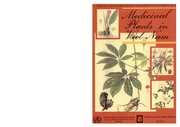
WHO regional publications. Western Pacific series ; no.3
The book has three main parts. The first part describes research in Viet Nam conducted on medicinal plants in line with the national policy of developing a system of medicine and pharmacy that integrates the modern and traditional systems. Th
...
e second part, which constitutes the core of the book, describes and illustrates the 200 most valuable species of wild and cultivated medicinal plants in Viet Nam. Each plant species is first documented by a full colour drawing illustrating the plant's distinctive features and natural colours. Explanatory notes for each species provide a concise description of the plant and give local names, flowering period, geographical distribution, parts used, chemical composition, and therapeutic uses. Information on indications and dosage is also provided.
To facilitate retrieval of information, the third part indexes plant species according to botanical name, Vietnamese name, and English name.
Large File to download: 75 MB! more
To facilitate retrieval of information, the third part indexes plant species according to botanical name, Vietnamese name, and English name.
Large File to download: 75 MB! more
This report is intended to provide information regarding reporting status of the public and private hospitals, availability and utilization of hospital services, performance of the hospitals under administration of Ministry of Health, hospital deliveries and leading causes of hospitalization and mor
...
tality. The varieties of presentation were used to illustrate different utilization patterns according to geographical distribution and hospital types. Changes of hospital statistics over time were elicited with graphical and tabular presentation.
more

Massoda Tonye et al. Malar J (2018) 17:156
https://doi.org/10.1186/s12936-018-2284-7
Background: In 2011, the demographic and health survey (DHS) in Cameroon was combined with the multiple indicator
cluster survey. Malaria parasitological data were collected, but the survey period did not overl
...
ap with the high
malaria transmission season. A malaria indicator survey (MIS) was also conducted during the same year, within the
malaria peak transmission season. This study compares estimates of the geographical distribution of malaria parasite
risk and of the effects of interventions obtained from the DHS and MIS survey data.
more
