
Filter
457
Text search:
fair
trade
Featured
34
120
Language
Document type
217
121
46
31
20
9
7
3
2
1
Countries
43
17
15
13
11
11
10
9
8
7
7
7
6
6
6
6
5
5
5
4
4
4
4
4
3
3
3
3
3
3
3
3
3
3
3
2
2
2
2
2
2
2
2
2
2
2
2
2
1
1
1
1
1
1
1
1
1
1
1
1
1
1
1
1
1
1
1
1
1
1
1
1
1
1
1
Authors & Publishers
Publication Years
Category
146
36
34
14
11
5
4
1
Toolboxes
55
43
30
26
23
18
18
17
12
12
12
11
11
9
9
7
6
5
5
3
3
1
1
9 September 2020
In a snapshot, fair allocation of vaccines will occur in the following way:
An initial proportional allocation of doses to countries until all countries reach enough quantities to cover 20% of their population
This document
...
Framework for Fair, Equitable and Timely Allocation of COVID-19 Vaccines in Africa. Highlights Day 1
The virtual conference, co-organised by the Africa Centres for Disease Control and Prevention (Africa CDC) and the South African Medical Research Council (SAMRC) brought together African leaders, public health professionals and researchers, policymakers, business leaders and civil society and commun
...

The Lancet Planetary Health Volume 6, ISSUE 4, e342-e349, April 01, 2022. Human impacts on earth-system processes are overshooting several planetary boundaries, driving a crisis of ecological breakdown. This crisis is being caused in large part by global resource extraction, which has increased dra
...

Oxfam’s report found that Covid-19 has the potential to increase economic inequality in almost every country at once, the first time this has happened since records began over a century ago. It sets out how a rigged economy is enabling a super-rich elite to amass wealth in the middle of the worst
...

According to most recent data, the world economy grew by 3.1 per cent in 2022. To many, the rebound
suggested that a soft landing was possible in 2023, and that the key problems of the year 2022 – rising
prices, supply-chain disruptions and recession risks – have been addressed. As a result, t
...
Global Biodiversity Outlook (GBO) is the flagship publication of the Convention on Biological Diversity (CBD). It is a periodic report that summarizes the latest data on the status and trends of biodiversity and draws conclusions relevant to the further implementation of the Convention.
GBO-5 pro
...
Science . 2020 Sep 11;369(6509):1309-1312. doi: 10.1126/science.abe2803. Epub 2020 Sep 3.
The Fair Priority Model offers a practical way to fulfill pledges to distribute vaccines fairly and equitably

Urbanization, land use, global trade and industrialization have led to profound and negative impacts on nature, biodiversity and ecosystems across the world. The ongoing depletion of natural resources not only afects environmental conditions but als
...

Agenda 2030: Sustainable Development Goals (SDGs)
An easy read introduction to the SDGs which will be adopted in September 2015 at the United Nations General Assembly.
This easy read version was developed by the International Disability Alliance (IDA) and the International Disability and Developme
...
Global Biodiversity Outlook (GBO) is the flagship publication of the Convention on Biological Diversity (CBD). It is a periodic report that summarizes the latest data on the status and trends of biodiversity and draws conclusions relevant to the further implementation of the Convention.
GBO-5 provi
...

22 Sept. 2021
The rapid development of effective Covid-19 vaccines in 2020 gave hope to the world in the darkest days of the deadly pandemic. However, the vaccine roll-out has been massively skewed towards wealthy nations. While rich states have hoarded vaccines, companies have also played a decisi
...
A new respiratory infectious disease, COVID-19, caused by a new coronavirus called SARS-CoV-2, emerged in early December 2019. Since then, the virus has spread to India and 106 other countries in Asia, Europe, North America, Africa, and Oceania. On March 11, the World Health Organization (WHO) decl
...
Key considerations for the use of law to prevent noncommunicable diseases in the WHO European Region
Report of an intensive legal training and capacity-building workshop on law and noncommunicable diseases (Moscow, 30 May–3 June 2016)
The report summarizes important issues, themes and topics discussed during the meeting in Moscow, ranging from the design and implementation of legislation, reconc
...
Healthy people, healthy animals and a healthy environment worldwide with the One Health approach.
The COVID-19 pandemic has drastically demonstrated just how close the link is between humans, animals, and the environment, and has highlighted and aggravated existing challenges. The destruction of na
...
The second edition of the joint WHO, WIPO and WTO
publication “Promoting Access to Medical Technologies
and Innovation: Intersections between public health,
intellectual property and trade” (the Trilateral Study),*
...
African countries, like many regions of the world, are affected by the legacy of atrocity crimes. Genocide, the transatlantic slave trade and slavery, colonialism and post-independence violence committed during dictatorships, not to mention civil wa
...
February 2020Earth's Future 8(2):e2019EF001377.The water planetary boundary attempts to provide a global limit to anthropogenic water cycle modifications, but it has been challenging to translate and apply it to the regional and local scales at which water problems and management typically occur. We
...
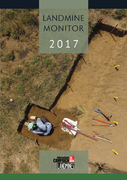
This is the 19th annual Landmine Monitor report. It is the sister publication to the Cluster Munition Monitor report, first published in November 2010.
Landmine Monitor 2016 provides a global overview of the landmine situation. Chapters on developments in specific countries and other areas are ava
...

Over the ages, human societies have altered local ecosystems and modified regional climates. Today the human influence has attained a global scale. This reflects the recent rapid increase in population size, energy consumption, intensity of land use, international
...
