
Filter
1974
Text search:
Socioeconomic
context
Featured
160
491
Language
1936
56
44
30
25
15
15
4
3
1
1
1
1
1
1
1
1
Document type
960
508
195
135
108
26
25
8
3
1
1
1
1
Countries
127
57
51
49
44
40
36
36
34
34
33
31
30
30
30
29
28
28
25
24
23
19
19
17
17
16
14
14
13
13
13
13
12
12
11
10
9
9
8
8
8
8
8
8
7
7
7
7
6
6
6
6
5
5
5
5
4
4
4
4
4
3
3
3
3
3
3
3
2
2
2
2
2
2
2
2
2
2
2
2
2
2
2
2
2
2
2
1
1
1
1
1
1
1
1
1
1
1
1
1
1
1
1
1
1
1
1
1
1
1
1
1
1
1
1
1
1
Authors & Publishers
310
88
87
58
51
30
29
27
24
23
21
20
18
15
14
14
13
13
10
9
9
9
8
8
8
7
7
7
7
7
6
6
6
6
6
6
5
5
5
5
5
5
5
5
5
5
5
5
4
4
4
4
4
4
4
4
4
4
4
4
4
4
4
4
4
3
3
3
3
3
3
3
3
3
3
3
3
3
3
3
3
3
3
3
3
3
3
3
3
3
3
3
3
3
3
3
3
3
3
3
3
3
3
3
2
2
2
2
2
2
2
2
2
2
2
2
2
2
2
2
2
2
2
2
2
2
2
2
2
2
2
2
2
2
2
2
2
2
2
2
2
2
2
2
2
2
2
2
2
2
2
2
2
2
2
2
2
2
2
2
2
2
2
2
2
2
2
2
2
2
2
2
2
2
2
2
2
2
2
2
2
2
2
2
2
2
2
2
2
2
2
2
2
2
2
2
2
2
2
2
2
2
2
2
2
2
2
2
2
2
2
2
2
2
2
2
2
2
2
2
2
2
2
2
2
2
2
2
1
1
1
1
1
1
1
1
1
1
1
1
1
1
1
1
1
1
1
1
1
1
1
1
1
1
1
1
1
1
1
1
1
1
1
1
1
1
1
1
1
1
1
1
1
1
1
1
1
1
1
1
1
1
1
1
1
1
1
1
1
1
1
1
1
1
1
1
1
1
1
1
1
1
1
1
1
1
1
1
1
1
1
1
1
1
1
1
1
1
1
1
1
1
1
1
1
1
1
1
1
1
1
1
1
1
1
1
1
1
1
1
1
1
1
1
1
1
1
1
1
1
1
1
1
1
1
1
1
1
1
1
1
1
1
1
1
1
1
1
1
1
1
1
1
1
1
1
1
1
1
1
1
1
1
1
1
1
1
1
1
1
1
1
1
1
1
1
1
1
1
1
1
1
1
1
1
1
1
1
1
1
1
1
1
1
1
1
1
1
1
1
1
1
1
1
1
1
1
1
1
1
1
1
1
1
1
1
1
1
1
1
1
1
1
1
1
1
1
1
1
1
1
1
1
1
1
1
1
1
1
1
1
1
1
1
1
1
1
1
1
1
1
1
1
1
1
1
1
1
1
1
1
1
1
1
1
1
1
1
1
1
1
1
1
1
1
1
1
1
1
1
1
1
1
1
1
1
1
1
1
1
1
1
1
1
1
1
1
1
1
1
1
1
1
1
1
1
1
1
1
1
1
1
1
1
1
1
1
1
1
1
1
1
1
1
1
1
1
1
1
1
1
1
1
1
1
1
1
1
1
1
1
1
1
1
1
1
1
1
1
1
1
1
1
1
1
1
1
1
1
1
1
1
1
1
1
1
1
1
1
1
1
1
1
1
1
1
1
1
1
1
1
1
1
1
1
1
1
1
1
1
1
1
1
1
1
1
1
1
1
1
1
1
1
1
1
1
1
1
1
1
1
1
1
1
1
1
1
1
1
1
1
1
1
1
1
1
1
1
1
1
1
1
1
1
1
1
1
1
1
1
1
1
1
1
1
1
1
1
1
1
1
1
1
1
1
1
1
1
1
1
1
1
1
1
1
1
1
1
1
1
1
1
1
1
1
1
1
1
1
1
1
1
1
1
1
1
1
1
1
1
1
1
1
1
1
1
1
1
1
1
1
1
1
1
1
1
1
1
1
1
1
1
1
1
1
1
1
1
1
1
1
1
1
1
1
1
1
1
1
1
1
1
1
1
1
1
1
1
1
1
1
1
1
1
1
1
1
1
1
1
1
1
1
1
1
1
1
1
1
1
1
1
1
1
1
1
1
1
1
1
1
1
1
1
1
1
1
1
1
1
1
1
1
1
1
1
1
1
1
1
1
1
1
1
1
1
1
1
1
1
1
1
1
1
1
1
1
1
1
1
1
1
1
1
1
1
1
1
1
1
1
1
1
1
1
1
1
1
1
1
1
1
1
1
1
1
1
1
1
1
1
1
1
1
1
1
1
1
1
1
1
1
1
1
1
1
1
1
1
1
1
1
1
1
1
1
1
1
1
1
1
1
1
1
1
1
1
1
1
1
1
1
1
1
1
1
1
1
1
1
1
1
1
1
1
1
1
1
1
1
1
1
1
1
1
1
1
1
1
1
1
1
1
1
1
1
1
1
1
1
1
1
1
1
1
1
1
1
1
1
1
1
1
1
1
1
1
1
1
1
1
1
1
1
1
1
1
1
1
1
1
1
1
1
1
1
1
1
1
1
1
1
1
1
1
1
1
1
1
1
1
1
1
1
1
1
1
1
1
1
1
1
1
1
1
1
1
1
1
1
1
1
1
1
1
1
1
1
1
1
1
1
1
1
1
1
1
1
1
1
1
1
1
1
1
1
1
1
1
1
1
1
1
1
1
1
1
1
1
1
1
1
1
1
1
1
1
1
1
1
1
1
1
1
1
1
1
1
1
1
1
1
1
1
1
1
1
1
1
1
1
1
1
1
1
1
1
1
1
1
1
1
1
1
1
1
1
1
1
1
1
1
1
1
1
1
1
1
1
1
1
1
1
1
1
1
1
1
1
1
1
1
1
1
1
1
1
1
1
1
1
1
1
1
1
1
1
1
1
1
1
1
1
1
1
1
1
1
1
1
1
1
1
1
1
1
1
1
1
1
1
1
1
1
1
1
1
1
1
1
1
1
1
1
1
1
1
1
1
1
1
1
1
1
1
1
1
1
1
1
1
1
1
1
1
1
1
1
1
1
1
1
1
1
1
1
1
1
1
1
1
1
1
1
1
1
1
1
1
1
1
1
1
1
1
1
1
1
1
1
1
1
1
1
1
1
1
1
1
1
1
1
1
1
1
1
1
1
1
1
1
1
1
1
1
1
1
1
1
1
1
1
1
1
1
1
1
1
1
1
1
1
1
1
1
1
1
1
1
1
1
1
1
1
1
1
1
1
1
1
1
1
1
1
1
1
1
1
1
1
1
1
1
1
1
1
1
1
1
1
1
1
1
1
1
1
1
1
1
1
1
1
1
1
1
1
1
1
1
1
1
1
1
1
1
1
1
1
1
1
1
1
1
1
1
1
1
1
1
1
1
1
1
1
1
1
1
1
1
1
1
1
1
1
1
1
1
1
1
1
1
1
1
1
1
1
1
1
1
1
1
1
1
1
1
1
1
1
1
1
1
1
1
1
1
1
1
1
1
1
1
1
1
1
1
1
1
1
1
1
1
1
1
1
1
1
1
1
1
1
1
1
1
1
1
1
1
1
1
1
1
1
1
1
1
1
1
1
1
1
1
1
1
1
1
1
1
1
1
1
1
1
1
1
1
1
1
1
1
1
1
1
1
1
1
1
1
1
1
1
1
1
1
1
1
1
1
1
1
1
1
1
1
1
1
1
1
1
1
1
1
1
1
1
1
1
1
1
1
1
1
1
1
1
1
1
1
1
1
1
1
1
1
1
1
1
1
1
1
1
1
1
1
1
1
1
1
1
1
1
1
1
1
1
1
1
1
1
1
1
1
1
1
1
1
1
1
1
1
1
1
1
1
1
1
1
1
1
1
1
1
1
1
1
1
1
1
1
1
1
1
1
1
1
1
1
1
1
1
1
1
1
1
1
1
1
1
1
1
1
1
1
1
1
1
1
1
1
1
1
1
1
1
1
1
1
1
1
1
1
1
1
1
1
1
1
1
1
1
1
1
1
1
1
1
1
1
1
1
1
1
1
1
1
1
1
1
1
1
1
1
1
1
1
1
1
1
1
1
1
1
1
1
1
1
1
1
1
1
1
1
1
1
1
1
1
1
1
1
1
1
1
1
1
1
1
1
1
1
1
1
1
1
1
1
1
1
1
1
1
1
1
1
1
1
1
1
1
1
1
1
1
1
1
1
1
1
1
1
1
1
1
1
1
1
1
1
1
1
1
1
1
1
1
1
1
1
1
1
1
1
1
1
1
1
1
1
1
1
1
1
1
1
1
1
1
1
1
1
1
1
1
1
1
1
1
1
1
1
1
1
1
1
1
1
1
1
1
1
1
1
1
1
1
1
1
1
1
1
1
1
1
1
1
1
1
1
1
1
1
1
1
1
1
1
1
1
1
1
1
1
1
1
1
1
1
1
1
1
1
1
1
1
1
1
1
1
1
1
1
1
1
1
1
1
1
1
1
1
1
1
1
1
1
1
1
1
1
1
1
1
1
1
1
1
1
1
1
1
1
1
1
1
1
1
1
1
1
1
1
1
1
1
1
1
1
1
1
1
1
1
1
1
1
1
1
Publication Years
705
1132
132
4
1
Category
725
182
114
103
100
26
6
Toolboxes
198
158
156
96
94
70
65
58
57
54
52
43
34
32
30
28
25
20
12
12
9
7
7
6
5


The health and socioeconomic crisis triggered by the COVID-19 pandemic has hit the countries of Latin America hard and laid bare the profound inequities about which numerous international, regional and national reports have sounded warnings in recen
...
t decades. In this context, the historical political and economic exclusion and marginalization of the more than 800 indigenous peoples in the region has been accentuated as a result of insufficient State responses to the crisis, which have not adequately considered the collective rights of these peoples and have had little cultural relevance.
This document provides an overview of the situation of indigenous peoples in the region in the face of the COVID-19 pandemic. It analyses both the State’s and indigenous peoples’ own responses to the crisis, as well as offering a set of recommendations to rectify the neglect of these peoples in the management of the pandemic, centring on their collective rights.
more
Migration continues to be an essential ingredient of socioeconomic development everywhere.
Whether it is a case of people moving from the countryside to cities to find work, or people crossing seas and borders to meet host country demands for new l
...
abour, migrants are an integral part of the modern world. They bring with them new skills and talents, and a willingness to take on jobs that host societies have difficulty filling. Despite this, migrants tend to be overlooked by many health and social service systems. They are also vulnerable to exclusion, stigma and discrimination, particularly if “undocumented” or irregular. Today, in the context of COVID-19, a neglect of migrants will make it impossible to stem the pandemic.
These Notes are designed to remind national and local authorities that the war against COVID-19 cannot be won if migrants are forgotten; unus pro omnibus, omnes pro uno”, or one for all, and all for one, must guide the fight against COVID-19.
more
This baseline survey and report examine the Durable Peace Programme (DPP) in Myanmar, which delivers a broad range of activities. The report provides an insight into the current situation facing both internally displaced persons (IDPs) and conflict-affected non-IDP communities in Kachin state, Myanm
...
ar. It is based on a comprehensive and systematic research process involving just over 2,200 interviews conducted in 12 townships across Kachin. The research provides data and analysis on the socioeconomic situation, attitudes towards peace and conflict, gender dynamics, return and resettlement, among others. The Durable Peace Programme Consortium has decided to share the results of this baseline, as it provides insights into the Kachin context for interested stakeholders, and also to encourage cooperation and information sharing. The report adopts a highly visual approach to communicate the large amount of data collected.
more
COVID-19 vaccine hesitancy is currently one of the main obstacles to worldwide herd immunity and socioeconomic recovery. Because vaccine coverage can vary between and within countries, it is important
to identify sources of variation so that polici
...
es can be tailored to different population groups. In this paper, we analyze the results from a survey designed and implemented in order to identify early adopters and
laggers in six big cities of Latin America. We find that trust in government and science, accurate knowledge about the value of vaccination and vaccine effects, perceived risk of getting sick, and being a student
increase the odds to get vaccinated. We also identify potential laggers as women and populations between 20 and 35 years old who are not students. We discuss specific strategies to promote vaccination among
these populations groups as well as more general strategies designed to gain trust. These findings are specific to the context of Latin America insofar as the underlying factors associated with the choice to be
vaccinated vary significantly by location and in relation to individual-level factors.
more

This publication provides an overview of evidence and guidance on the growing challenge of workplace heat stress in the context of climate change. It highlights the health and productivity risks faced by billions of workers, especially in manual lab
...
or sectors. The report details the physiological, socioeconomic, and mental health impacts of heat stress and outlines evidence-based strategies for prevention and mitigation. It emphasizes the need for occupational heat action programmes, stakeholder collaboration, and tailored interventions to protect vulnerable workers, reduce productivity losses, and support sustainable development in a warming world.
more
UNICEF Syria’s series of think pieces. Every day counts. An outlook on child protection for the most vulnerable children in Syria.To navigate the complex and continuously changing context and attain sustainable results for children, UNICEF – alo
...
ng with other UN agencies - seeks to make a shift in its programming towards early recovery while maintaining the delivery of humanitarian assistance based on needs on the ground. This will help strengthen the linkages between the needs-based emergency response and essential service restoration, socioeconomic resilience, and social cohesion.
more
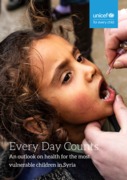
UNICEF Syria’s series of think pieces. Every day counts. An outlook on child protection for the most vulnerable children in Syria.To navigate the complex and continuously changing context and attain sustainable results for children, UNICEF – alo
...
ng with other UN agencies - seeks to make a shift in its programming towards early recovery while maintaining the delivery of humanitarian assistance based on needs on the ground. This will help strengthen the linkages between the needs-based emergency response and essential service restoration, socioeconomic resilience, and social cohesion.
more
UNICEF Syria’s series of think pieces. Every day counts. An outlook on child protection for the most vulnerable children in Syria.To navigate the complex and continuously changing context and attain sustainable results for children, UNICEF – alo
...
ng with other UN agencies - seeks to make a shift in its programming towards early recovery while maintaining the delivery of humanitarian assistance based on needs on the ground. This will help strengthen the linkages between the needs-based emergency response and essential service restoration, socioeconomic resilience, and social cohesion.
more
UNICEF Syria’s series of think pieces. Every day counts. An outlook on child protection for the most vulnerable children in Syria.To navigate the complex and continuously changing context and attain sustainable results for children, UNICEF – alo
...
ng with other UN agencies - seeks to make a shift in its programming towards early recovery while maintaining the delivery of humanitarian assistance based on needs on the ground. This will help strengthen the linkages between the needs-based emergency response and essential service restoration, socioeconomic resilience, and social cohesion.
more
Management of Type 2 Diabetes in Developing Countries: Balancing Optimal Glycaemic Control and Outcomes with Affordability and Accessibility to Treatment
Mohan, V.; Khunti, K.; Chan,S.P.; et al.
National Library of Medicine, National Center for Biotechnology Information
(2020)
CC3
With the growing prevalence of type 2 diabetes, particularly in emerging countries, its management in the context of available resources should be considered. International guidelines, while comprehensive and scientifically valid, may not be appropr
...
iate for regions such as Asia, Latin America or Africa, where epidemiology, patient phenotypes, cultural conditions and socioeconomic status are different from America and Europe. Although glycaemic control and reduction of micro- and macrovascular outcomes remain essential aspects of treatment, access and cost are major limiting factors; therefore, a pragmatic approach is required in restricted-resource settings. Newer agents, such as sodium–glucose cotransporter 2 inhibitors and glucagon-like peptide 1 receptor agonists in particular, are relatively expensive, with limited availability despite potentially being valuable for patients with insulin resistance and cardiovascular complications. This review makes a case for the role of more accessible second-line treatments with long-established efficacy and affordability, such as sulfonylureas, in the management of type 2 diabetes, particularly in developing or restricted-resource countries.
more

WHO’s Country Cooperation Strategy (CCS) defines the Organization’s medium-term vision for working in and with a particular country. The CCS, developed in the context of global and national health priorities, examines the overall health situatio
...
n in a country, including the state of the health sector, socioeconomic status and the major health determinants.
This CCS sets out WHO’s strategic framework for collaboration with the Syrian Arab Republic, from June 2022 until June 2025, in light of the 12 years of crisis that have had a devastating impact on the health sector and infrastructure of basic services. It carefully considers the current and projected issues during its transition from continued humanitarian assistance to recovery, resilience and development. The consolidation of health policies and strategies and health system strengthening, based on the strengthening of primary health care (PHC), aims to contribute to the achievement of national and global development and health goals and the targets of the SDGs.
more

Oral diseases are among the most common chronic diseases worldwide and constitute a major public health problem due to the huge health and economic burden on individuals, families, societies, and health care systems. The recent emphasis on the role of determinants of health, common risk factors and
...
their recognition in the context of the growing burden of noncommunicable diseases (NCDs) provides good opportunities for integrating oral health into NCD prevention and control efforts. This Strategy for oral health in South-East Asia, 2013-2020, presents guidance to Member States in developing national policy and action plans to improve oral health within existing socioeconomic, cultural, political and health system contexts. It expresses the consensus on major strategies in the area of oral health promotion as well as oral disease prevention and control for the South-East Asia Region aiming at reducing the health and socioeconomic burden resulting from oral diseases, reducing oral health inequities, and improving the quality of life of the population.
more

Over the ages, human societies have altered local ecosystems and modified regional climates. Today the human influence has attained a global scale. This reflects the recent rapid increase in population size, energy consumption, intensity of land use, international trade and travel, and other human a
...
ctivities. These global changes have heightened awareness that the long-term good health of populations depends on the continued stability of biosphere's ecological, physical and socioeconomic systems.
The world's climate system is an integral part of the complex of life-supporting processes. Like other large systems, the global climate system is coming under pressure from human activities.
This book seeks to describe the context and process of global climate change, its actual or likely impacts on health, and how human societies and their governments should respond with particular focus on the health sector.
more

The Regional Action Framework for Noncommunicable Disease Prevention and Control provides a unified vision of objectives and recommended actions to combat the noncommunicable disease (NCD) epidemic in the Western Pacific Region. Implementation should be supported by cross-sectoral coordination
...
, sustainable financing, evidence-based policy, and community engagement, tailored to each Member State’s unique context. In doing so, Member States are encouraged to transform a disease treatment-centered “sick system” into a “health system” in which a population’s health and well-being enable socioeconomic development.
more
The Regional Action Framework for Noncommunicable Disease Prevention and Control provides a unified vision of objectives and recommended actions to combat the noncommunicable disease (NCD) epidemic in the Western Pacific Region. Implementation should be supported by cross-sectoral coordination
...
, sustainable financing, evidence-based policy, and community engagement, tailored to each Member State’s unique context. In doing so, Member States are encouraged to transform a disease treatment-centered “sick system” into a “health system” in which a population’s health and well-being enable socioeconomic development.
more
Welcome to our implementation research case example focusing on chagas disease and Ecuador. This module offers a comprehensive exploration of the strategies employed to address the challenges posed by Chagas disease, a neglected tropical disease prevalent in Latin America. With a specific focus on t
...
he southern Ecuador context, this course describes the relationship between public health interventions, socioeconomic factors, and community understanding, all of which are essential for the prevention, treatment, and diagnosis of chagas disease
more

Objective: To identify gaps in national stroke guidelines that could be bridged to enhance the quality of stroke care services in low- and
middle-income countries.
Methods: We systematically searched medical databases and websites of medical societies and contacted international organizations.
Co
...
untry-specific guidelines on care and control of stroke in any language published from 2010 to 2020 were eligible for inclusion. We reviewed
each included guideline for coverage of four key components of stroke services (surveillance, prevention, acute care and rehabilitation).
We also assessed compliance with the eight Institute of Medicine standards for clinical practice guidelines, the ease of implementation of
guidelines and plans for dissemination to target audiences.
Findings: We reviewed 108 eligible guidelines from 47 countries, including four low-income, 24 middle-income and 19 high-income countries.
Globally, fewer of the guidelines covered primary stroke prevention compared with other components of care, with none recommending
surveillance. Guidelines on stroke in low- and middle-income countries fell short of the required standards for guideline development;
breadth of target audience; coverage of the four components of stroke services; and adaptation to socioeconomic context. Fewer low- and
middle-income country guidelines demonstrated transparency than those from high-income countries. Less than a quarter of guidelines
encompassed detailed implementation plans and socioeconomic considerations.
Conclusion: Guidelines on stroke in low- and middle-income countries need to be developed in conjunction with a wider category of
health-care providers and stakeholders, with a full spectrum of translatable, context-appropriate interventions.
more
The document is primarily meant to inform mental health and psychosocial support (MHPSS) staff, such as: psychologists, psychosocial counsellors, social workers, psychiatrists, psychiatric nurses, and others who are involved providing individual or group counselling, psychotherapy and/or psychiatric
...
treatment for Syrians
more

This guide is available in English, French, Spanish, Russian, Arabic and Chinese
This guide consolidates COVID-19 guidance for human resources for health managers and policy-makers at national, subnational and facility levels to design, manage and preserve the workforce necessary to manage the COVI
...
D-19 pandemic and maintain essential health services.
The guide identifies recommendations to protect, support and empower health workers at individual, management, organizational and system levels.
more
