
Filter
2585
Text search:
Global
Health
Cluster
Featured
Recommendations
227
New Publications
735
Language
Document type
No document type
1367
Studies & Reports
487
Guidelines
304
Manuals
153
Strategic & Response Plan
136
Situation Updates
52
Fact sheets
44
Training Material
29
Resource Platforms
8
Infographics
4
Online Courses
1
Countries / Regions
Global
132
Kenya
66
Nepal
62
Indonesia
62
Syria
60
Nigeria
57
Myanmar / Burma
56
India
54
Sierra Leone
53
Congo, Democratic Republic of
46
Malawi
44
Ethiopia
43
Bangladesh
43
Africa
43
South Sudan
41
Liberia
40
Uganda
37
Ukraine
37
South Africa
36
Ghana
33
Zambia
32
Yemen
30
Rwanda
29
Tanzania
27
Zimbabwe
25
Mozambique
24
Brazil
23
Senegal
22
Latin America and the Carribbean
22
Western and Central Europe
21
Haiti
20
Philippines
19
Burkina Faso
18
East and Southern Africa
17
West and Central Africa
16
Pakistan
14
Central African Republic
14
Madagascar
14
South–East Asia Region
14
Russia
14
Lesotho
13
Guinea
12
Afghanistan
12
Sudan
12
Namibia
12
Somalia
11
Cameroon
10
Jordan
10
Mali
9
Germany
9
Lebanon
9
Benin
9
Colombia
9
Venezuela
9
Eastern Europe
9
Cambodia
8
Thailand
7
Middle East and North Africa
7
Vietnam
7
Eswatini/ Swaziland
6
Palestine
6
Moldova
6
Niger
5
Iraq
5
China
5
Botswana
5
Laos
5
Portugal
5
Turkey
4
Argentina
4
Peru
4
Burundi
4
Angola
4
Sri Lanka
4
Western Pacific Region
4
Asia
4
Albania
4
Togo
3
Papua New Guinea
3
Hungary
3
Eastern Europe and Central Asia
3
Paraguay
3
Iran
3
Kyrgyzstan
3
Guinea-Bissau
2
Côte d’Ivoire / Ivory Coast
2
Morocco
2
USA
2
Chad
2
Malaysia
2
Croatia
2
Ecuador
2
Libya
2
Mexico
2
Chile
2
Poland
2
Italy
2
Armenia
2
Romania
2
Georgia
2
France
2
United Kingdom
2
Spain
2
Azerbaijan
2
Saudi Arabia
1
Gambia
1
Mauritania
1
Singapore
1
North Macedonia
1
Serbia
1
Bolivia
1
Greece
1
Other region
1
Fiji
1
Bhutan
1
Southern Africa
1
Timor Leste/ East Timor
1
Tajikistan
1
Qatar
1
Bulgaria
1
Slovakia
1
North America
1
Gabon
1
Turkmenistan
1
Jamaica
1
Japan
1
Denmark
1
Mauritius
1
Tunisia
1
Norway
1
Belarus
1
Bosnia and Herzegovina
1
Authors & Publishers
Publication Years
Category
Countries
1066
Key Resources
238
Women & Child Health
181
Clinical Guidelines
142
Public Health
141
Capacity Building
28
Pharmacy & Technologies
15
Toolboxes
COVID-19
284
Conflict
160
HIV
157
Mental Health
134
Disability
96
TB
75
Ebola & Marburg
74
Planetary Health
68
Natural Hazards
64
Rapid Response
63
NTDs
59
AMR
52
Refugee
43
NCDs
42
2.0 Rapid Response
41
Caregiver
40
Malaria
36
Global Health Education
34
Cholera
23
Polio
20
Zika
20
Health Financing Toolbox
20
Pharmacy
15
Specific Hazards
10
Typhoon
2
Social Ethics
2
South Sudan
1
Background: Community health worker (CHW) programmes are a valuable component of primary care in resource-poor settings. The evidence supporting their effectiveness generally shows improvements in disease-specific outcomes relative to the absence of
...
Through HeRAMS, the Global Health Cluster aims at promoting and supporting good practice in mapping hea
...
Despite recent global declines, under-five mortality remains high in many of the poorest countries. Barriers to timely
quality care, including user fees, distance to facilities and the availability of trained
...
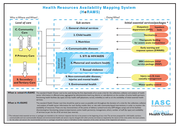
Accessed June 2014
The Lancet Vol.400 (2022) p.17-67-1776. Published:October 31, 2022DOI:https://doi.org/10.1016/S0140-6736(22)01884-0.
Surgical site infection (SSI) is the most common complication of surgery around the world: ChEETAh trial finds routinely changing gloves and instruments for wound closure could preve
...

Each humanitarian setting provides distinct opportunities and challenges for actors to coordinate and collaborate at strategic and operational levels. The Health and Protection Joint Operational Framework has been developed to ensure that the
...

The humanitarian crisis in Northeast Nigeria, driven by conflict, climate-related shocks, and food insecurity, has created immense challenges for the health sector in Borno, Adamawa, and Yobe (BAY) States. About 1.8 million people remain displaced(1
...

Confronted with the important issue of patient safety, in 2002 the Fifty-fifth World Health Assembly adopted a resolution urging countries to pay the closest possible attention to the problem and to strengthen safety and monitoring systems. In May 2
...
This document is for humanitarian health actors working at national and sub-national level in countries facing humanitarian emergencies. It applies to Health
...
The document introduces a simple classification, minimums standards and a registration form for Foreign Medical Teams (FMTs) that may provide surgical and trauma care arriving within the aftermath of a sudden onset disaster. These can serve as tools to improve the coordination of the foreign medical
...
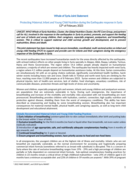
UNICEF, WHO Whole of Syria Nutrition, Cluster, the Global Nutrition Cluster, the IFE Core Group, and partners call for ALL involved in the response
...

Promoting health and preventing disease is a critical component of the effort required to achieve Universal Health Coverage (UHC). to date, efforts to achieve UHC have focused mostly on strengthenin
...
The World Health Organization (WHO) endorses the use of population-based prevalence surveys for estimating the prevalence of trachoma. In general, the prevalence of TF in children aged 1–9 years and the prevalence of TT in adults aged ≥ 15 years
...
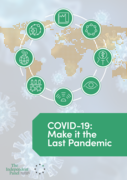
Available in Arabic, Chinese, English, French, Russian and Spanish. You can download a summary of the main report and background documents!
The report demonstrates that the current system—at both national and international levels— was not adequate to protect people from COVID-19. The time it t
...
Nutrition Cluster Handbook
recommended
The purpose of the handbook is to provide those involved in nutrition coordination with relevant tools, guidance, information and resources to support their roles in facilitating predictable, coordinated and effective preparation for, and responses to, nutrition needs in humanitarian emergencies. Ra
...
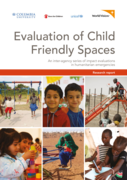
Child friendly spaces (CFS) have become a widely
used approach to protect and provide psychosocial
support to children in emergencies. However,
little evidence documents their outcomes and
impacts. There is widespread commitment among
humanitarian agencies to strengthen the evidence
base of pr
...
The World Health Organization (WHO) endorses the use of population-based prevalence surveys for estimating the prevalence of trachoma. In general, the prevalence of TF in children aged 1–9 years and the prevalence of TT in adults aged ≥ 15 years
...
This is the Filipino version of the article "How you can best look after your children in this situation" prepared by the Global Protection Cluster- Child Protection
