
Filter
33
Text search:
Gething,
PW.
Featured
7
Language
Document type
19
8
3
1
1
1
Countries / Regions
5
2
1
1
1
1
1
1
1
1
Authors & Publishers
Publication Years
Category
5
3
2
1
1
Toolboxes
8
6
5
4
2
2
1

Financing for malaria control has increased as part of international commitments to achieve the Millennium Development Goals (MDGs). We aimed to identify the unmet financial needs that would be biologically and economically equitable and would increase the chances of reaching worldwide malaria-contr
...
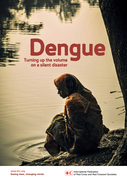
Over the past 50 years, dengue has spread from nine to over a hundred countries, making it the most rapidly spreading vector-borne disease. Yet, dengue continues to have a low profile among policy-makers and donors and does not receive the media attention it deserves. While there is no vaccine or cu
...
Hoy en día, más del 40 por ciento de la población mundial está en riesgo de contraer el dengue y el dengue grave

Dengue is a mosquito-borne viral disease that has rapidly spread to all regions of WHO in recent years. Dengue virus is transmitted by female mosquitoes mainly of the species Aedes aegypti and, to a lesser extent, Ae. albopictus. These mosquitoes are also vectors of chikungunya, yellow fever and Zik
...
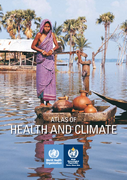
The Atlas of health and climate is a product of this unique collaboration between the meteorological and public health communities. It provides sound scientific information on the connections between weather and climate and major health challenges. These range from diseases of poverty to emergencies
...
BMC Medicine 2014, 12:196
http://www.biomedcentral.com/1741-7015/12/196

Infectious Diseases of Poverty 2014, 3:42
http://www.idpjournal.com/content/3/1/42
BMC Medicine (2015) 13:42 DOI 10.1186/s12916-014-0263-6
BMC Medicine201614:112 DOI: 10.1186/s12916-016-0660-0

The report examines financing in the battle against malaria, focusing on the role of foreign aid. It analyzes whether or not a disease such as malaria can be controlled or eliminated in Africa without health aid. It also presents a theoretical model of the economics of malaria and shows how health a
...
This user guide is designed to provide national malaria control programmes with general information on glucose-6-phosphate dehydrogenase (G6PD) deficiency. Individuals with this condition may be at risk of adverse effects from medicines commonly used to cure Plasmodium vivax malaria, as well as from
...

Massoda Tonye et al. Malar J (2018) 17:156
https://doi.org/10.1186/s12936-018-2284-7
Background: In 2011, the demographic and health survey (DHS) in Cameroon was combined with the multiple indicator
cluster survey. Malaria parasitological data were collected, but the survey period did not overl
...
In this document, recommendations are provided on designing and implementing
a cross-sectional serosurvey using school-based sampling to estimate age-specific
DENV seroprevalence to inform a country’s national dengue vaccination program.
The document includes recommendations for methods for
...

Malaria Journal (2018) 17:460 https://doi.org/10.1186/s12936-018-2606-9
In malaria endemic countries, asymptomatic cases constitute an important reservoir of infections sustaining transmission. Estimating the burden of the asymptomatic population and identifying areas with elevated risk is import
...
Published: April 26, 2017 https://doi.org/10.1371/journal.pone.0176004

Clinical Microbiology and Infection Volume 21, Issue 5, May 2015, Pages 433-443;
The neglected zoonotic diseases (NZDs) have been all but eradicated in wealthier countries, but remain major causes of ill-health and mortality across Africa, Asia, and Latin America. This neglect is, in part, a conse
...
Environmental Research Volume 151, November 2016, Pages 115-123
Dengue is the world’s most important arboviral disease in terms of number of people affected. Over the past 50 years, incidence increased 30-fold: there were approximately 390 million infections in 2010. Globalization, trade, travel,
...
Dengue is a mosquito-borne viral disease that occurs mainly in the tropics and subtropics but has a high potential to spread to new areas. Dengue infections are climate sensitive, so it is important to better understand how changing climate factors affect the potential for geographic spread and futu
...
