
Filter
113
Featured
3
2
Language
Document type
54
30
15
3
2
2
2
2
1
1
1
Countries / Regions
26
14
8
6
3
3
2
2
2
2
2
2
1
1
1
1
1
1
1
1
1
1
1
1
1
1
1
1
1
1
1
1
1
1
1
1
1
1
1
1
Authors & Publishers
Publication Years
Category
17
16
15
12
8
7
6
3
3
2
2
2
1
1
1
1
1
1
1
1
1
1
1
1
1
1
1
1
1
1
Toolboxes
15
10
7
6
6
6
4
3
2
2
2
2
2
2
2
2
2
2
2
2
2
2
2
2
2
1
1
1
1
1
1
1
1
1
1
1
1
1
1
1
1
1
1
1
1
1
1
1
1
1
1
1
1
1
1
1
1
1
1

The World Health Organization (WHO) organized the first global meeting on skin-related neglected tropical diseases (skin NTDs) at its headquarters in Geneva, Switzerland on 27–31 March 2023. This 5-day hybrid meeting brought together more than 800 global experts, stakeholders and partners from 86
...
The One Health (OH) High-Level Expert Panel (OHHLEP) of the Quadripartite Organizations defined OH as an integrated, unifying approach that aims to sustainably balance and optimize the health of people, animals and ecosystems.”
It recognizes the health of humans, domestic and wild animals, plan
...
The burden of mental health conditions in the Region is high and actions are being taken by WHO to address this issue. These include the PARO Declaration (1) by the health ministers of Member States at the Seventy-fifth Session of the WHO Regional Committee for South-East Asia on universal access to
...

During the Programme Managers’ Review Meeting of Central and East Africa and South-East Asia (online meeting, June 2022), experts proposed additional regional and national subtargets related to VL incidence, as defined below. These targets can be revisited as progress is reviewed and access to dia
...
The WHO EMRO webpage on the "Regional framework for action" outlines strategies for addressing noncommunicable diseases (NCDs) within the Eastern Mediterranean region. The framework provides a roadmap for countries to reduce the prevalence and impact of NCDs such as cardiovascular diseases, diabetes
...
WHO Package of Essential NCD interventions will help to improve the coverage of appropriate services for people with NCDs services in primary care settings. The HEARTS technical package provides a strategic approach to improving cardiovascular health in countries in primary care settings.
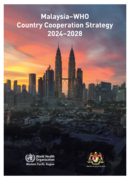
The Country Cooperation Strategy (CCS) is WHO’s strategic framework to guide the Organization’s work in and with a country. It responds to that country’s National Health and Development Agenda and identifies a set of agreed joint priorities for WHO collaboration, covering those areas where the
...

Malawi is a landlocked country with a surface area of 118,484 km2. Administratively, the country is divided into three regions, namely the Northern, Central and Southern regions. The country has 28 districts, which are further divided into traditional authorities (TA) ruled by chiefs. The TAs are su
...
The Councils share a common mandate of ensuring persons practising health related professions in Namibia are suitably qualified. Registration with the Councils is, thus, a pre-requisite for professional practice – and it is also a legal requirement too update personal details of all registered hea
...
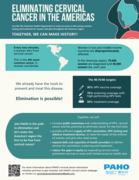
This flyer invites to join PAHO in the path to elimination and make the region of the Americas the first to be free from cervical cancer.

Health communication has proven to play a crucial role in addressing diseases such as dengue, Zika and chikungunya, for which there are no definitive or easily accessible vaccines. In this context, this discipline becomes a fundamental tool to promote the change behavior and promote preventive pract
...

The Malaria Ministerial Conference, co-hosted by WHO and the Government of Cameroon on 6 March 2024, brought together more than 400 stakeholders, including Ministers of Health and senior representatives from the African countries hardest hit by malaria, global health leaders, scientists, civil socie
...

Boîte à outils pour le changement social et comportemental face au paludisme à l'intention des agents de santé communautaires Module 2
This WHO guidance outlines reactive strategies to interrupt malaria transmission in areas nearing elimination or to prevent re-establishment, triggered by confirmed cases.

La République démocratique du Congo (RDC) occupe la 2ème place en termes de nombre de cas de paludisme et de décès associés dans le monde (12% des cas et 13% des décès), et représente à elle seule 54,6% des cas en Afrique centrale (OMS, Rapport Mondial sur la situation du paludisme 2022).
...

Building on the progress of the London Declaration on Neglected Tropical Diseases (NTDs) and putting individuals and communities at the centre of the NTD response, we, the signatories of this declaration, come together to commit to ending NTDs.
Available in different languages
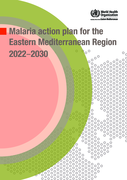
This action plan is intended for senior-level decision-makers in ministries of health, malaria
programme managers, entomologists, and epidemiologists working on malaria and other vectorborne diseases programmes. It is also intended for decision-makers and technical and advocacy
staff at other orga
...
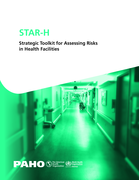
Health facilities in the Region of the Americas frequently suffer the effects of health emergencies and disasters, which jeopardize their ability to provide services to the population. The STAR-H methodology helps staff responsible for health emergency and disaster risk management to identify and as
...
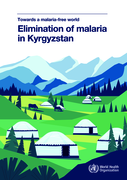
This publication describes the reasons for the resurgence of malaria in Kyrgyzstan and presents an analysis of evidence-based elimination strategies and policies that were applied to contain the epidemic and outbreaks of the disease, achieve its elimination, and maintain the country malaria-free. Th
...
The pharmacological treatment of heart failure has evolved over the last three decades since the demonstration of the effect of angiotensinconverting enzyme inhibitors on major cardiovascular events in patients with heart failure with reduced ejection fraction. Composite analysis of heart failure wi
...
