
Filter
274
Breadcrumb:
World Health Organization World Health Organization WHO
Featured
26
9
Language
Document type
86
43
37
28
25
12
12
9
8
7
4
2
1
Countries
65
6
4
2
1
1
1
1
1
1
1
1
1
1
1
1
1
1
1
1
1
1
1
1
1
1
1
1
1
1
1
1
1
1
1
Authors & Publishers
Publication Years
Category
7
6
4
4
4
3
3
3
3
3
3
2
2
2
2
2
1
1
1
1
1
1
1
1
1
1
1
1
1
1
1
1
1
1
1
1
1
1
1
1
1
Toolboxes
16
14
13
12
11
11
10
10
9
9
8
8
7
7
7
7
7
7
6
6
6
6
6
6
5
5
5
5
5
5
5
5
4
4
4
4
4
4
4
4
3
3
3
3
3
3
3
3
2
2
2
2
2
2
2
2
2
2
2
2
2
2
2
1
1
1
1
1
1
1
1
1
1
1
1
1
1
1
1
1
1
1
1
1
1
1
1
1
1
1
1
1
1
As part of its 2019–2030 global strategy for the prevention and control of snakebite envenoming, WHO is launching a new Snakebite Information and Data Platform. This is the result of collaboration between the Departments of Control of Neglected Tropical Diseases (WHO/NTD) and Data Delivery for Imp
...

Rabies is a vaccine-preventable, zoonotic, viral disease affecting the central nervous system. Once clinical symptoms appear, rabies is virtually 100% fatal. In up to 99% of cases, domestic dogs are responsible for rabies virus transmission to humans. Yet, rabies can affect both domestic and wild an
...

La schistosomiase humaine est une maladie parasitaire chronique et aigüe causée par une infection par des douves du sang (vers trématodes) du genre Schistosoma. Cette maladie est un problème de santé publique dans les zones tropicales et
subtropicales d’Afrique, d’Asie, des Caraïbes et dâ
...
Website last accessed on 18.03.2023
Website last accessed on 18.03.2023
The GHO data repository is WHO's gateway to health-related statistics for its 194 Member States. It provides access to over 1000 health topics indicators.
Website last accessed on 18.03.2023
Early detection of cases is critical to complete cure with combined antibiotics. In its late stages, Buruli ulcer causes severe destruction of the skin, leading to permanent disability. #BeatNTDs
Website - last accessed on 18.03.2023

Website last accessed on 18.03.2023
WHO often receives requests from Member States and implementing partners to provide training in capacity‐building in endemic areas in order to better equip health personnel to diagnose, treat and control the disease.
Website last accessed on 31.03.2023
Le chikungunya a été identifié pour la première fois en Tanzanie en 1952. Depuis 2004, on constate une propagation rapide du virus du chikungunya, ce dernier ayant été détecté dans plus de 60 pays.
Website last accessed on 31.03.2023
El chikungunya se identificó por primera vez en Tanzania en 1952. Desde 2004, se ha producido una rápida propagación del virus chikungunya, que se ha detectado en más de 60 países.
Website last accessed on 31.03.23
Dengue is a mosquito-borne viral infection causing a severe flu-like illness and, sometimes causing a potentially lethal complication called severe dengue. The incidence of dengue has increased 30-fold over the last 50 years. Up to 50-100 million infections are
...
Website last accessed on 09.04.2023
L’échinococcose humaine est une maladie parasitaire causée par des ténias du genre Echinococcus. Plus d’un million de personnes sont touchées par l’échinococcose.
Website last accessed on 09.04.2023
Human echinococcosis is a parasitic disease caused by tapeworms of the genus Echinococcus. More than one million people are affected by echinococcosis.
Website last accessed on 09.04.2023
La equinococosis humana es una enfermedad parasitaria causada por tenias del género Echinococcus. La equinococosis afecta a más de un millón de personas.
Website last accessed on 09.04.2023
Эхинококкоз человека - это паразитарное заболевание, вызываемое ленточными червями рода Echinococcus. Эхинококкозом болеют более миллиона человек
...
Website last accessed on 09.04.2023
Human echinococcosis is a parasitic disease caused by tapeworms of the genus Echinococcus. More than one million people are affected by echinococcosis.
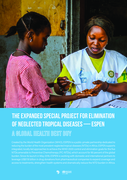
While virtually unheard of in developed countries, NTDs are a group of medically diverse parasitic and bacterial infectious diseases common in tropical and subtropical areas. NTDs affect more than 1.5 billion people annually, causing death, blindness, disfigurement, chronic pain, cognitive impairmen
...
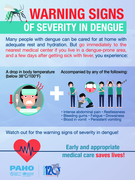
Poster on the warning signs of dengue severity. Many people with dengue can be cared for at home with adequate rest and hydration. But go immediately to the nearest medical center if you live in a dengue-prone area, and a few days after getting sick with fever, you experience: a drop in body tempera
...

Website last accessed on 14.04.2023
Food-borne trematode infections are zoonotic, and their pathogens can be transmitted to humans only after the completion of a complex life cycle, some stages of which take place in the body of an intermediate animal host. The first intermediate hosts of all tr
...
Website last accessed on 14.04.2023
Les trématodes d'origine alimentaire sont des zoonoses et leurs agents pathogènes ne peuvent être transmis à l'homme qu'après avoir accompli un cycle de vie complexe, dont certaines étapes se déroulent dans un hôte animal intermédiaire. Les premiers h
...
