
Filter
352
Featured
19
17
Language
Document type
246
36
20
17
10
8
6
5
2
2
Countries
33
32
27
20
11
9
8
4
4
4
3
3
3
3
2
2
2
2
2
2
2
2
2
2
2
2
2
2
2
1
1
1
1
1
1
1
1
1
1
1
1
1
1
1
1
1
1
1
1
1
1
1
1
1
1
1
1
1
1
1
1
1
1
1
1
1
1
1
1
1
1
1
1
1
1
1
1
1
1
1
1
1
1
Authors & Publishers
Publication Years
Category
30
4
2
2
1
1

This guideline includes 48 updated and new evidence-based recommendations related to MNS conditions. The guideline is targeted towards non-specialized health workers at primary- or secondary-level healthcare facilities, or those working at the district level including basic inpatient and outpatient
...
The OECD's "Alcohol Consumption" indicator measures the annual sales of pure alcohol in liters per person aged 15 and older. This metric helps assess long-term trends in alcohol consumption across countries. It's important to note that the methodology for converting alcoholic beverages to pure alcoh
...
The World Health Organization (WHO) launched the SAFER initiative in 2018 to address the global health and societal challenges posed by alcohol-related harm. The initiative outlines five key strategies aimed at reducing alcohol consumption and its associated consequences. These include strengthening
...
The Federal Centre for Health Education (BZgA) emphasizes the critical role of drug prevention in enhancing public health in Germany. Annually, the country faces significant premature mortality due to substance use: at least 110,000 deaths from smoking, 40,000 from harmful alcohol consumption, and a
...
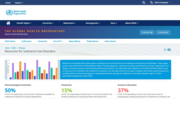
Welcome to the Global Information System on Resources for the Prevention and Treatment of Substance Use Disorders. These pages present data collected from WHO Member States in broad categories: governance, policy and financing, service organization and delivery, human resources and national informat
...
The Youth.gov webpage on "Substance Use/Misuse" provides information and resources about preventing and addressing substance abuse among youth. It highlights risk factors, prevention strategies, and support programs designed to reduce substance use and its negative impacts on young people. The site
...

Young people across the world are urging governments to shield them from predatory tobacco marketing tactics. The industry targets youth for a lifetime of profits, creating a new wave of addiction. The latest data show that children are using e-cigarettes at rates higher than adults in many countrie
...

Just under 2.5 million people die annually due to alcohol use. This global estimate, however, excludes most of the health burden
borne by others than the alcohol user. Alcohol’s harm to others includes a multitude of conditions, such as trauma from traffic crashes, fetal disorders due to prenatal
...
The Global status report on alcohol and health and treatment of substance use disorders presents a comprehensive overview of alcohol consumption, alcohol-related harm and policy responses as well as treatment capacities for alcohol and drug use disorders worldwide. The report is based on data collec
...

This integrated operational framework provides an overview of the connections between mental health, neurological and substance use (MNS) conditions, and their links to health, well-being and the broader public health and sustainable development agenda. The need for integrated approaches is increasi
...

Pharmaceutical News
Evaluation of Saccharide Content of the WHO 2nd International Standard for Haemophilus Influenzae Polysaccharide Polyribosyl Ribitol Phosphate (PRP) by HPAECPAD Analysis Following Acid Hydrolysis
Consultation Documents
Lamivudine and tenofovir disoproxil fumarate tablets (lami
...
HIV, viral hepatitis and STI epidemics, particularly among people who inject drugs and other key populations, continue to be fuelled by laws and policies criminalizing sex work; drug use or possession; diverse forms of gender expression and sexuality; stigma and discrimination; gender discrimination
...
There is an expanding market of no- and low-alcohol beverages (NoLos). However, their effects on global ethanol consumption and public health are still questioned. Policies and regulations about NoLos’ availability, acceptability and affordability are lacking and evidence about their benefits is l
...
The ninth WHO report on the global tobacco epidemic tracks the progress made by countries in tobacco control since 2008 and, marks 15 years since the introduction of the MPOWER technical package which is designed to help countries implement the demand-reduction measures of the WHO Framework Conventi
...

The environment in which young people live, learn and play significantly affects their decisions about whether to consume alcohol. Environmental factors are the main risk factors driving alcohol consumption and related harm among young people. Environments that normalize alcohol consumption – term
...

Tobacco has negative implications for the environment, the economy and the health of both smokers and non-smokers. All people have a fundamental right to breathe clean air, and tobacco-free environments are essential to guaranteeing this right. This includes protection in outdoor spaces. Whether sit
...
The mhGAP guideline supports countries to strengthen capacity to deal with the growing burden of mental, neurological and substance use (MNS) conditions and narrow the treatment gap. This new edition includes 30 updated and 18 new recommendations, alongside 90 pre-existing recommendations. This is t
...
This short brief describes the main findings and the key lessons learned from the research project "Evaluation of the impact of alcohol control policies on morbidity and mortality in Lithuania and other Baltic states", funded by the United States National Institute on Alcohol Abuse and Alcoholism fo
...
The World Health Organization's fact sheet on opioid overdose highlights the significant global health issue posed by opioids, which include natural, semi-synthetic, and synthetic compounds used primarily for pain management. Misuse and unsupervised use can lead to dependence and severe health probl
...
Country Profile
