
Filter
1341
Featured
80
144
Language
Document type
358
335
189
97
96
78
43
36
34
22
19
14
10
9
1
Countries
440
95
34
23
21
19
13
12
11
11
10
10
8
7
7
7
6
6
5
5
5
5
4
4
4
4
4
3
3
3
3
3
3
3
3
3
3
3
3
2
2
2
2
2
2
2
2
2
2
1
1
1
1
1
1
1
1
1
1
1
1
1
1
1
1
1
1
1
1
1
1
1
1
1
1
1
1
1
1
1
1
1
1
1
1
Authors & Publishers
Publication Years
Toolboxes
563
61
54
48
46
43
37
36
29
27
26
14
13
11
9
8
8
6
6
4
3
3
2
1
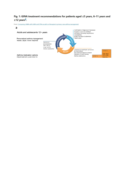
Adults and adolescents 12+ years. Asthma medication options: Adjust treatment up and down for individual patient needs
Asbestosis is a process of diffuse interstitial fibrosis of the lung due to exposure to asbestos dust. Asbestos is the name given to a group of naturally occurring minerals that are resistant to heat and corrosion; these include mineral fibers such as chrysotile, amosite, and crocidolite, among oth
...
Asbestos, the most frequent cause of occupational cancer, continues to be consumed ona massive scale, with millions of people exposed on a daily basis. This review explains why we havefailed in curtailing the silent epidemic of asbestos-related disease and why the numbers of asbestosvictims are like
...

Coronavirus disease 2019 has a mild disease course in children and adolescents. Chronic respiratory conditions, including asthma, have been suggested as risk factors; however, asthma in children is highly variable in both triggers and severity.
During the pandemic, pediatric asthma services limite
...
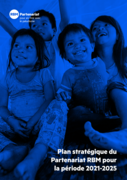
Le plan stratégique de la RBM Partnership to End Malaria pour 2021-2025 présente les priorités stratégiques du partenariat mondial visant à éliminer le paludisme. Le document se concentre sur trois objectifs stratégiques principaux : optimiser les programmes régionaux et nationaux, maximiser
...
Every two minutes, a child under the age of 5 dies from malaria. Under-five children accounted for 67 per cent of all malaria deaths worldwide in 2018. Most of them occurred in sub-Saharan Africa where an estimated 24 million children were infected with its deadliest form. In addition to being the t
...
Health in All Policies (HiAP) promotes health and equity. It is based on the recognition that our greatest health challenges for example, non-communicable diseases, health inequities and inequalities, climate change, and spiraling health care costs are highly complex and often linked through the soc
...

Some of the key findings of the report include:
Almost 80% of the general public are concerned about developing dementia at some point and 1 in 4 people think that there is nothing we can do to prevent dementia
35% of carers across the world said that they have hidden the diagnosis of de
...

This compendium collates current tools and resources on quality improvement developed by the WHO Service Delivery and Safety Department and provides examples of how the tools and resources have been applied in country settings. The target audience for this document are ministries of health, facility
...
The key aim of this guideline is to present recommendations based on a critical evaluation of the evidence on emerging digital health interventions that are contributing to health system improvements, based on an assessment of the benefits, harms, acceptability, feasibility, resource use and equity
...
The WHO Guidelines on risk reduction of cognitive decline and dementia provide evidence-based recommendations on lifestyle behaviours and interventions to delay or prevent cognitive decline and dementia. These WHO Guidelines are an important tool for health care providers as well as governments, pol
...
The aim of the framework is to provide guidance to Member States and partners on region-specific priority actions towards the goals, targets and milestones of the GTS. The central pillar of the framework is the adoption of programme phasing and transitioning, aimed at facilitating a tailored approac
...
CHW Central is an online community of practice that brings together program managers, experts, practitioners, researchers, and supporters of CHW programs. The website is a virtual meeting place to share resources and experiences and to discuss and develop questions and ideas on CHW programs and poli
...
The community engagement hub is a platform for the International Red Cross and Red Crescent Movement, designed to help us put communities at the heart of what we do.
The hub offers a range of learning materials, tools and guidance to support you to mainstream community engagement and accountabili
...
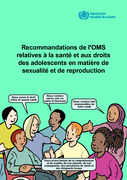
D’un format facilement accessible, simple à utiliser, le présent document décrit succinctement
les problèmes liés à la santé et aux droits en matière de sexualité et de reproduction qui peuvent
affecter les droits fondamentaux, la santé et le bien-être des adolescents (âgés de 10 à
...

At least half of the world’s population does not have full coverage of essential health services. Health expenses push more than 100 million people into extreme poverty each and every year, forcing them into terrible choices that no one should ever have to make: Buy medicine or food? Education or
...
Stronger collaboration, better health: global action plan for healthy lives and well-being for all
recommended
The overall objective of the Global Action Plan is to enhance collaboration among 12 global organizations engaged in health, development and humanitarian responses to accelerate country progress on the health-related SDG targets. The Plan presents a new approach to strengthening collaboration among
...
Countries must invest at least 1% more of GDP on primary health care to eliminate glaring coverage gaps
At current rates of progress up to 5 billion people will miss out on health care in 2030
Countries must increase spending on primary healthcare by at least 1% of their gross domestic product (
...

The ICOPE guidance for person-centred assessment and pathways in primary care (ICOPE Handbook) helps community health and care workers put the recommendations outlined in the ICOPE Guidelines into practice. The Handbook assists with setting person-centred goals, screening for loss in a range of doma
...

The ICOPE Handbook App helps implement ICOPE in community care settings by providing an interactive step-by-step approach to the Handbook. The App guides users through each section of the ICOPE Handbook from screening and assessment to designing a personalised care plan. The App also generates a pri
...
