
Filter
1341
Featured
80
144
Language
Document type
358
335
189
97
96
78
43
36
34
22
19
14
10
9
1
Countries
440
95
34
23
21
19
13
12
11
11
10
10
8
7
7
7
6
6
5
5
5
5
4
4
4
4
4
3
3
3
3
3
3
3
3
3
3
3
3
2
2
2
2
2
2
2
2
2
2
1
1
1
1
1
1
1
1
1
1
1
1
1
1
1
1
1
1
1
1
1
1
1
1
1
1
1
1
1
1
1
1
1
1
1
1
Authors & Publishers
Publication Years
Toolboxes
563
61
54
48
46
43
37
36
29
27
26
14
13
11
9
8
8
6
6
4
3
3
2
1
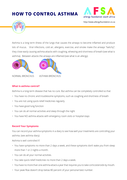
Asthma is a long term illness of the lungs that causes the airways to become inflamed and produce lots of mucus. Viral infections, cold air, allergens, exercise, and smoke make the airways “twitchy”; they close easily causing asthma attacks with coughing, wheezing and shortness of breath (see wh
...
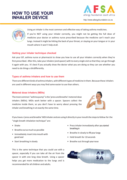
Using an inhaler is the most common and effective way of taking asthma medicines. If you’re NOT using your inhaler correctly, you might not be getting the full dose of medicine your doctor or asthma nurse prescribed because the medicine can’t reach your
lungs. Instead it might be hitting the ba
...
Asthma is a chronic (long-term) lung condition that affects your airways or bronchial tubes. It can cause your airways to narrow and their lining to swell and to produce extra mucus, which makes it more difficult to breathe. The narrowing of the airways causes you to feel short of breath, wheeze, or
...
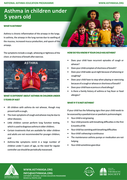
Asthma is chronic inflammation of the airways in the lungs.
In asthma, the airways in the lung narrow due to swelling of
the mucosa, increased mucus production, and spasm of the airways.
South Africa has possibly the highest incidence of malignant mesothelioma anywhere, thanks to more than a century of mining asbestos in the Northern Cape, North- West, Limpopo and Mpumulanga provinces. There are three types of asbestos and all were mined in South Africa; the most carcinogenic is cro
...

Severe asthma is associated with high morbidity, mortality, and health care utilization, but its burden in Africa is unknown. This article wants to determine the burden (prevalence,
mortality, and activity and work impairment) of severe asthma in 3 countries in East Africa: Uganda, Kenya, and Ethio
...

Despite recent global declines, under-five mortality remains high in many of the poorest countries. Barriers to timely
quality care, including user fees, distance to facilities and the availability of trained health workers and medical supplies,
hinder progress in further reducing morbidity and m
...

The target audience of this document (and the associated online companion tool) includes WHO country offices in Member States of the African Region; Member States’ ministries of health and their public health emergency operation centres; relevant external assessment teams; and partners looking to
...

The protracted humanitarian situation in northeastern Nigeria, particularly in Borno, Adamawa, and Yobe (BAY) States, remains a concern due to ongoing insecurity, displacement, food insecurity, disease outbreaks, and climate-related shocks. To address these complex challenges, the health sector has
...

Indoor residual spraying (IRS) involves applying residual insecticide to potential vector resting sites on the interior surfaces of human dwellings or other buildings. The main aim of IRS is to kill vectors before they are able to transmit pathogens to humans. When carried out correctly, IRS has his
...
Le flyer „MMV Strategy“ présente la stratégie de la Medicines for Malaria Venture (MMV) pour lutter contre le paludisme. Il met en avant les objectifs clés de l'organisation, qui se concentre sur la recherche et le développement de nouveaux médicaments antipaludiques. Le document décrit le
...
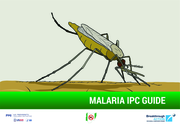
This guide provides practical tools and strategies for interpersonal communication (IPC) to support the prevention and treatment of malaria in northern Nigeria. Targeting health workers, community leaders and vulnerable groups such as pregnant women and young children, it aims to improve knowledge,
...
The aim of this protocol is to support the conduct of entomological comparative efficacy assessments for vector control products and the associated non-inferiority analysis. This evidence is used to inform discussions within the guidelines development context as to whether a new vector control prod
...
2023 was another year of significant progress in the fight against HIV, tuberculosis (TB) and malaria. In countries where the Global
Fund invests, there has been a full recovery from the disruptive impact of the COVID-19 pandemic. The results we have achieved in the last year build on our extraord
...
Depending on the health profile of the traveller, the type of travel to be undertaken, and the place of transit and destination, travellers may face various health risks during travel. The International travel and health collection is an update of International travel and health (2012) and serves as
...
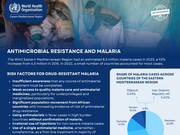
Antimicrobial resistance (AMR) and malaria remain significant public health challenges in the WHO Eastern Mediterranean Region (EMR). In 2021, the region reported 1.7 million sepsis-related deaths, with 373,000 associated with bacterial AMR. High antibiotic consumption, particularly in high-income c
...
The 2024 World Malaria Report shows that the malaria burden remains overwhelmingly concentrated in Africa. The continent accounted for 94% of global cases and 95% of malaria-related deaths in 2023. Although the number of malaria cases increased globally from 204 million in 2000 to 246 million in 202
...
This checklist is an operational tool to help national authorities develop or revise national respiratory pathogen (inclusive of influenza and coronaviruses) pandemic preparedness plans.
Patients with diabetes are at increased risk of developing cardiovascular disease (CVD) with its manifestations of coronary artery disease (CAD), heart failure (HF), atrial fibrillation (AF), and stroke, as well as aortic and peripheral artery diseases. In addition, diabetes is a major risk factor f
...
The World Health Organization's fact sheet on Chronic Obstructive Pulmonary Disease (COPD) - arabic version
