
Filter
135
Featured
1
Language
Document type
61
16
12
8
8
6
5
5
4
4
3
2
1
Countries
3
3
2
1
1
1
1
1
1
1
Authors & Publishers
Publication Years
Category
47
12
3
2
1
1
The World Health Organization's fact sheet on opioid overdose highlights the significant global health issue posed by opioids, which include natural, semi-synthetic, and synthetic compounds used primarily for pain management. Misuse and unsupervised use can lead to dependence and severe health probl
...
One in three people globally suffers from at least one form of malnutrition, leading to poor health outcomes and low productivity in the workplace. The workplace offers an important, relatively unexploited opportunity to address malnutrition in all its forms. This narrative literature review aims to
...
The document emphasizes integrating environmental considerations into nutrition programs. It introduces a screening tool piloted across ten projects to identify environmental risks and opportunities, fostering sustainable practices in food systems. The tool promotes collaboration, co-learning, and a
...
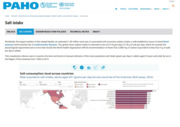
The article on the PAHO website discusses the health risks of excessive salt consumption, which contributes to numerous deaths worldwide. It highlights that average salt intake significantly exceeds WHO recommendations, particularly in the Americas, and suggests measures like reducing salt in foods
...
The World Health Organization (WHO) has developed this report to monitor progress and identify areas for action in the implementation of sodium reduction policies and other measures within Member States and across WHO regions and World Bank income groups. For the first time, a Sodium Country Score f
...
Tobacco kills up to half of its users who don’t quit (1-3).
Tobacco kills more than 8 million people each year, including an estimated 1.3 million non-smokers who are exposed to second-hand smoke Around 80% of the world's 1.3 billion tobacco users live in low- and middle-income countries.In 2020,
...
A systematic review of connections between climate change, globalization and NCD'S
A systematic review of connections between climate change, globalization and NCD'S
En Dale un Giro a tu Alimentación te compartimos información sobre hábitos saludables, desde la alimentación, ejercicio y autocuidado, con el objetivo de sentirte bien desde todos los espacios.
Según la Organización Panamerticana de la Salud (OPS), las enfermedades no transmisibles (ENT): cardiopatías coronarias, accidentes cerebrovasculares, cáncer, diabetes y enfermedades pulmonares crónicas, son responsables del 81% de todas las muertes en la Región de las Américas, de las que el
...
This report presents an overview of the state of air quality and its impacts on health in Africa.

The combined effects from ambient (outdoor) air pollution and indoor (household, in particular) air pollution cause approximately 7 million premature deaths every year, largely as a result of increased mortality from stroke, IHD, COPD, lung cancer and acute respiratory infections (1). Air pollution
...
In 2020, emissions of all key air pollutants in the 27 Member States of the EU (EU-27) continued to decline, maintaining a trend seen since 2005. This was the case despite an increase in gross domestic product (GDP) over the same period.
Residential, commercial and institutional energy consumption
...
The World Health Organization (WHO) provides an overview of alcohol consumption and its global impact. Alcohol, containing ethanol, is a psychoactive and toxic substance that can lead to dependence. In 2019, alcohol consumption was responsible for approximately 2.6 million deaths worldwide, with 1.6
...

The article "Capacity-Building in Community-Based Drug Treatment Services" by Michael J. Cole focuses on the global challenges in providing adequate community-based drug treatment services. It highlights the gaps in availability, quality, and accessibility of evidence-based care. The article discuss
...
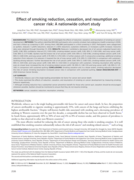
Background
The objective of this study was to investigate the effects of reduction, cessation, and resumption of smoking on cancer development.
Methods
The authors identified 893,582 participants who currently smoked, had undergone a health screening in 2009, and had a follow-up screening in 20
...
The World Health Organization's fact sheet on physical activity emphasizes its critical role in maintaining health and well-being. It outlines the benefits of regular physical activity, such as reducing the risk of noncommunicable diseases like heart disease, stroke, diabetes, and certain cancers. T
...
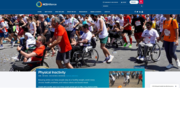
Keeping active can help people stay at a healthy weight, avoid many chronic health problems, and reduce stress and boost mood.
Despite all its benefits, about one in three people globally gets too little, if any, physical activity.

School Nutrition Education Material for Teachers, Parents, and School-Aged Children is a set of nutrition education materials developed by the World Food Programme with the Ministry of Education, Culture, Research, and Technology and UNICEF
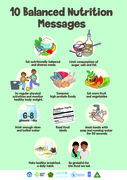
School Nutrition Education Material for Teachers, Parents, and School-Aged Children is a set of nutrition education materials developed by the World Food Programme with the Ministry of Education, Culture, Research, and Technology and UNICEF
