
Filter
144
Featured
1
Language
Document type
63
28
23
16
3
2
2
2
1
1
1
1
1
Countries
94
11
8
5
5
2
2
2
1
1
1
1
1
1
1
1
1
1
1
Authors & Publishers
Publication Years
Category
111
6
4
2
1
PAHO has developed a series of country profiles on diabetes that illustrate the growing burden of diabetes and diabetic kidney disease in countries in the Region of the Americas. The country profiles reveal that over the past 20 years, diabetes disability (excluding diabetic kidney disease) increase
...

Diabetes is a chronic, metabolic disease characterized by elevated levels of blood glucose (or blood sugar), which leads over time to serious damage to the heart, blood vessels, eyes, kidneys and nerves. The most common is type 2 diabetes, usually in adults, which occurs when the body becomes resist
...

It is now well known that there is a pandemic of Type 2 Diabetes in the world particularly in developing countries. This fact has several implications for the health care system in the developing countries because this condition is associated with metabolic and vascular complications which in turn i
...

Every November 14, World Diabetes Day is commemorated. This is an opportunity to raise awareness about the impact of diabetes on the health of people and to highlight the opportunities to strengthen the prevention, diagnosis, and treatment of diabetes.

Diabetes is a chronic disease that occurs either when the pancreas does not produce enough insulin or when the body cannot effectively use the insulin it produces. Insulin is a hormone that regulates blood glucose. Hyperglycaemia, also called raised blood glucose or raised blood sugar, is a common e
...

The World Health Organization's fact sheet on diabetes provides an overview of the disease, highlighting its increasing prevalence, particularly in low- and middle-income countries. It outlines the main types of diabetes—Type 1, Type 2, and gestational diabetes—detailing their characteristics an
...

The World Health Organization's fact sheet on diabetes provides an overview of the disease, highlighting its increasing prevalence, particularly in low- and middle-income countries. It outlines the main types of diabetes—Type 1, Type 2, and gestational diabetes—detailing their characteristics an
...
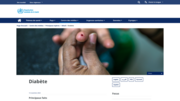
Le nombre de personnes atteintes de diabète est passé de 108 millions en 1980 à 422 millions en 2014

Diabetes is a chronic disease that occurs either when the pancreas does not produce enough insulin or when the body cannot effectively use the insulin it produces. Insulin is a hormone that regulates blood glucose. Hyperglycaemia, also called raised blood glucose or raised blood sugar, is a common e
...

Diabetes is a chronic disease that occurs either when the pancreas does not produce enough insulin or when the body cannot effectively use the insulin it produces. Insulin is a hormone that regulates blood glucose. Hyperglycaemia, also called raised blood glucose or raised blood sugar, is a common e
...

The CDC webpage "Types of Insulin" provides an overview of the various insulin types used in diabetes management, categorized by their onset, peak time, and duration of action. It explains terms like onset (how quickly insulin lowers blood sugar), peak time (when insulin is at maximum strength), and
...

The document provides the NICE Quality Standard for managing Type 2 diabetes in adults (QS209). It outlines evidence-based recommendations for preventing Type 2 diabetes, structured education, continuous glucose monitoring (CGM), medication such as SGLT2 inhibitors, and regular care processes to mon
...

The document provides quality standards for managing Type 1 diabetes in adults, emphasizing areas like structured education, continuous glucose monitoring (CGM), cardiovascular risk management, and diabetic foot assessment. It aims to improve care processes, reduce complications, and enhance patient
...

This event was an opportunity for healthcare professionals, policy makers, researchers, and NHS commissioners to meet with one another, take stock of the activities happening around the UK, upskill, and work together to improve diabetes and related disease outcomes for people of Black, Black African
...

Diabetes is one of the leading causes of chronic kidney disease (CKD). Up to 40% of people living with diabetes develop CKD, and the number of new cases of CKD in people with type 2 diabetes increased by 74% between 1990 and 2017. The prevalence of diabetes-related CKD varies widely between countrie
...
Non-communicable diseases (NCDs) are major global public health concerns that cause nearly three-quarters of the burden of mortality worldwide. Cardiovascular diseases, cancer, chronic respiratory diseases, and diabetes alone account for over eight out of ten NCD deaths. To alleviate this huge burde
...

Diabetes is an increasingly prevalent yet under-recognised health crisis in Africa, driven by demographic and socioeconomic transitions. In 2021, 24 million adults in the region were living with diabetes, and this figure is expected to increase by 129% by 2045.
Heliyon 2023 Oct 20;9(11):e21286. doi: 10.1016/heliyon.2023.e21286. This study conducted a systematic review of observational, community-based studies from 2013 to 2022, aiming to estimate the prevalence of prediabetes and its associated risk factors within the adult East African population. Twenty
...

The alarming rise in the worldwide prevalence of obesity and associated type 2 diabetes mellitus (T2DM) have reached epidemic portions. Diabetes in its many forms and T2DM have different physiological backgrounds and are difficult to classify. Bariatric surgery (BS) is considered the most effective
...

The burden of diabetes is enormous, positioning it as one of the main challenges facing public health today. Currently, it is estimated that 62 million people are living with diabetes in the Region of the Americas and projections show its prevalence will continue rising over the following years. The
...
