
Filter
31
Featured
1
Language
Document type
14
9
5
3
Countries
24
2
1
1
1
1
1
1
1
1
Authors & Publishers
Publication Years
Category
2
1

Video last accessed on 04.06.2023
Video Dailymotion

Website last accessed on 04.06.2023

Website last accessed on 07.06.2023
Stopleishmania.org is an initiative of the VISAVET Health Surveillance Centre (UCM), the National Centre of Microbiology (ISCIII), the Animal Protection Centre (Madrid City Council) and the Directorate of Public Health (Regional Government of Madrid). This proj
...
Die Infektion wird durch nachtaktive, blutsaugende Raubwanzen übertragen. Während des Blutsaugens scheiden die infizierten Wanzen Trypanosomen aus, die Bindehaut, Schleimhäute, Abschürfungen und Hautverletzungen einschließlich der Bißwunde kontaminieren können. Die Übertragung kann auch durc
...
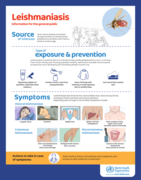
Leishmaniasis is a parasitic disease that is found in parts of the tropics, subtropics, and southern Europe. Leishmaniasis is caused by infection with Leishmania parasites, which are spread by the bite of infected sand flies. There are several different forms of leishmaniasis in people. The most com
...
Leishmaniasis is a vector-borne tropical/subtropical disease caused by an intracellular parasite transmitted to humans by sand fly bite. It is endemic in Asia, Africa, the Americas, and the Mediterranean region. Worldwide reports include 1.5–2 million new cases each year, more than 300 million at
...
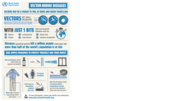
Vectors can be a threat to you, at home and when travelling.
Simple measures for protection.

Leishmaniasis is a parasitic disease caused by the Leishmania parasite. This parasite typically lives in infected sand flies. You can contract leishmaniasis from a bite of an infected sand fly.
The sand flies that carry the parasite typically reside in tropical and subtropical environments. Fatal
...
Aide-mémoire - Leishmaniose

Frequently Asked Questions on Visceral Leishmaniasis

