
Filter
66
Text search:
Humanitarian
Bulletin
Ethiopia
Featured
10
24
Language
Document type
39
15
4
4
2
2
Countries / Regions
10
7
5
5
4
4
3
3
3
3
2
2
1
1
1
1
1
1
1
1
1
1
1
1
1
1
Authors & Publishers
Publication Years
Category
20
10
10
6
4
1
Toolboxes
5
4
4
4
3
3
3
2
2
1
1
1
1
1
1
1
1
1
1
1

Issue #6| 23 March– 05 April 2020
Summary of the Ethopian country office of WHO on COVID-19 activities.
Humanitarian Response in Violent Conflict
recommended
A Toolbox of Conflict Sensitive Indicators.
This toolbox adapts a sample of 15 indicators from the SPHERE Project's Humanitarian Charter and Minimum Standards in Humanitarian Response to be even mo
...
Examining the needs of at‐risk youth in the Middle East and North Africa: A multi‐method landscape analysis and systematic literature review
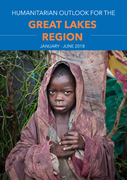
The report covers: drivers of humanitarian crises in the region, particularly the intensification of violence in the DRC; manifestations of humanitarian needs, including record levels of displacemen
...
A new report by the world’s largest humanitarian network warns that the number of people needing humanitarian assistance every year as a result of climate-related disasters could double by 2050. I
...
Cholera is a diarrheal disease caused by the bacterium Vibrio cholera. The infection primarily spreads through contaminated water and food. Symptoms include the onset of acute diarrhea and/or vomiting, muscle cramps, and body weakness. If untreated, the infection can result in rapid dehydration and
...

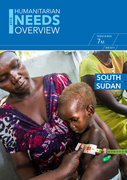
2018 South Sudan Humanitarian Needs Overview
recommended
This document provides the Humanitarian Country Team’s shared understanding of the crisis, including the most pressing
humanitarian needs and the estimated number of people who need assistance.
...

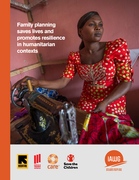
Globally, it is estimated that 128.6 million people are currently in need of humanitarian assistance. Of these individuals, approximately one-fourth are women and girls of reproductive age. Although family planning is one of the most life-saving, em
...

The International Rescue Committee (IRC) and the United Nations Children’s Fund (UNICEF) have newly developed "Caring for Child Survivors of Sexual Abuse Guidelines" for health and psychosocial providers in humanitarian settings - “CCS Guideline
...
Objective: To identify gaps in national stroke guidelines that could be bridged to enhance the quality of stroke care services in low- and
middle-income countries.
Methods: We systematically searched medical databases and websites of medical societies and contacted international organizations.
Co
...
The guide is designed to help disaster managers in national Governments gain basic knowledge of how to use international tools and services. It aims to support the growing disaster response and disaster response preparedness capabilities that exist at national level across Asia and the Pacific.
...
...

Circulating vaccine-derived poliovirus type 2 in Angola
Ebola virus disease in Democratic Republic of the Congo
Dengue fever in Côte d’Ivoire
Humanitarian crisis in north-east Nigeria.
The Minimum Standards for Protection Mainstreaming are a set of international standards designed to provide practical assistance to humanitarian actors to mainstream protection in the assessment, design, implementation, monitoring and evaluation of
...

This handbook is a quick-reference tool that provides practical, field-level guidance to establish and maintain a GBV sub-cluster in a humanitarian emergency. It provides the foundations for coordination. More in-depth information can be pursued thr
...
