Filter
1164
Featured
Recommendations
18
New Publications
456
Language
Document type
No document type
714
Situation Updates
146
Studies & Reports
96
Fact sheets
84
Resource Platforms
58
Infographics
43
Dashboards/Maps
10
Strategic & Response Plan
8
Manuals
2
Guidelines
2
Training Material
1
Countries / Regions
Nepal
51
India
47
Venezuela
44
Namibia
43
Uganda
41
Nigeria
40
Indonesia
40
Sierra Leone
38
Ethiopia
38
Senegal
37
Rwanda
36
Congo, Democratic Republic of
34
Kenya
32
Paraguay
32
Zambia
31
Bangladesh
29
Ukraine
29
Lesotho
27
Myanmar / Burma
27
Tanzania
25
Burkina Faso
23
Liberia
22
Haiti
22
Philippines
21
Ghana
19
Latin America and the Carribbean
18
Argentina
16
Zimbabwe
15
Syria
15
South Africa
15
Malawi
15
Brazil
15
Madagascar
15
Cambodia
14
Mozambique
14
Eswatini/ Swaziland
14
Botswana
13
Colombia
12
Bolivia
12
Global
11
Peru
10
South Sudan
9
Benin
9
Central African Republic
9
Togo
7
Pakistan
7
Ecuador
7
Africa
6
Eastern Europe and Central Asia
5
Chile
4
West and Central Africa
4
Russia
4
Moldova
4
Azerbaijan
4
Côte d’Ivoire / Ivory Coast
3
Somalia
3
Sudan
3
Yemen
3
East and Southern Africa
3
Western Pacific Region
3
Western and Central Europe
3
Tajikistan
3
Uzbekistan
3
Georgia
3
Belarus
3
Guinea
2
Mali
2
Jordan
2
Afghanistan
2
Germany
2
Lebanon
2
Chad
2
El Salvador
2
Guatemala
2
Middle East and North Africa
2
South–East Asia Region
2
Albania
2
Armenia
2
Estonia
2
Cameroon
1
Iraq
1
Turkey
1
Egypt
1
Gambia
1
Burundi
1
Honduras
1
Libya
1
Mexico
1
Asia
1
Eastern Europe
1
Romania
1
Kazakhstan
1
Uruguay
1
Portugal
1
Authors & Publishers
Publication Years
Toolboxes
TB
83
COVID-19
38
Conflict
26
HIV
14
Ebola & Marburg
10
Planetary Health
9
Refugee
7
Mental Health
7
NTDs
7
Natural Hazards
5
Global Health Education
5
Malaria
5
Polio
4
Cholera
3
Disability
1
Rapid Response
1
Caregiver
1
Health Financing Toolbox
1
NCDs
1
Climate change is a major risk to good development outcomes, and the World Bank Group is committed to playing an important role in helping countries integrate climate action into their core development agendas. The World Bank Group is committed to supporting client countries to invest in and build a
...
his profile is part of a series of Climate Risk Country Profiles developed by the World Bank Group (WBG). The country profile
synthesizes most relevant data and information on climate change, disaster risk reduction, and adaptation actions and policies
at the country level. The country profile ser
...
This profile is part of a series of Climate Risk Country Profiles developed by the World Bank Group (WBG). The country profile synthesizes most relevant data and information on climate change, disaster risk reduction, and adaptation actions and policies at the country level. The country profile seri
...
Haiti is one of the worst food crises in the world with 46 percent of the population projected to be in high acute food security, mainly due to reduced agricultural production caused by a long period of drought, storms and increased prices of basic foodstuffs, which are compounded by the effects of
...
IOM Ethiopia plans to provide timely and tailored humanitarian assistance and resilience programming for crisis-affected populations in Ethiopia and vulnerable migrant returnees, aiming towards durable and sustainable solutions.
Climate change is a major risk to good development outcomes, and the World Bank Group is committed to playing an important role in helping countries integrate climate action into their core development agendas. The World Bank Group is committed to supporting client countries to invest in and build a
...
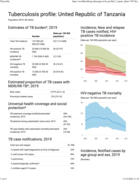
Country profile: Tanzania
This profile is part of a series of Climate Risk Country Profiles developed by the World Bank Group (WBG). The country profile
synthesizes most relevant data and information on climate change, disaster risk reduction, and adaptation actions and policies
at the country level. The country profile se
...
This document is a compilation of all questions, justifications, and sources used to determine the 2021 Global Health Security Index scores for Zambia. For a category and indicator-level summary, please see the Country Profile for Zambia.
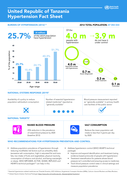
In 2012, 25.7% of adults in Tanzania aged 25–64 had hypertension, affecting approximately 4 million people. However, most remain unaware of their condition or are not receiving treatment, with only 0.1 million achieving blood pressure control.
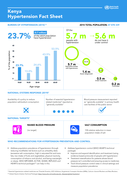
In 2015, 23.7% of Kenyan adults aged 18–69 — around 5.7 million people — had hypertension. However, only 0.2 million of these individuals had their condition under control. Awareness and treatment rates remain low.
Country profile: Cote d'Ivoire
Accessed November 2017