
Filter
103
Featured
15
7
Language
Document type
26
25
18
12
5
4
4
3
2
2
1
1
Countries
23
6
2
2
2
1
1
1
1
1
1
1
1
1
1
Authors & Publishers
Publication Years
Category
20
16
7
5
3
O Manual para aplicação de borrifação residual em áreas urbanas para o controle do Aedes aegypti não se dirige apenas ao pessoal operacional e aos gerentes e gestores de nível médio dos programas de prevenção e controle das doenças transmitidas pelo Aedes, mas também à comunidade acadê
...

This document provides the specifications for major pesticide application equipment used for control of vectors of diseases. The specification guidelines contained herein are intended to assist national authorities and other public health users in selecting equipment of assured quality for applicati
...
The skin of a patient is the first and most visible structure of the body that any health-care worker encounters during the course of an examination. To the patient, it is also highly visible, and any disease that affects it is noticeable and will have an impact on personal and social well-being. Th
...
Ce rapport montre que d’importants progrès ont été accomplis en 2015 pour atteindre les cibles de la feuille de route. Ces résultats procèdent de la mise en œuvre de cinq interventions recommandées par l’OMS pour vaincre les MTN : chimiothérapie préventive ; prise en charge innovante et
...
En la presente guía de capacitación se explica cómo reconocer los signos y los síntomas de las enfermedades tropicales desatendidas de la piel a partir de sus características visibles. También contiene información sobre cómo diagnosticar y tratar los problemas frecuentes de la piel que puede
...

Epidemics of infectious diseases are occurring more often, and spreading faster and further than ever, in many different regions of the world. The background factors of this threat are biological, environmental and lifestyle changes, among others. A potentially fatal combination of newly-discovered
...
Comment reconnaître les maladies tropicales négligées selon les altérations de la peau : guide de formation à l’usage du
personnel sanitaire de première lignes [Recognizing neglected tropical diseases through changes on the skin: a training
guide for front-line health workers]
Guia de treinamento para profissionais de saúde da linha de frente
Versão oficial em português da obra original em Inglês
Recognizing neglected tropical diseases through changes on the skin: a training guide for front-line health workers
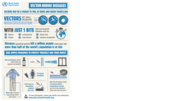
Vectors can be a threat to you, at home and when travelling.
Simple measures for protection.

Le Cadre d’action régional vise à aider les États Membres, l’OMS et tous les autres donateurs et partenaires à travailler ensemble pour remédier systématiquement et progressivement aux diverses faiblesses relevées dans les principaux domaines programmatiques et/ou de contribuer à renforc
...
Plague: Knowledge resources for responders
recommended
Plague is a zoonotic disease caused by the bacteria Yersinia pestis, found in small mammals. It is transmitted between animals by their fleas.
The bacteria, the animal reservoir and the vector in a given area are collectively called a “plague natural focus”. Humans can become infected by bein
...

The Global vector control response 2017–2030 (GVCR) provides a new strategy to strengthen vector control worldwide through increased capacity, improved surveillance, better coordination and integrated action across sectors and diseases.
In May 2017, the World Health Assembly adopted resolutio ...
In May 2017, the World Health Assembly adopted resolutio ...
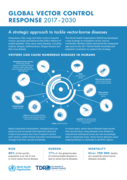
Mosquitoes, flies, bugs and other vectors transmit viruses, parasites and bacteria that infect millions of people globally. They cause many diseases, including malaria, dengue, leishmaniases, Chagas disease and Zika virus disease.
The World Health Organization (WHO) has developed a new strategy to
...

This fourth WHO report on neglected tropical diseases (NTDs) reviews the progress made towards achieving the Roadmap targets for 2020, noting the remaining challenges, then looks beyond 2020 to evaluate the changing global health and development landscape, considering the implications of integrating
...
Integrating neglected tropical diseases into global health and development: fourth WHO report on neglected tropical diseases evaluates the changing global public health landscape; assesses progress towards the 2020 targets; and considers the possible core elements of a strategic vision to integratin
...

Vector-borne diseases are responsible for 17% of the global burden of communicable diseases and more than 500 000 deaths annually. The ambitious global targets for the control of vector-borne diseases come in the context of the (re-)emergence of diseases, increasing resistances to insecticides and u
...
This toolkit for integrated vector management (IVM) is designed to help national and regional programme managers coordinate across sectors to design and run large IVM programmes.
The toolkit provides the technical detail required to plan, implement, monitor and evaluate an IVM approach. IVM can ...
The toolkit provides the technical detail required to plan, implement, monitor and evaluate an IVM approach. IVM can ...

National Deworming Day – ASHA information Handout
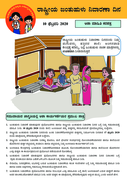
National Deworming Day – ASHA information Handout
This report outlines the coordination and partnership between two key ministries (Education and Public Health) in Kenya, other line ministries, the private sector, NGOs and the community in implementing the first phase of a sub-national school-based deworming exercise. The areas targeted included Co
...

