
Filter
204
Featured
7
2
Language
Document type
104
24
16
14
12
9
7
6
4
3
2
2
1
Countries
19
3
2
2
2
2
2
2
2
2
2
1
1
1
1
1
1
1
1
1
1
1
1
1
1
1
1
1
1
1
1
Authors & Publishers
Publication Years
Category
24
23
9
7
4
1
Monitoring air quality (for example collecting continuous and quality data) is integral and critical to detecting air pollutants and to ensuring information sharing with the public, policy-makers, and regulatory compliance. Air quality monitoring is also one of the first and necessary steps for quan
...
La Hoja de Ruta del Grupo Regional de Expertos en AirQ+ representa un hito para la región de las Américas en la integración de la evidencia científica en la toma de decisiones sobre calidad del aire y salud pública. Fruto de un proceso de construcción colectiva que reunió a más de 100 especi
...

This report presents the performance results of 21 household water treatment (HWT) products evaluated in Rounds III and IV of the WHO International Scheme to Evaluate Household Water Treatment Technologies (the Scheme). Released alongside a consolidated overview of findings from Rounds I–II, it re
...

This guide defines public spaces for children as those that can be easily and freely accessed and enjoyed by all children, either alone or with friends or family, regardless of gender,
ethnicity, sexuality, nationality, social status or physical ability. Whatever their context, these places are saf
...
Series: Energy and Health in Low-Income and Middle-Income Countries, The Lancet Global Health, Volume 14, Issue 4e626-e639April 2026.Open access. Reliable, affordable, sustainable, and equitable electricity access in health-care facilities is fundamental to achieving universal health coverage. Decen
...
os pacientes y el personal de atención de salud permanecen en los establecimientos de salud durante largos períodos. Por lo tanto, asegurar una calidad del ambiente en espacios
interiores (CAEI) en relación con la salud es esencial para proteger a los pacientes, visitantes y trabajadores de salu
...
This document is designed to assist UNICEF and WHO country offices in collaborating with national, sub-national, and
local counterparts to implement the UNICEF Game Plan to Reach Safely Managed Sanitation 2022–2030 and the WHO
Guidelines on sanitation and health. It also aims to facilitate compl
...
More than a quarter of the global population still cook meals over open fires and/or on simple stoves fuelled by firewood, agricultural waste, dried dung, charcoal, and coal. This practice results in the emission of harmful and dangerously high levels of household air pollution.
Exposure to this h
...
Exposure to air pollution has significant adverse health effects, leading to nearly 1 in every 8 deaths globally. Air pollution affects all age groups, from unborn children to older people, in both high- and low-income nations.

WHO, as the coordinating authority on international health, supports countries in protecting public health through evidence-based policies and actions. Considering the significant health burden and the multiple potential benefits of interventions, the WHO Air Quality, Energy and Health Unit aims to
...
A escala mundial, unos 2100 millones de personas siguen cocinando con combustibles sólidos (como leña, desechos agrícolas, carbón vegetal y mineral y excrementos de animales) y queroseno, en fuegos abiertos y fogones poco eficientes (1). En su mayor parte, se trata de personas en situación de p
...
La contaminación atmosférica proviene principalmente de cinco actividades humanas que emiten una gama de sustancias, tales como monóxido de carbono, dióxido de carbono, óxido de nitrógeno, dióxido de nitrógeno, dióxido de azufre, ozono troposférico o a nivel del suelo, material particulado
...
La contaminación atmosférica es una de las mayores amenazas para la salud infantil. El 99% de la población mundial vive en lugares donde el aire se considera nocivo. Respirar aire contaminado perjudica la salud de los niños y las niñas y pone en peligro su futuro.
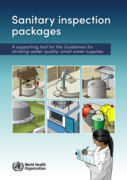
A sanitary inspection is a simple, on-site evaluation (traditionally using a checklist) to help identify and support the management of priority risk factors that may lead to contamination of a drinking-water supply. Sanitary inspections are a well-established and widely-applied practice. They can su
...
El Marco de monitoreo del WASH Cluster Honduras es un documento de referencia para el monitoreo de las actividades que realizan los socios en terreno y para los puntos focales que están a cargo de reportar las actividades en la plataforma. El GTMI Honduras liderado por OCHA utiliza la plataforma 34
...
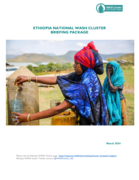
The document is part of the briefing package for Ethiopia's Water, Sanitation, and Hygiene (WASH) Cluster, which consists of resources that provide greater clarity and guidance to the cluster partners and other humanitarian actors.
The document is divided into four sections. Each section represen
...

Around the world, more than 2 billion people lack access to safely managed water, sanitation and hygiene services, with conflicts and climate change exacerbating the issue.
Unsafe and insufficient WASH facilities, especially in rural and remote areas, can lead to increased health complications fo
...

Clean Household Energy Solutions Toolkit
recommended
A systematic review of the evidence has demonstrated the key role of clean household energy in improving global health, reaffirming the importance of United Nations’ Sustainable Development Goal (SDG) 7, to achieve worldwide access to affordable, modern and clean energy by 2030.
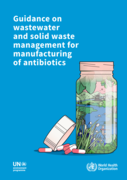
Control of pollution from antibiotic manufacturing is a key part of safeguarding the longevity of antibiotics for all. Pollution contributes to antibiotic resistance and potentially undermines the effectiveness of medicines. High levels of antibiotics in water bodies downstream of manufacturing site
...
