Filter
1718
Text search:
migration
policy
Featured
109
503
Language
Document type
863
455
140
99
79
31
22
19
3
3
3
1
Countries
96
63
61
59
53
42
39
35
35
33
32
29
28
26
25
24
24
24
23
22
20
18
16
16
15
15
15
14
13
13
13
12
11
11
10
10
10
10
10
10
9
9
9
8
8
7
7
7
7
7
7
7
7
7
6
5
5
5
5
5
5
4
4
4
4
4
4
4
4
4
3
3
3
3
3
3
3
3
3
2
2
2
2
2
2
2
2
2
2
2
2
2
2
1
1
1
1
1
1
1
1
1
1
1
1
1
1
1
1
1
1
1
1
Authors & Publishers
Publication Years
Category
649
142
88
60
54
24
9
1
Toolboxes
186
143
127
109
101
96
74
39
38
38
35
32
29
28
23
18
17
14
12
8
7
7
5
3
3
1

The document presents a strategic framework by the World Health Organization for managing risks related to emergencies and disasters in the health sector. It highlights that such events (such as epidemics, natural disasters, or conflicts) have major impacts on health, healthcare systems, and societa
...

BMC Public Health (2025) 25:3774 https://doi.org/10.1186/s12889-025-24555-6. The study results provide useful insights on how climate change influences malaria in African countries, and reiterates the need for a greater engagement of policymakers and social partners, in intensifying the action neede
...

The Gender Assessment Tool for National HIV Responses (Gender Assessment Tool) is intended to assist countries in assessing their HIV epidemic, context and response through an intersectional gender lens, with the aim of strengthening gender-transformative, equitable and rights-based HIV responses. T
...


Emergency Medical Teams 2030 strategy
recommended
The Emergency Medical Teams (EMT) initiative plays a vital role in building this stronger and
more resilient global health emergency architecture, both by driving its formation and by
contributing to a rapidly deployable global health emergency corps. The Initiative and EMTs
bring something uniqu
...

A toolkit designed to support with developing effective community engagement strategies for different emergencies with specific tools for natural hazards, conflicts, disease outbreaks, epidemics, and complex emergencies.

The Global Report on Food Crises 2026 provides a comprehensive overview of acute food insecurity, acute malnutrition and displacement in countries experiencing food crises. The report analyzes the scale, severity and drivers of food crises worldwide, highlighting the impacts of conflict, weather ext
...
This report aims to estimate the economic cost of providing regular access to healthcare for migrants in an irregular situation, compared with the cost of providing treatment in emergency cases only. Two specific medical conditions – hypertension and prenatal care – were selected as examples, an
...

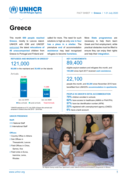
This month 600 people reached Greece, mostly to Lesvos island. UNHCR with IOM and UNICEF welcomed the latest relocations of 49 unaccompanied children from Greece to Portugal and Finland and called for more. The need for such solutions is high as only one in four has a place in a shelter. The prematu
...
PLOSONE| https://doi.org/10.1371/journal.pone.0204882October17,2018

Empfehlungen und Material zur Umsetzung von Beschwerdeverfahren.
Die vorliegenden Empfehlungen und Praxismaterialien sind Ergebnisse aus dem Projekt "Gewaltschutz für Fraün und Beschwerdemanagement in Unterkünften für Geflüchtet" von Fraünhauskoordinierung e.V. (FHK).
Chaque année, des milliers d’enfants béninois meurent ou n’arrivent pas à développer pleinement leur potentiel physique ou intellectuel du fait de la malnutrition chronique. La présente politique du secteur de la santé pour la nutrition se focalise sur la mère, lenourrisson,
...

The Global Appeal provides updated information for government, private donors, partners and other readers interested in UNHCR's priorities and budgeted activities for 2021 to protect and improve the lives of tens of millions of people of concern (refugees, internally displaced people, stateless pers
...
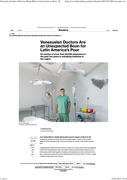
Over 22,000 medical professionals fled Venezuela from 2012-2017 and sought jobs in other Latin American countries.
The influx of specialists in places like Chile, Argentina, Colombia, and Peru has helped address critical gaps in care—patients in poorer or rural communities wait months for special
...
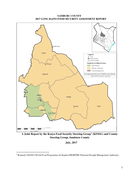
Movilidad Humana, oportunidades compartidas recomienda ampliar las rutas legales, reducir los costos de transacción de las remesas, garantizar los derechos de las personas migrantes, especialmente para las mujeres, fomentar la integración y la cohesión social, y movilizar a las diásporas. Dado q
...