Filter
1690
Text search:
participatory
approach
Featured
147
523
Language
Document type
1001
225
172
133
87
46
12
8
5
1
Countries
71
58
55
52
51
47
44
37
33
29
29
29
29
25
25
23
20
18
17
17
16
16
15
15
14
14
11
11
10
10
10
9
9
8
8
8
8
7
7
7
7
6
6
6
6
6
6
6
5
5
4
4
4
4
4
4
4
3
3
3
2
2
2
2
2
2
2
2
1
1
1
1
1
1
1
1
1
1
1
1
1
1
1
1
1
1
1
1
1
1
1
1
1
1
1
Authors & Publishers
Publication Years
Category
639
211
128
103
67
52
2
Toolboxes
128
124
107
80
60
58
47
46
44
40
38
38
36
36
26
25
20
15
9
8
8
7
5
5
5
1
1
Effective risk communication requires the alignment of complex factors including trust between the communicator and the audience(s), audience involvement, and emotional responses to risk. Risk communication is especially challenging now as new media changes the landscape for both
communicators and
...
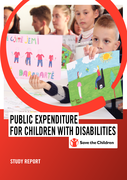
Save the Children in Albania is establishing and strengthening structures and mechanisms which monitor and advocate for children’s rights, promote ways to protect children from all forms of exploitation and violence and also empower and support children and their representatives to meaningfully ad
...
Persons with disabilities are one of the most vulnerable and socially excluded groups in any crisis-affected community. They may be in hidden in homes, overlooked during needs assessments and not consulted in the design of programs.4 While gender-based violence (GBV) affects women, girls, men and bo
...
The report provides lessons and recommendations for other organizations and the wider humanitarian community on engaging persons with disabilities at all levels of humanitarian work. It draws on consultations with over 700 displaced persons—including persons with disabilities, their families, and
...
The Education 2030 Incheon Declaration and Framework for Action specifies that the mandate of the Global Education Monitoring Report is to be ‘the mechanism for monitoring and reporting on SDG 4 and on education in the other SDGs’ with the responsibility to ‘report on the implementation of nat
...

The purpose of this publication is to facilitate the implementation of existing WHO guidelines on nutrition-specific and nutrition-sensitive actions required for improving health and well-being of adolescents. Implementing these actions should explicitly take into account the heterogeneity of adoles
...
This document is one of eight PDF documents that comprise the Guidance on Child-focused Victim
Assistance. All are available in PDF at

Global Education Review, 3(3).4-27
Conference Report Sao Paulo, Brazil 22-24 October 2015
This resource presents "the minimum level of educational quality and access in emergencies through to recovery. The aim of the handbook is to enhance the quality of educational preparedness, response and recovery; to increase access to safe and relevant learning opportunities for all learners, regar
...
Making education more inclusive requires schools and education authorities to remove the barriers to education experienced by the most excluded children - often the poorest, children with disabilities, children without family care, girls, or children from minority groups. Also included in the text a
...

In 2018, the Food and Agriculture Organization of the United Nations (FAO) in South Sudan must respond to the highest levels of food insecurity ever recorded in the country. To address this challenge, FAO revised its multiyear Emergency Livelihood Response Programme (ELRP) to enable rapid food produ
...
WHO-SEARO in partnership with WHOCC AIIMS, UNICEF, UNFPA and USAID has prepared a training package for building capacity of healthcare teams in health facilities for continous quality improvement of maternal and newborn healthcare. The focus is on the care of mothers and newborns at the time of chil
...
Four simple steps to practice quality improvement at health facility level

The new WHO recommendations for the treatment of isoniazid-resistant, rifampicin-susceptible TB are based upon a review of evidence from patients treated with such regimens by a Guideline Development Group in conformity with WHO requirements for evidence-based policies.