
Filter
2415
Text search:
World
Bank
et
al.
Featured
Recommendations
138
New Publications
583
Language
Document type
No document type
1288
Studies & Reports
664
Guidelines
188
Manuals
103
Strategic & Response Plan
73
Fact sheets
39
Training Material
28
Situation Updates
19
Resource Platforms
7
Infographics
3
Brochures
2
Online Courses
1
Countries / Regions
Global
154
Kenya
64
Ethiopia
60
India
55
Sierra Leone
51
Nepal
50
Malawi
49
Latin America and the Carribbean
47
Nigeria
46
Africa
46
Myanmar / Burma
45
Zambia
41
Liberia
38
Uganda
37
South Africa
35
Bangladesh
34
Ghana
31
Tanzania
31
Rwanda
29
Ukraine
28
Congo, Democratic Republic of
27
Western and Central Europe
26
Syria
25
Namibia
24
Asia
24
Haiti
22
Mozambique
20
South–East Asia Region
19
Eastern Europe
18
Senegal
17
Guinea
16
Zimbabwe
16
West and Central Africa
16
Cambodia
14
Philippines
13
Lesotho
13
Yemen
13
East and Southern Africa
13
Russia
13
Burkina Faso
12
Cameroon
12
South Sudan
12
Pakistan
11
Indonesia
11
Colombia
10
Middle East and North Africa
10
Venezuela
10
Afghanistan
9
China
9
Botswana
9
Thailand
8
Brazil
8
Eswatini/ Swaziland
7
Somalia
6
Sudan
6
Benin
6
Eastern Europe and Central Asia
6
Albania
6
Lebanon
5
Central African Republic
5
Peru
5
Ecuador
5
Mexico
5
Sri Lanka
5
Palestine
5
Southern Africa
5
Mali
4
Jordan
4
Western Pacific Region
4
Tajikistan
4
Moldova
4
Kyrgyzstan
4
Vietnam
4
USA
3
Germany
3
Argentina
3
Guatemala
3
Chile
3
Paraguay
3
Laos
3
Timor Leste/ East Timor
3
Côte d’Ivoire / Ivory Coast
2
Niger
2
Chad
2
Honduras
2
El Salvador
2
Bolivia
2
Libya
2
Angola
2
Madagascar
2
Armenia
2
Kazakhstan
2
Georgia
2
North America
2
Turkmenistan
2
Jamaica
2
Bosnia and Herzegovina
2
Saudi Arabia
1
Iraq
1
Papua New Guinea
1
Dominican Republic
1
Hungary
1
Burundi
1
Nicaragua
1
Fiji
1
Poland
1
Bulgaria
1
Romania
1
Lithuania
1
Slovakia
1
Iran
1
Uzbekistan
1
Japan
1
Mauritius
1
Belize
1
Costa Rica
1
Panama
1
Authors & Publishers
Publication Years
Category
Countries
846
Key Resources
178
Women & Child Health
161
Public Health
152
Clinical Guidelines
124
Capacity Building
25
Pharmacy & Technologies
9
Toolboxes
HIV
187
Planetary Health
179
Disability
153
COVID-19
151
Mental Health
140
Health Financing Toolbox
109
Global Health Education
87
Caregiver
74
TB
67
Conflict
66
AMR
62
NTDs
54
NCDs
50
Ebola & Marburg
48
Natural Hazards
35
Refugee
27
Pharmacy
24
Rapid Response
22
Malaria
20
2.0 Rapid Response
12
Cholera
10
Social Ethics
7
Zika
6
Specific Hazards
4
Polio
2
South Sudan
1
Typhoon
1

A year ago, the second Special Session of the World Health Assembly (WHASS) unanimously agreed to start a diplomatic process for a new binding instrument aimed at ensuring the international community is better prepared for the next health emergencie
...
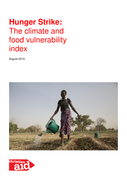
Top 10 hungriest countries contribute just 0.08% of global CO2.
-Climate & Food Vulnerability Index shows 10 most food insecure countries emit less than half a tonne of CO2 per person
-Burundi is the world's most food insecure and smalles
...

The 2021 Financing for Sustainable Development Report responds to the request made by Member States to review the impact of the COVID-19 pandemic on nancing for sustainable development, and to propose recommendations to rebuild better. The report underlines the need for policy actions to ensure e e
...

This document lays out economic arguments for investing in the Access to COVID-19 Tools Accelerator (ACT-Accelerator). Framed within an overall context that recognizes the broader human health and societal impacts of the COVID-19 crisis, ACT-Accelerator's Economic Investment Case argues that investm
...
Overall, harmonisation and innovation should be the
focus of the future direction of DAH and the creation of
a healthy global community. The world needs all hands
on deck if it were to move towards achieving the SDGs,
addressing global health in
...

In 2019, the Task Force on Fiscal Policy for Health concluded that taxes on tobacco, alcohol, and sugar-sweetened beverages were a highly effective but greatly underused policy tool to reduce consumption, save lives, and raise domestic resources. The Task Force estimated that if all countries increa
...

Noncommunicable diseases (NCDs) (e.g., cardiovascular diseases, cancers, diabetes, and chronic respiratory diseases) and mental health conditions (e.g., Alzheimer’s disease and related dementias, depression, anxiety, autism spectrum disorders) are the wo
...
ECDC Technical Report
In line with ECDC’s recommendations provided in the ’Risk Assessment of HTLV-1/2 transmission by tissue/cell transplantation’ dated 14 March 2012, this Directive replaces the term ‘incidence’ with ‘prevalence’ in the description of endemic areas of HTLV-1/2 i ...
In line with ECDC’s recommendations provided in the ’Risk Assessment of HTLV-1/2 transmission by tissue/cell transplantation’ dated 14 March 2012, this Directive replaces the term ‘incidence’ with ‘prevalence’ in the description of endemic areas of HTLV-1/2 i ...
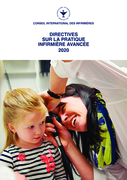
La pratique infirmière avancée (PIA), telle qu’évoquée dans le présent document, se réfère aux services et
aux interventions de santé renforcés et étendus, assurés par des infirmières
...
This report presents further analysis of the 2015 Nepal Health Facility Survey. Data analysis is based on the Donabedian framework for assessing quality of care in health services, which divides the indicators into three groups: structure, process, and outcome. The
...
This report challenges policy-makers and political leaders to tackle fossil fuel production and consumption as a health control issue, in the same way that smoking has been reduced and regulated. Fossil fuel combustion is a major source of toxic air pollution that kills 7 million people every year,
...

The COVID-19 pandemic’s immediate costs, measured in lives lost and damaged, have been appalling and continue to rise. In addition, its effects on individuals’ livelihoods and economies around the world have been deep and are likely to be long l
...
Air pollution is one of the leading causes of health complications and mortality worldwide, especially affecting lower-income groups, who tend to be more exposed and vulnerable. This study documents the relationship between ambient air pollution exposure and poverty in 211 countries and territories.
...
In 2014, an estimated 40 million women of reproductive age were infected with Schistosoma haematobium, S. japonicum and/or S. mansoni. In both 2003 and 2006, the World Health Organization (WHO) recommended that all schistosome-infected pregnant and
...

The GHS Index is intended to be a key resource in the face of increasing risks of high-consequence and globally catastrophic biological events and in light of major gaps in international financing for preparedness. These risks are magnified by a rapidly changing and interconnected
...
During the first year of the Covid-19 pandemic, the world’s economy slowed. Yet, the global annual average particulate pollution (PM2.5) was largely unchanged from 2019 levels. At the same time, growing evidence shows air pollution—even when exp
...
This short paper aims to identify key evidence gaps in our knowledge of livestock- and fisheries-linked antimicrobial resistance in the developing world, and to document on-going or planned research initiatives on this topic by key stakeholders.
Th
...
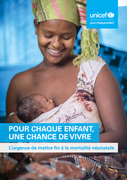
Chaque année, 2,6 millions de bébés meurent avant l’âge d’un mois. Un million d’entre eux rendent leur dernier souffle le jour même de leur naissance. Pourtant, des millions de jeunes vies pourraient être épargnées chaque année si les mères
...

The Planetary Health Education Framework is a project of the Planetary Health Alliance (planetaryhealthalliance.org). The Planetary Health Alliance is a consortium of over 250 partners from around the world committed to understanding and addressing
...

24 Nov. 2021
Action against gender-based violence being pushed to the outlying margins of the global COVID-19 response
A new Oxfam report shows an undeniable increase in gender-based violence (GBV) during the COVID-19 pandemic around the world t
...
