Filter
1981
Text search:
Centers
for
Disease
Control
(CDC)
Featured
200
518
Language
Document type
964
325
187
119
109
76
62
52
43
18
10
8
4
2
1
Countries
115
83
70
56
51
47
42
41
40
40
40
35
34
28
27
27
26
26
25
24
24
23
23
21
20
18
16
16
15
15
14
14
14
14
14
14
13
13
12
11
10
10
9
9
8
8
8
7
7
6
6
6
6
5
5
4
4
4
4
4
4
3
3
3
3
3
3
3
2
2
2
2
2
2
2
2
2
1
1
1
1
1
1
1
1
1
1
1
1
1
1
1
1
1
1
1
1
1
1
1
1
1
Authors & Publishers
Publication Years
Category
599
176
112
107
65
30
27
Toolboxes
249
204
149
107
105
79
68
66
63
57
46
45
40
39
33
31
28
27
24
19
14
10
8
7
2


Scientific Brief 9 July 2020
This guide focuses on three main areas: how to support a person whose condition warrants home care because of non-severe symptoms and home care is recommended by local jurisdictions; how to prevent the spread of COVID-19 in the home; and how to provide emotional support to family members. While this
...

Emergency medical teams (EMTs) play an important role in strengthening health service networks in terms of their strategies and tactics for planning mass vaccination programs, especially in remote or under-resourced areas or those overwhelmed by COV
...

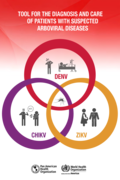
It is Zika virus (ZIKV) that most often causes these neurological effects it appears to be the only arbovirus than can cause congenital malformations such as microcephaly. In any case, more scientific tests are needed to establish the causal relationship between the virus and this malformation (7-10
...

Trop. Med. Infect. Dis. 2022, 7, 152. https://doi.org/10.3390/tropicalmed7080152

WHO guidelines for clinical management of arboviral diseases: dengue, chikungunya, Zika and yellow fever
recommended
The new WHO guidelines provide clinical management recommendations for four of the most widespread arboviruses affecting humans: dengue, chikungunya, Zika, and yellow fever.
An integrated approach is vital, as these four diseases often present wi
...
This publication is a companion document to the NDVP National Deployment and Vaccination Plans guidance, which provides a framework for countries to develop their national strategies. As countries face challenges with erratic vaccine supplies, use
...
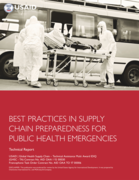
This document compiles best practices in emergency supply chain preparedness so that countries
can respond rapidly and effectively to epidemic and pandemic threats. Such a response requires a well-functioning supply chain

Essential triple EMTCT services include testing for HIV, syphilis and HBV in ante-
natal care (ANC) settings; prompt and efficacious interventions to treat women
who test positive; prevent transmission of any of the infections to their children;
...
Maternal mortality has fallen significantly in recent years, especially in countries that have emphasized the prevention of its main causes, such as hemorrhagic and infectious complications and hypertension , including in the Region of the Americas. In its final report on the Plan of Action to Accel
...

The pandemic has emphasized the high risk of avoidable harm to patients, health workers, and the general public, and has identified a range of safety gaps across all core components of health systems at all levels.
The rapid review ‘Implications of the COVID-19 pandemic
...
http://dx.doi.org/10.4172/2329-9088.1000136
Trop Med Surg 2013, 1:136
Interim Assessement Report
The EMA review was started by the Agency’s Committee for Medicinal Products for Human Use (CHMP) to support decision-making by health authorities. This first interim re
...