
Filter
2763
Text search:
family
disability
Featured
251
662
Language
2676
84
73
56
37
23
22
14
9
8
8
7
7
6
5
5
5
5
5
5
5
5
4
4
4
4
4
4
4
3
3
3
3
3
3
3
2
2
2
2
2
2
2
2
2
1
1
1
1
1
1
1
1
1
1
1
1
Document type
1695
403
277
173
106
46
29
18
7
5
3
1
Countries
162
118
77
64
58
57
56
54
52
49
48
42
40
38
37
37
32
31
31
30
28
27
23
22
22
20
20
20
19
18
18
16
14
14
12
12
11
11
10
9
9
8
8
7
7
7
7
7
7
7
7
7
7
6
6
6
6
5
5
5
5
5
5
5
5
5
4
3
3
3
3
3
3
3
3
3
3
3
3
2
2
2
2
2
2
2
2
2
2
1
1
1
1
1
1
1
1
1
1
1
1
1
1
1
1
1
1
1
1
1
1
1
1
1
1
1
1
Authors & Publishers
312
123
77
74
68
67
66
46
43
29
23
22
22
21
20
20
17
17
16
16
15
15
14
13
12
12
11
11
11
11
10
10
10
10
10
10
9
9
9
9
9
8
8
8
8
8
8
8
8
8
8
7
7
7
7
7
7
7
7
7
7
6
6
6
6
6
6
6
6
6
6
6
6
6
6
5
5
5
5
5
5
5
5
5
5
5
5
5
5
5
5
5
4
4
4
4
4
4
4
4
4
4
4
4
4
4
4
4
4
4
4
4
4
4
4
4
4
4
4
4
3
3
3
3
3
3
3
3
3
3
3
3
3
3
3
3
3
3
3
3
3
3
3
3
3
3
3
3
3
3
3
3
3
3
3
3
3
3
3
3
3
3
3
3
3
3
3
3
3
3
3
3
3
3
3
3
3
3
3
3
3
3
3
3
3
2
2
2
2
2
2
2
2
2
2
2
2
2
2
2
2
2
2
2
2
2
2
2
2
2
2
2
2
2
2
2
2
2
2
2
2
2
2
2
2
2
2
2
2
2
2
2
2
2
2
2
2
2
2
2
2
2
2
2
2
2
2
2
2
2
2
2
2
2
2
2
2
2
2
2
2
2
2
2
2
2
2
2
2
2
2
2
2
2
2
2
2
2
2
2
2
2
2
2
2
2
2
2
2
2
2
2
2
2
2
2
2
2
2
2
2
2
2
2
2
2
2
2
2
1
1
1
1
1
1
1
1
1
1
1
1
1
1
1
1
1
1
1
1
1
1
1
1
1
1
1
1
1
1
1
1
1
1
1
1
1
1
1
1
1
1
1
1
1
1
1
1
1
1
1
1
1
1
1
1
1
1
1
1
1
1
1
1
1
1
1
1
1
1
1
1
1
1
1
1
1
1
1
1
1
1
1
1
1
1
1
1
1
1
1
1
1
1
1
1
1
1
1
1
1
1
1
1
1
1
1
1
1
1
1
1
1
1
1
1
1
1
1
1
1
1
1
1
1
1
1
1
1
1
1
1
1
1
1
1
1
1
1
1
1
1
1
1
1
1
1
1
1
1
1
1
1
1
1
1
1
1
1
1
1
1
1
1
1
1
1
1
1
1
1
1
1
1
1
1
1
1
1
1
1
1
1
1
1
1
1
1
1
1
1
1
1
1
1
1
1
1
1
1
1
1
1
1
1
1
1
1
1
1
1
1
1
1
1
1
1
1
1
1
1
1
1
1
1
1
1
1
1
1
1
1
1
1
1
1
1
1
1
1
1
1
1
1
1
1
1
1
1
1
1
1
1
1
1
1
1
1
1
1
1
1
1
1
1
1
1
1
1
1
1
1
1
1
1
1
1
1
1
1
1
1
1
1
1
1
1
1
1
1
1
1
1
1
1
1
1
1
1
1
1
1
1
1
1
1
1
1
1
1
1
1
1
1
1
1
1
1
1
1
1
1
1
1
1
1
1
1
1
1
1
1
1
1
1
1
1
1
1
1
1
1
1
1
1
1
1
1
1
1
1
1
1
1
1
1
1
1
1
1
1
1
1
1
1
1
1
1
1
1
1
1
1
1
1
1
1
1
1
1
1
1
1
1
1
1
1
1
1
1
1
1
1
1
1
1
1
1
1
1
1
1
1
1
1
1
1
1
1
1
1
1
1
1
1
1
1
1
1
1
1
1
1
1
1
1
1
1
1
1
1
1
1
1
1
1
1
1
1
1
1
1
1
1
1
1
1
1
1
1
1
1
1
1
1
1
1
1
1
1
1
1
1
1
1
1
1
1
1
1
1
1
1
1
1
1
1
1
1
1
1
1
1
1
1
1
1
1
1
1
1
1
1
1
1
1
1
1
1
1
1
1
1
1
1
1
1
1
1
1
1
1
1
1
1
1
1
1
1
1
1
1
1
1
1
1
1
1
1
1
1
1
1
1
1
1
1
1
1
1
1
1
1
1
1
1
1
1
1
1
1
1
1
1
1
1
1
1
1
1
1
1
1
1
1
1
1
1
1
1
1
1
1
1
1
1
1
1
1
1
1
1
1
1
1
1
1
1
1
1
1
1
1
1
1
1
1
1
1
1
1
1
1
1
1
1
1
1
1
1
1
1
1
1
1
1
1
1
1
1
1
1
1
1
1
1
1
1
1
1
1
1
1
1
1
1
1
1
1
1
1
1
1
1
1
1
1
1
1
1
1
1
1
1
1
1
1
1
1
1
1
1
1
1
1
1
1
1
1
1
1
1
1
1
1
1
1
1
1
1
1
1
1
1
1
1
1
1
1
1
1
1
1
1
1
1
1
1
1
1
1
1
1
1
1
1
1
1
1
1
1
1
1
1
1
1
1
1
1
1
1
1
1
1
1
1
1
1
1
1
1
1
1
1
1
1
1
1
1
1
1
1
1
1
1
1
1
1
1
1
1
1
1
1
1
1
1
1
1
1
1
1
1
1
1
1
1
1
1
1
1
1
1
1
1
1
1
1
1
1
1
1
1
1
1
1
1
1
1
1
1
1
1
1
1
1
1
1
1
1
1
1
1
1
1
1
1
1
1
1
1
1
1
1
1
1
1
1
1
1
1
1
1
1
1
1
1
1
1
1
1
1
1
1
1
1
1
1
1
1
1
1
1
1
1
1
1
1
1
1
1
1
1
1
1
1
1
1
1
1
1
1
1
1
1
1
1
1
1
1
1
1
1
1
1
1
1
1
1
1
1
1
1
1
1
1
1
1
1
1
1
1
1
1
1
1
1
1
1
1
1
1
1
1
1
1
1
1
1
1
1
1
1
1
1
1
1
1
1
1
1
1
1
1
1
1
1
1
1
1
1
1
1
1
1
1
1
1
1
1
1
1
1
1
1
1
1
1
1
1
1
1
1
1
1
1
1
1
1
1
1
1
1
1
1
1
1
1
1
1
1
1
1
1
1
1
1
1
1
1
1
1
1
1
1
1
1
1
1
1
1
1
1
1
1
1
1
1
1
1
1
1
1
1
1
1
1
1
1
1
1
1
1
1
1
1
1
1
1
1
1
1
1
1
1
1
1
1
1
1
1
1
1
1
1
1
1
1
1
1
1
1
1
1
1
1
1
1
1
1
1
1
1
1
1
1
1
1
1
1
1
1
1
1
1
1
1
1
1
1
1
1
1
1
1
1
1
1
1
1
1
1
1
1
1
1
1
1
1
1
1
1
1
1
1
1
1
1
1
1
1
1
1
1
1
1
1
1
1
1
1
1
1
1
1
1
1
1
1
1
1
1
1
1
1
1
1
1
1
1
1
1
1
1
1
1
1
1
1
1
1
1
1
1
1
1
1
1
1
1
1
1
1
1
1
1
1
1
1
1
1
1
1
1
1
1
1
1
1
1
1
1
1
1
1
1
1
1
1
1
1
1
1
1
1
1
1
1
1
1
1
1
1
1
1
1
1
1
1
1
1
1
1
1
1
1
1
1
1
1
1
1
1
1
1
1
1
1
1
1
1
1
1
1
1
1
1
1
1
1
1
1
1
1
1
1
1
1
1
1
1
1
1
1
1
1
1
1
1
1
1
1
1
1
1
1
1
1
1
1
1
1
1
1
1
1
1
1
1
1
1
1
1
1
1
1
1
1
1
1
1
1
1
1
1
1
1
1
1
1
1
1
1
1
1
1
1
1
1
1
1
1
1
1
1
1
1
1
1
1
1
1
1
1
1
1
1
1
1
1
1
1
1
1
1
1
1
1
1
1
1
1
1
1
1
1
1
1
1
1
1
1
1
1
1
1
1
1
1
1
1
1
1
1
1
1
1
1
1
1
1
1
1
1
1
1
1
1
1
1
1
1
1
1
1
1
1
1
1
1
1
1
1
1
1
1
1
1
1
1
1
1
1
1
1
1
1
1
1
1
1
1
1
1
1
1
1
1
1
1
1
1
1
1
1
1
1
1
1
1
1
1
1
1
1
1
1
1
1
1
1
1
1
1
1
1
1
1
1
1
1
1
1
1
1
1
1
1
1
1
1
1
1
1
1
1
1
1
1
1
1
1
1
1
1
1
1
1
1
1
1
1
1
1
1
1
1
1
1
1
1
1
1
1
1
1
1
1
1
1
1
1
1
1
1
1
1
1
1
1
1
1
1
1
1
1
1
1
1
1
1
1
1
1
1
1
1
1
1
1
1
1
1
1
1
1
1
1
1
1
1
1
1
1
1
1
1
1
1
1
1
1
1
1
1
1
1
1
1
1
1
1
1
1
1
1
1
1
1
1
1
1
1
1
1
1
1
1
1
1
1
1
1
1
1
1
1
1
1
1
1
1
1
1
1
1
1
1
1
1
1
1
1
1
1
1
1
1
1
1
1
1
1
1
1
1
1
1
1
1
1
1
1
1
1
1
1
1
1
1
1
1
1
1
1
1
1
1
1
1
1
1
1
1
1
1
1
1
1
1
1
1
1
1
1
1
1
1
1
1
1
1
1
1
1
1
1
1
1
1
1
1
1
1
1
1
1
1
1
1
1
1
1
1
1
1
1
1
1
1
1
1
1
1
1
1
1
1
1
1
1
1
1
1
1
1
1
1
1
1
1
1
1
1
1
1
1
1
1
1
1
1
1
1
1
1
1
1
1
1
1
1
1
1
1
1
1
1
1
1
1
1
1
1
1
1
1
1
1
1
1
1
1
1
1
1
1
1
1
1
1
1
1
1
1
1
1
1
1
1
1
1
1
1
1
1
1
1
1
1
1
1
1
1
1
1
1
1
1
1
1
1
1
1
1
1
1
1
1
1
1
1
1
1
1
1
1
1
1
1
1
1
1
1
1
1
1
1
1
1
1
1
1
1
1
1
1
1
1
1
1
1
1
1
1
1
1
1
1
1
1
1
1
1
1
1
1
1
1
1
1
1
1
1
1
1
1
1
1
1
1
1
1
1
1
1
1
1
1
1
1
1
1
1
1
1
1
1
1
1
1
1
1
1
1
1
1
1
1
1
1
1
1
1
1
1
1
1
1
1
1
1
1
1
1
1
1
1
1
1
1
1
1
1
1
1
1
1
1
1
1
1
1
1
1
1
1
1
1
1
1
1
1
1
1
1
1
1
1
1
1
1
1
1
1
1
1
1
1
1
1
1
1
1
1
1
1
1
1
1
1
1
1
1
1
1
1
1
1
1
1
1
1
1
1
1
1
1
1
1
1
Publication Years
1
688
1775
288
10
1
Category
1023
197
188
178
134
47
2
1
Toolboxes
461
439
159
104
100
71
61
59
59
53
49
44
30
24
23
16
15
11
11
11
9
6
4
2

Every year, an estimated 15 million babies are born preterm – before 37 weeks of pregnancy. That is more than 1 in 10 live births. Approximately 1 million children die each year worldwide due to complications from their early birth. Those that survive often face a lifetime of ill-health including
...
disability, learning difficulties, and visual and hearing problems.
Half of the babies born at or below 32 weeks (2 months early) die in low-income settings, due to a lack of feasible, cost-effective care, such as warmth, breastfeeding support, and basic care for infections and breathing difficulties. In high-income countries, almost all these babies survive.
more

Mental health is critical to personal well-being, interpersonal relationships, and successful contributions to society. Mental health conditions consequently impose a high burden not only on individuals, families and society, but also on economies. In Jamaica, mental health conditions are highly pre
...
valent and major contributors to morbidity, disability, and premature mortality.
more
The World Health Organization organized a Consultation of National Leprosy Programme managers, partners and affected persons to discuss the draft Global Leprosy Strategy, 2021--2030. This virtual event took place from 26 to 30 October 2020. It was attended by more than 450 stakeholders. Contribution
...
s were shared through 70 presentations made by stake holders from all Regions. The presentations covered the key strategic approaches: global context, challenges in countries, contact tracing and post exposure prophylaxis, disability care, interruption of transmission and elimination of disease, stigma and d iscrimination, research. In addition to numerous comments received through the chat box and by email, the conclusions and recommendations of this Consultation will guide finalizing the post 2020 Global Leprosy Strategy.
more
Integrated Management of Newborn and Childhood Illness, Part 1 Blended Learning Module for the Health Extension Programme
HEAT, UNICEF, Open University, AMREF, WHO
Ministry of Health, Federal Democratic Republic of Ethiopia
(2011)
C1
These Blended Learning Modules cover the full range of health promotion, disease prevention, basic management and essential treatment protocols to improve and protect the health of rural communities in Ethiopia. A strong focus is on enabling Ethiopia to meet the Millennium Development Goals to reduc
...
e maternal mortality by three-quarters and under-5 child mortality by two-thirds by the year 2015. The Modules cover antenatal care, labour and delivery, postnatal care, the integrated management of newborn and childhood illness, communicable diseases (including HIV/AIDS, malaria, TB, leprosy and other common infectious diseases), family planning, adolescent and youth reproductive health, nutrition and food safety, hygiene and environmental health, non-communicable diseases, health education and community mobilisation, and health planning and professional ethics.
more

This Module, Count me in! Inclusive WASH in Ethiopia, was prepared by Ethiopian authors with support from The Open University UK. It was first published in June 2018. The contributors of original material are:Girma Aboma, Manager, GAA Economic Development ConsultBethel Shiferaw, SPCC
...
Disability Inclusion Advisor, Ethiopian Center for Disability and Development
more

- Module 1: Understanding modelling approaches for sexual, reproductive, maternal, newborn, child and adolescent health, and nutrition
Coronavirus disease 2019 (COVID-19) has a wide range of documented effects. It directly causes death and disability
...
for some people infected. However, disruption to essential health services, resources allocated to mitigation and therefore away from essential health service delivery, and the overall impact on the economy and society must also be considered within the response to COVID-19. Understanding the magnitude of all of these effects is an essential part of developing mitigation polices.
Several epidemiological models have been created to assess the potential impact of disruptions to essential health services caused by COVID-19 on morbidity and mortality from conditions other than COVID-19 illness. This guide presents models that have been used to assess these indirect impacts. The effects have been studied in various settings, using a variety of models.
The guide is intended for people who need to understand what the models say, their construction and their underlying assumptions, or need to use models and their outcomes for planning and programme development and to support policy decisions for a country or region.
more
In the Region of the Americas, the leishmaniases are a group of diseases caused by various species of Leishmania, which cause a set of clinical syndromes in infected humans that can involve the skin, mucosa, and visceral organs. The spectrum of clinical disease is varied and depends on the interacti
...
on of several factors related to the parasite, the vector, and the host. Cutaneous leishmaniasis is the form most frequently reported in the Region and nearly 90% of cases present single or multiple localized lesions. Other cutaneous clinical forms, such as disseminated and diffuse cutaneous leishmaniasis, are more difficult to treat and relapses are common. The mucosal form is serious because it can cause disfigurement and severe disability if not diagnosed and treated early on. Visceral leishmaniasis is the most severe form, as it can cause death in up to 90% of untreated people.
more
Covid-19 Social Policy Response Series / No.14
This report examines Ecuador’s social policy response to mitigate the Covid-19 pandemic’s effects and protect
vulnerable populations. It chronologically traces containment, closure policies, social policies and programmes
put in place following t
...
he announcement of Covid-19 as a global pandemic. A combination of external con-
straints and domestic structures, i.e. informality and weak coordination, led to truncated efforts in the healthcare
response, while persistent inequalities in access to technology and high levels of informality led to fragmented
education, labour policies and social protection responses. The report zooms into the Family Protection Grant
(Bono de Protección Familiar or BPF), a new social protection programme that covers informal workers, which
captures the difficulties in reaching unregistered populations amid lockdown and containment measures.
more
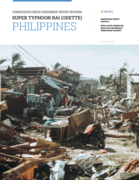
Eight years after Super Typhoon Haiyan, the most destructive storm to ever hit the Philippines, Super Typhoon Rai brought similar torrential rains, violent winds, mudslides, floods and storm surges to central parts of the Philippines, leaving a wide path of destruction and debris in its wake. While
...
not as powerful as Haiyan in terms of wind strength, evidence shows that Rai damaged houses, infrastructure and livelihoods on a comparable scale or in even greater numbers. Most striking, Rai damaged 1.57 million homes, 500,000 more than Haiyan, across 11 of the Philippines 17 regions, with around 180,000-200,000 people still displaced – either still in evacuation centers or staying with friends, family or other temporary housing.
more

Stats SA has released an in-depth report on persons with disabilities. The report, written using Census 2011 data, is the first in a series of in-depth analyses of various Census 2011 variables, such as ageing and education.
The report provides statistical evidence relating to the prevalence of
...
disability and characteristics of persons with disabilities at both individual and household levels. Two methods were used to profile disability prevalence and patterns based on the six functional domains, namely seeing, hearing, communication, remembering/concentrating, walking and self-care. These two methods were:
- the level/degree of difficulty in a specific functional domain and;
- the disability index.
more

The guide is suitable and can be used for the following audiences:
1. nurses and other trained healthcare workers who can use this manual as a self-study tool and then incorporate its guidance into their practice;
2. governmental and non-governmental employers of lay and professional TB treatment
...
adherence workers, who can provide training and guidance to their staff using the guidance in this manual;
3. TB clinicians, programme managers, policy makers and other leaders, to make them aware of the full range of interventions required by a person on TB treatment to complete his or her treatment and thus understand the gap that often exists in the support provided to patients;
4. people who, with enhanced capacity and support, can act as peer counsellors and supporters for people affected by TB. This can include family members who, in most contexts, play an important role in offering support to people with TB.
more

The Updated guidelines on Management of tuberculosis in children and adolescents include new recommendations that cover diagnostic approaches for TB, shorter treatment for children with non-severe drug-susceptible TB, a new option for the treatment of TB meningitis, the use of bedaquiline and delama
...
nid in young children with multidrug- and rifampicin-resistant TB and decentralized and family-centred, integrated models of care for TB case detection and prevention in children and adolescents.
more

Health care-associated infections (HAIs) affect patients and health systems every day, causing immense suffering, driving higher health-care costs and hampering efforts to achieve high-quality care for all. HAIs are often difficult to treat, are the major driver of antimicrobial resistance (AMR) and
...
cause premature deaths and disability. The COVID-19 pandemic, as well as outbreaks of Ebola, Marburg and mpox are the most dramatic demonstrations of how pathogens can spread rapidly and be amplified in health care settings. But HAIs are a daily threat in every hospital and clinic, not only during epidemics and pandemics. Lack of water, sanitation and hygiene (WASH) in health care settings not only affects the application of infection prevention and control (IPC) best practices but also equity and dignity among both those providing and receiving care.
more
Ensuring mental health and well-being has become a worldwide imperative and an important target
of the Sustainable Development Goals.
But in all countries around the world, our response has been woefully insufficient, and we have made
little progress to advance mental health as a fundamental huma
...
n right.
One in ten people are affected by a mental health condition, up to 200 million people have an
intellectual disability and an estimated 50 million people have dementia. Many persons with mental
health conditions, or psychosocial, intellectual, or cognitive disabilities lack access to quality mental
health services that respond to their needs and respect their rights and dignity.
more
Rev. Panam Salud Publica. 2017;41:e153. doi: 10.26633/RPSP.2017.153
Worldwide, over 6 million people are infected with Trypanosoma cruzi, the pathogen that causes Chagas disease (CD). In the Americas, CD creates the greatest burden in disability-ad
...
justed life years of any parasitic infection. In Colombia, 437 000 people are infected with T. cruzi, of whom 131 000 suffer from cardiomyopathy. Colombia’s annual costs for treating patients with advanced CD reach US$ 175 016 000. Although timely etiological treatment can significantly delay or prevent development of cardiomyopathy—and costs just US$ 30 per patient—fewer than 1% of people with CD in Colombia and elsewhere receive it.
more

These guidelines have been compiled for education ministries or other educational leaders (including development partners, non-governmental or private organizations working with schools or directly with caregivers) who want to adapt and adopt resources to support the marginalized caregivers of child
...
ren with disabilities.
The guidance presented in this document was developed by a team of international and national experts following a proof-of-concept pilot4 of the resources in two countries. The work was carried out between February 2021 and January 2022. The pilots demonstrated that principles and activities described in the resources could be carried out, in practical terms, in line with existing government programmes supporting the implementation of disability-inclusive education.
more

States have committed and assumed obligations to address multiple and intersecting forms of discrimination against refugees, internally displaced persons, asylum seekers, returnees and stateless persons. The Global Compact on Refugees places ending discrimination of any kind based on the grounds of
...
race, colour, sex, language, religion, political or other opinion, national or social origin, property, birth, disability, age, or other status at the centre of action to prevent displacement and to ensure peaceful coexistence between refugee and host communities. Narratives about cultural diversity and inclusion are important, but there is also a pressing need in many societies for conversations and action to address racism, racial discrimination, xenophobia and related intolerance.
more

The objective of this concept note and the framework it outlines is the elimination of a group of CDs and the negative health effects they generate, which together create a tangible burden on affected individuals, their families and communities, and on health care systems throughout the Region. Thou
...
gh there is no unified consensus on the best measures to use for the public’s health and a nation’s epidemiologic situation, it is common for the disease burden to be measured by disease rates (incidence, prevalence, etc.), disease-specific death rates, comparative morbidity and mortality rates, geographic distribution, and disability-adjusted life years (DALYs). The current epidemiological situation, including data on disease rates or geographic distribution for the diseases in Table 1, is discussed below in Section 4. Hotez et al. (2008) were the first to review and compare the burden of DALYs in Latin America and the Caribbean—for NTDs, HIV/AIDS, malaria, and TB—as it existed about 10 years ago. Though the regional burden of TB, malaria, and neglected infectious diseases (NIDs) is somewhat less than it was 10 years ago, work (and schooling) continue to be lost to illness and premature death or disability, and the need for stepping up disease elimination efforts is evident in all communities living in vulnerable conditions....
more
The chapter Dementia in Latin America and the Caribbean: Prevalence, Incidence, Impact, and Trends over Time, is part of the publication series titled “Decade of Healthy Aging: situation and challenges”. This document aims to provide an outline of the current situation in Latin America and the C
...
aribbean in respect of the prevalence and incidence of dementia and its impact on the health status of older people. As dementia is a significant global health problem which also has social and economic impacts this document highlights the importance of monitoring dementia in the region. The document evidences that dementia is one of the main contributors to dependence and disability in older people in Latin America and the Caribbean and, although its prevalence and incidence increase exponentially with age, it is not part of normal aging. Alzheimer’s disease is the most common dementia, and there is no cure for this condition, but with timely diagnosis is possible to ameliorate symptoms. It is important to assess what are the needs of people leaving with dementia and their families and to integrate dementia risk reduction strategies in pre-existing strategies for other non-communicable diseases. As shown in the report, despite the huge burden dementia is still underdiagnosed, and it is fundamental to better monitor its prevalence, incidence and the different societal impact that dementia can have. For that, it is crucial to promote the use of harmonized methodologies to address this information in a broader number of studies and countries in the region. This can contribute to the generation of direct actions to decrease dementia risk and lead to healthier lives for people with dementia and their families.
more
Background: A recent report by the Institute for Health Metrics and Evaluation (IHME) highlights that mental health receives little attention despite being a major cause of disease burden. This paper extends previous assessments of development assistance for mental health (DAMH) in two significant w
...
ays; first by contrasting DAMH against that for other disease categories, and second by benchmarking allocated development assistance against the core disease burden metric (disability-adjusted life year) as estimated by the Global Burden of Disease Studies. Methods: In order to track DAH, IHME collates information from audited financial records, project level data, and budget information from the primary global health channels. The diverse set of data were standardised and put into a single inflation adjusted currency (2015 US dollars) and each dollar disbursed was assigned up to one health focus areas from 1990 through 2015. We tied these health financing estimates to disease burden estimates (DALYs) produced by the Global Burden of Disease 2015 Study to calculated a standardised measure across health focus areas—development assistance for health (in US Dollars) per DALY.
more
