
Filter
3698
Text search:
Centers
for
Disease
control
and
prevention
Featured
378
967
Language
3169
287
213
102
82
74
34
31
30
13
10
6
6
6
5
5
5
5
5
5
5
5
5
4
4
4
4
3
3
3
3
3
3
3
2
2
2
2
2
2
2
2
2
2
2
2
2
2
2
2
2
2
2
2
2
1
1
1
1
1
1
1
1
1
1
1
1
1
1
1
1
1
1
1
1
1
1
1
1
1
1
1
1
1
1
1
1
1
1
1
1
1
1
1
1
1
1
1
1
1
Document type
1801
639
478
217
158
150
75
68
50
32
11
9
5
2
2
Countries
176
135
125
122
102
88
84
74
66
63
61
55
53
51
50
48
46
45
43
43
43
40
36
36
33
32
32
29
27
27
26
26
24
24
23
23
22
22
21
20
20
19
19
18
17
17
16
16
16
16
15
13
13
12
10
10
10
9
8
8
7
7
7
6
5
5
5
5
5
5
5
4
4
4
4
4
4
3
3
3
3
3
3
3
3
3
2
2
2
2
2
2
2
2
2
2
2
2
2
2
2
2
1
1
1
1
1
1
1
1
1
1
1
1
1
1
1
1
1
1
1
1
1
1
1
1
1
Authors & Publishers
473
297
144
120
85
84
72
61
60
52
38
37
34
31
30
26
21
21
20
19
19
19
18
18
17
16
16
16
15
15
13
13
13
13
13
12
12
12
12
12
10
10
10
10
10
10
10
10
10
9
9
9
9
9
8
8
8
8
8
8
8
7
7
7
7
7
7
7
7
7
7
7
7
6
6
6
6
6
6
6
6
6
6
6
6
5
5
5
5
5
5
5
5
5
5
5
5
5
5
5
5
5
5
5
5
5
5
4
4
4
4
4
4
4
4
4
4
4
4
4
4
4
4
4
4
4
4
4
4
4
4
4
4
4
4
4
4
4
4
4
4
4
4
3
3
3
3
3
3
3
3
3
3
3
3
3
3
3
3
3
3
3
3
3
3
3
3
3
3
3
3
3
3
3
3
3
3
3
3
3
3
3
3
3
3
3
3
3
3
3
3
3
3
3
3
3
3
3
3
3
3
3
3
3
3
3
3
3
3
3
3
3
3
3
3
3
3
3
3
3
3
2
2
2
2
2
2
2
2
2
2
2
2
2
2
2
2
2
2
2
2
2
2
2
2
2
2
2
2
2
2
2
2
2
2
2
2
2
2
2
2
2
2
2
2
2
2
2
2
2
2
2
2
2
2
2
2
2
2
2
2
2
2
2
2
2
2
2
2
2
2
2
2
2
2
2
2
2
2
2
2
2
2
2
2
2
2
2
2
2
2
2
2
2
2
2
2
2
2
2
2
2
2
2
2
2
2
2
2
2
2
2
2
2
2
2
2
2
2
2
2
2
2
2
2
2
2
2
2
2
2
2
2
2
2
2
2
2
2
2
2
2
2
2
2
2
2
2
2
2
2
2
2
2
2
2
2
2
2
2
2
2
2
2
2
2
2
2
2
2
2
2
2
2
2
2
2
2
2
2
2
2
2
2
2
2
2
2
2
2
2
2
2
2
2
1
1
1
1
1
1
1
1
1
1
1
1
1
1
1
1
1
1
1
1
1
1
1
1
1
1
1
1
1
1
1
1
1
1
1
1
1
1
1
1
1
1
1
1
1
1
1
1
1
1
1
1
1
1
1
1
1
1
1
1
1
1
1
1
1
1
1
1
1
1
1
1
1
1
1
1
1
1
1
1
1
1
1
1
1
1
1
1
1
1
1
1
1
1
1
1
1
1
1
1
1
1
1
1
1
1
1
1
1
1
1
1
1
1
1
1
1
1
1
1
1
1
1
1
1
1
1
1
1
1
1
1
1
1
1
1
1
1
1
1
1
1
1
1
1
1
1
1
1
1
1
1
1
1
1
1
1
1
1
1
1
1
1
1
1
1
1
1
1
1
1
1
1
1
1
1
1
1
1
1
1
1
1
1
1
1
1
1
1
1
1
1
1
1
1
1
1
1
1
1
1
1
1
1
1
1
1
1
1
1
1
1
1
1
1
1
1
1
1
1
1
1
1
1
1
1
1
1
1
1
1
1
1
1
1
1
1
1
1
1
1
1
1
1
1
1
1
1
1
1
1
1
1
1
1
1
1
1
1
1
1
1
1
1
1
1
1
1
1
1
1
1
1
1
1
1
1
1
1
1
1
1
1
1
1
1
1
1
1
1
1
1
1
1
1
1
1
1
1
1
1
1
1
1
1
1
1
1
1
1
1
1
1
1
1
1
1
1
1
1
1
1
1
1
1
1
1
1
1
1
1
1
1
1
1
1
1
1
1
1
1
1
1
1
1
1
1
1
1
1
1
1
1
1
1
1
1
1
1
1
1
1
1
1
1
1
1
1
1
1
1
1
1
1
1
1
1
1
1
1
1
1
1
1
1
1
1
1
1
1
1
1
1
1
1
1
1
1
1
1
1
1
1
1
1
1
1
1
1
1
1
1
1
1
1
1
1
1
1
1
1
1
1
1
1
1
1
1
1
1
1
1
1
1
1
1
1
1
1
1
1
1
1
1
1
1
1
1
1
1
1
1
1
1
1
1
1
1
1
1
1
1
1
1
1
1
1
1
1
1
1
1
1
1
1
1
1
1
1
1
1
1
1
1
1
1
1
1
1
1
1
1
1
1
1
1
1
1
1
1
1
1
1
1
1
1
1
1
1
1
1
1
1
1
1
1
1
1
1
1
1
1
1
1
1
1
1
1
1
1
1
1
1
1
1
1
1
1
1
1
1
1
1
1
1
1
1
1
1
1
1
1
1
1
1
1
1
1
1
1
1
1
1
1
1
1
1
1
1
1
1
1
1
1
1
1
1
1
1
1
1
1
1
1
1
1
1
1
1
1
1
1
1
1
1
1
1
1
1
1
1
1
1
1
1
1
1
1
1
1
1
1
1
1
1
1
1
1
1
1
1
1
1
1
1
1
1
1
1
1
1
1
1
1
1
1
1
1
1
1
1
1
1
1
1
1
1
1
1
1
1
1
1
1
1
1
1
1
1
1
1
1
1
1
1
1
1
1
1
1
1
1
1
1
1
1
1
1
1
1
1
1
1
1
1
1
1
1
1
1
1
1
1
1
1
1
1
1
1
1
1
1
1
1
1
1
1
1
1
1
1
1
1
1
1
1
1
1
1
1
1
1
1
1
1
1
1
1
1
1
1
1
1
1
1
1
1
1
1
1
1
1
1
1
1
1
1
1
1
1
1
1
1
1
1
1
1
1
1
1
1
1
1
1
1
1
1
1
1
1
1
1
1
1
1
1
1
1
1
1
1
1
1
1
1
1
1
1
1
1
1
1
1
1
1
1
1
1
1
1
1
1
1
1
1
1
1
1
1
1
1
1
1
1
1
1
1
1
1
1
1
1
1
1
1
1
1
1
1
1
1
1
1
1
1
1
1
1
1
1
1
1
1
1
1
1
1
1
1
1
1
1
1
1
1
1
1
1
1
1
1
1
1
1
1
1
1
1
1
1
1
1
1
1
1
1
1
1
1
1
1
1
1
1
1
1
1
1
1
1
1
1
1
1
1
1
1
1
1
1
1
1
1
1
1
1
1
1
1
1
1
1
1
1
1
1
1
1
1
1
1
1
1
1
1
1
1
1
1
1
1
1
1
1
1
1
1
1
1
1
1
1
1
1
1
1
1
1
1
1
1
1
1
1
1
1
1
1
1
1
1
1
1
1
1
1
1
1
1
1
1
1
1
1
1
1
1
1
1
1
1
1
1
1
1
1
1
1
1
1
1
1
1
1
1
1
1
1
1
1
1
1
1
1
1
1
1
1
1
1
1
1
1
1
1
1
1
1
1
1
1
1
1
1
1
1
1
1
1
1
1
1
1
1
1
1
1
1
1
1
1
1
1
1
1
1
1
1
1
1
1
1
1
1
1
1
1
1
1
1
1
1
1
1
1
1
1
1
1
1
1
1
1
1
1
1
1
1
1
1
1
1
1
1
1
1
1
1
1
1
1
1
1
1
1
1
1
1
1
1
1
1
1
1
1
1
1
1
1
1
1
1
1
1
1
1
1
1
1
1
1
1
1
1
1
1
1
1
1
1
1
1
1
1
1
1
1
1
1
1
1
1
1
1
1
1
1
1
1
1
1
1
1
1
1
1
1
1
1
1
1
1
1
1
1
1
1
1
1
1
1
1
1
1
1
1
1
1
1
1
1
1
1
1
1
1
1
1
1
1
1
1
1
1
1
1
1
1
1
1
1
1
1
1
1
1
1
1
1
1
1
1
1
1
1
1
1
1
1
1
1
1
1
1
1
1
1
1
1
1
1
1
1
1
1
1
1
1
1
1
1
1
1
1
1
1
1
1
1
1
1
1
1
1
1
1
1
1
1
1
1
1
1
1
1
1
1
1
1
1
1
1
1
1
1
1
1
1
1
1
1
1
1
1
1
1
1
1
1
1
1
1
1
1
1
1
1
1
1
1
1
1
1
1
1
1
1
1
1
1
1
1
1
1
1
1
1
1
1
1
1
1
1
1
1
1
1
1
1
1
1
1
1
1
1
1
1
1
1
1
1
1
1
1
1
1
1
1
1
1
1
1
1
1
1
1
1
1
1
1
1
1
1
1
1
1
1
1
1
1
1
1
1
1
1
1
1
1
1
1
1
1
1
1
1
1
1
1
1
1
1
1
1
1
1
1
1
1
1
1
1
1
1
1
1
1
1
1
1
1
1
1
1
1
1
1
1
1
1
1
1
1
1
1
1
1
1
1
1
1
1
1
1
1
1
1
1
1
1
1
1
1
1
1
1
1
1
1
1
1
1
1
1
1
1
1
1
1
1
1
1
1
1
1
1
1
1
1
1
1
1
1
1
1
1
1
1
1
1
1
1
1
1
1
1
1
1
1
1
1
1
1
1
1
1
1
1
1
1
1
1
1
1
1
1
1
1
1
1
1
1
1
1
1
1
1
1
1
1
1
1
1
1
1
1
1
1
1
1
1
1
1
1
1
1
1
1
1
1
1
1
1
1
1
1
1
1
1
1
1
1
1
1
1
1
1
1
1
1
1
1
1
1
1
1
1
1
1
1
1
1
1
1
1
1
1
1
1
1
1
1
1
1
1
1
1
1
1
1
1
1
1
1
1
1
1
1
1
1
1
1
1
1
1
1
1
1
1
1
1
1
1
1
1
1
1
1
1
1
1
1
1
1
1
1
1
1
1
1
1
1
1
1
1
1
1
1
1
1
1
1
1
1
1
1
1
1
1
1
1
1
1
1
1
1
1
1
1
1
1
1
1
1
1
1
1
1
1
1
1
1
1
1
1
1
1
1
1
1
1
1
1
1
1
1
1
1
1
1
1
1
1
1
1
1
1
1
1
1
1
1
1
1
1
1
1
1
1
1
1
1
1
1
1
1
1
1
1
1
1
1
1
1
1
1
1
1
1
1
1
1
1
1
1
1
1
1
1
1
1
1
1
1
1
1
1
1
1
1
1
1
1
1
1
1
1
1
1
1
1
1
1
1
1
1
1
1
1
1
1
1
1
1
1
1
1
1
1
1
1
1
1
1
1
1
1
1
1
1
1
1
1
1
1
1
1
1
1
1
1
1
1
1
1
1
1
1
1
1
1
1
1
1
1
1
1
1
1
1
1
1
1
1
1
1
1
1
1
1
1
1
1
1
1
1
1
1
1
1
1
1
1
1
1
1
1
1
1
1
1
1
1
1
1
1
1
1
1
1
1
1
1
1
1
1
1
1
1
1
1
1
1
1
1
1
1
1
1
1
1
1
1
1
1
1
1
1
1
1
1
1
1
1
1
1
1
1
1
1
1
1
1
1
1
1
1
1
1
1
1
1
1
1
1
1
1
1
1
1
1
1
1
1
1
1
1
1
1
1
1
1
1
1
1
1
1
1
1
1
1
1
1
1
1
1
1
1
1
1
1
1
1
1
1
1
1
1
1
1
1
1
1
1
1
1
1
1
1
1
1
1
1
1
1
1
1
1
1
1
1
1
1
1
1
1
1
1
1
1
1
1
1
1
1
1
1
1
1
1
1
1
1
1
1
1
1
1
1
1
1
1
1
1
1
1
1
1
1
1
1
1
1
1
1
1
1
1
1
1
1
1
1
1
1
1
1
1
1
1
1
1
1
1
1
1
1
1
1
1
1
1
1
1
1
1
1
1
1
1
1
1
1
1
1
1
1
1
1
1
1
1
1
1
1
1
1
1
1
1
1
1
1
1
1
1
1
1
1
1
1
1
1
1
1
1
1
1
1
Publication Years
1230
2179
266
23
Category
1279
315
212
183
130
56
48
1
Toolboxes
463
286
268
171
168
155
115
109
104
102
93
81
79
68
63
54
46
43
42
37
33
29
26
18
3
3

This report includes analysis from informal regional consultations in the African Region, the Caribbean and North America, Latin America, South-East Asia Region, European Region, Eastern Mediterranean Region, alongside three forums in the Western Pa
...
cific Region. It analyses the overarching similarities, regional nuances and priorities raised across the six WHO regions for the meaningful engagement of individuals with lived experience.
It is the second publication in the WHO Intention to action series, which aims to enhance the limited evidence base on the impact of meaningful engagement and address the lack of standardized approaches on how to operationalise meaningful engagement. The Intention to action series aims to do this by providing a platform from which individuals with lived experience, and organizational and institutional champions, can share solutions, challenges and promising practices related to this cross-cutting agenda. The Intention to action series also aims to provide powerful narratives, inspiration and evidence towards the Fourth United Nations High Level Meeting on NCDs in 2025 and achieving the 2030 United Nations Sustainable Development Goals (SDGs).
more
6 July 2021. The “WHO consolidated guidelines on tuberculosis. Module 3: Diagnosis - Rapid diagnostics for tuberculosis detection 2021 update” is the latest document replacing the one issued in 2020. Three new nucleic acid amplification test (NA
...
AT) classes are endorsed by WHO and included in the latest consolidated guideline
more

Every day in 2020, approximately 800 women died from preventable causes related to pregnancy and childbirth - meaning that a woman dies around every two minutes.
Sustainable Development Goal (SDG) target 3.1 is to reduce maternal mortality to less
...
than 70 maternal deaths per 100 000 live births by 2030.
The United Nations Maternal Mortality Estimation Inter-Agency Group (MMEIG) – comprising WHO, the United Nations Children’s Fund (UNICEF), the United Nations Population Fund (UNFPA), the World Bank Group and the United Nations Department of Economic and Social Affairs, Population Division (UNDESA/Population Division) has collaborated with external technical experts on a new round of estimates covering 2000 to 2020. The estimates represent the most up to date, internationally-comparable MMEIG estimates of maternal mortality, using refined input data and methods from previous rounds.
The report presents internationally comparable global, regional and country-level estimates and trends for maternal mortality between 2000 and 2020.
more
This brochure is part of the PLHIV Kit developed under the brand Everyday for Life. It provides information on the 4 stages of HIV, as identified in the WHO Clinical Staging of HIV/AIDS for Adults
...
and Adolescents.
more
English Manual and Guideline on World about Food and Nutrition, Health and Epidemic; published on 30 Nov 2021 by USAID

These guidelines provide a framework for effective action to facilitate access to safe and ethical
testing services for different population group
...
s. The implementation of the a comprehensive
approach, known as HIV Testing Services (HTS) is cardinal as an effective package of services
that diminishes the impact of the HIV epidemic in our country. All forms of HTS adhere to
the 5Cs: Confidentiality, Counselling, Consent, Correct results and Connection, or linkage
to care, with all based within a human right context. In addition to the 5Cs, however, the
MOHCDGEC emphasizes the use of a variety of approaches to HTS that will reduce the
number of missed opportunities. These include Provider-Initiated Testing and Counselling
testing, Couple counselling and testing, Index testing, and infant and children counselling and
testing in alignment to the revised WHO guidelines. Furthermore, these guidelines accentuate
on the continual provision of integrated HTS service at all levels of the public and private
health service delivery system.
The HTS Providers, managers and other stakeholders
more
Mapping of Communication Resources COVID-19
recommended
This resource mapping contains signposting and direct links to a range of resource sites and content online; this includes information about the main sources
...
for trustworthy information about the pandemic; sites for e-learning; organisations providing COVID-19 communication response guidance and tools; and sites providing downloadable materials such as factsheets and posters and access to material such as videos and audio.
more
Preliminary Stakeholder Engagement Plan (SEP)
India COVID-19 Emergency Response and Health Systems Preparedness Project (P173836)
Ministery of Health and Familiy Welfare - Government of India
(2020)
C2
A new respiratory infectious disease, COVID-19, caused by a new coronavirus called SARS-CoV-2, emerged in early December 2019. Since then, the virus has spread to India and 106 other countries in A
...
sia, Europe, North America, Africa, and Oceania. On March 11, the World Health Organization (WHO) declared the outbreak a pandemic, which has since rapidly evolved. As an economic hub with substantial global connectivity and movement of people and goods, India is directly impacted by the COVID-19 pandemic. Although it is too early to gauge the full spectrum of the outbreak’s social and economic impacts, COVID-19 has already caused lockdowns in China, Korea, and in many countries in Europe, and in some states of India, suspension of schools and universities, disruption of food systems and other supply chains, as well as a slowdown in trade between India and rest of the world.
more

A Guidebook for Medical and Professional Schools, Second Edition.
This book represents a significant step to engage health professions schools in addressing global health challenges
A Handbook to Support Strengthening of Organisational Capacity in Developing Information, Education and Communication (IEC) Materials for Lesbian, Gay, Bisexual, Transgender
...
and Intersex (LGBTI) People in Southern Africa Accessed 7 July 2015
more

Progress Toward Global Eradication of Dracunculiasis
Hopkins, D.; Weiss, A.; Roy, S.
Morbidity and Mortality Weekly Report MMWR; National Libary of Medicine
(2020)
CC
Dracunculiasis (Guinea worm disease), caused by the parasite Dracunculus medinensis, is traditionally acquired by drinking water containing copepods (water fleas) infected with D. medinensis larvae, but in recent years also appears increasingly to b
...
e transmitted by eating fish or other aquatic animals. The worm typically emerges through the skin on a lower limb of the host 1 year after infection, causing pain and disability.
more

In February 2014, there was an outbreak of the Ebola Virus Disease (EVD) in Guinea, which has spread to Liberia, Mali, Nigeria, Senegal and Sierra Leone causing untold hardship
...
and hundreds of deaths in these countries. As of 6 March 2015, a total of 24,282 cases, and 9,976 deaths, which were attributed to the EVD, had been recorded across the most affected countries of Guinea, Liberia and Sierra Leone. In the Democratic Republic of Congo (DRC), an outbreak of the EVD was also reported, but is considered of a different origin than that which has affected West Africa.
more
To better adapt current case management practices and address excess mortality in otherwise treatable
cases will require better knowledge of the demographic characteristics of the patients and como
...
rbidities
which can make severe dehydration harder to tolerate physiologically. With this in mind, a scoping review
was undertaken, to explore the literature and summarise the existing evidence on cholera mortality and
reported risk factors.
more
TB in India 2017
recommended
Central TB Divison, Ministry of Health and Social Welfare, Government of India
World Health Organisation (WHO)
(2017)
C1
Revised National TB Control Programme. Annual Status Report

The purpose of this document is to provide guidance on how quarantine and isolation can be achieved if there is a suspected or confirmed case in an overcrowded setting. It will focus on informal settlements
...
and collective shelters, but the guidance can be applied in non-refugee settings as well, such as detention centres and crowded neighborhoods. This guidance aims to support a coordinated and efficient response. It supports detailed planning at the regional level and is meant to be adapted to the local context. Households residing outside of these shelter types will be expected to follow the self-isolation circular provided by the MoPH. It is preferable, whenever feasible, that people are supported to remain in their homes. This guidance note will be continuously adapted as needed from the National level.
more
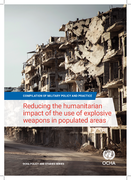
Reducing the humanitarian impact of the use of explosive weapons in populated areas is a key priority for the United
Nations, the International Committee of the Red Cross (ICRC), civil society and
...
an increasing number of Member States.
The United Nations Secretary-General has expressly called on parties to conflict to avoid the use in populated areas of
explosive weapons with wide-area effects.
While the use of explosive weapons in populated areas may in some circumstances be lawful under international
humanitarian law (IHL), empirical evidence reveals a foreseeable and often widespread pattern of harm to civilians,
particularly from explosive weapons with wide-area effects.
Many types of explosive weapons exist and are currently in use. These include air-delivered bombs, artillery projectiles,
missiles and rockets, mortar bombs, and improvised explosive devices (IEDs). Some are launched from the air and
others are surface launched. Whilst different technical features dictate their accuracy of delivery and explosive effect,
these weapons generally create a zone of blast and fragmentation with the potential to kill, injure or damage anyone
or anything within that zone. This makes their use in populated areas – such as towns, cities, markets and camps for
refugees and displaced persons or other concentrations of civilians – particularly problematic. The problems increase
further if the effects of the weapon extend across a wide-area either because of the scale of blast that they produce; their
inaccuracy; the use of multiple munitions across an area; or a combination thereof.
more

This helpdesk report seeks to establish what lessons have been learnt from the current and previous Ebola outbreaks. It recommends good practice and makes suggestions based on the evidence
...
for good practice and preparedness to reduce transmission and prevent further risk and exposure in affected countries.
more
The figures and findings reflected in the 2020 PMR represent the independent analysis of the United Nations (UN) and its humanitarian partners based on information available to them. Many of the fig
...
ures provided throughout the document are estimates based on sometimes incomplete and partial data sets using the methodologies for collection that were available at the time. The Government of Syria has expressed its reservations over the data sources and methodology of assessments used to inform the 2020 Humanitarian Needs Overview (HNO) as well as on a number of HNO findings reflected in the 2020 HRP. This applies throughout the document.
more
The Government of Republic of Zambia reported the first confirmed cases of COVID-19 on 18th March 2020. As of April 27th, 2020, there were 89 confirmed cases, three deaths and 42 recoveries. Confirmed cases are located in three provinces: Lusaka (83
...
cases), Copperbelt province (5 cases) and Central (1 case). Zambia introduced a series of measures including closure of three international airports, closure of all schools, movement restrictions and closure of non-essential services such as restaurant, bar, gym and public gatherings to curb the transmission rate.
more
The Boston Medical Center Patient Navigation Toolkit
The Boston Medical Center AVON Foundation for Women
The Boston Medical Center AVON Foundation for Women
(2020)
C1
This toolkit is designed to help you plan and implement a Patient Navigation program with the best chance of reducing health disparities and improving health outcomes
...
for your patients. It contains evidence-based and experience-based examples, case studies, practical tools, and resources to help you:
1. Establish an evidence-based patient navigation program tailored to reduce barriers for your patients
2. Incorporate best practices to enhance current patient navigation programs or services
3. Implement a patient navigation model to address any targeted medical condition
where disparities exist
4. Hire, prepare, supervise, support and retain effective Patient Navigators
5. Navigate patients who experience health disparities
6. Evaluate patient navigation programs with the aim of continuous quality
improvement
more
