Filter
466
Text search:
Wounds
International
Featured
60
119
Language
Document type
227
77
73
53
13
12
5
3
2
1
Countries
49
17
13
13
12
12
9
9
8
7
6
6
6
6
5
5
5
5
4
4
4
4
3
3
3
3
3
3
3
2
2
2
2
2
2
1
1
1
1
1
1
1
1
1
1
1
1
1
1
1
1
1
1
1
1
1
1
1
1
1
1
1
1
1
Authors & Publishers
Publication Years
Category
165
67
46
21
17
9
4
Toolboxes
42
40
38
24
20
19
15
14
13
11
11
10
9
9
8
7
5
4
4
2
2
2
This document is a practical guide to the management of burn injuries for healthcare professionals everyhwere who are non-burn specialistsi

Information on 102 commonly used medicinal plants in the South Pacific WHO regional publications. Western Pacific series ; Plants from this part of the world represent an especially diverse flora and include several species currently undergoing scientific investigation. Common traditional uses inclu
...
The principles and practice of the surgical lmanagment of wounds produced by missiles or explosions
This publication addresses the management of war wounds by non-specialist surgeons in situations where resources and expertise are limited. It is intended to be a pratical guide whether or not the surgeon has a special training in orthopaedic trauma
...
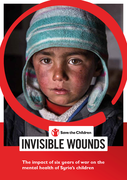
“The children are psychologically crushed and tired.
When we do activities like singing with them, they
don’t respond at all. They don’t laugh like they
would normally. They draw images of children
being butchered in the war, or tanks, or the siege
and the lack of food.”
Teacher in the
...
The purpose of this report is to provide an overview of the issues in regulating and managing international emergency in a selection of large and small-scale sudden onset disasters (SODs). In doing so, it aims to contribute to several key
...
The use of explosive weapons, such as bombs, rockets, and mortar and
artillery shells, in cities, towns and villages and in other populated areas
has devastating humanitarian consequences. Explosive weapons act mainly
through the projection of blast and fragmentation wi
...
Can J Anesth/J Can Anesth June 2018, Volume 65, Issue 6, pp 698–708
Primary Health-Care Services
recommended
In health emergencies as in periods of stability, restoring access to primary health-care services is a priority in so far as many health problems can be dealt with by means of preventive care and
conventional therapy. Depending on the context, the ICRC must often take action in this area, taking i
...
How to Recognise and Manage Leprosy Reactions
recommended
This book is for all health workers who may have to help people who have nerve damage to their eyes, hands and feet. It will help them to encourage patients to develop a lifetime habit of caring for nerve-damaged parts.
This booklet is recommended for all health workers who diagnose and treat leprosy, especially those at the first referral level such as a health centre. It contains more detail than the WHO Guide to Eliminate Leprosy as a Public Health Problem. The Guide gives practical advice on how to diagnose lep
...
Working with limited resources in armed conflict and other situations of violence. Vol.2
War Surgery. Vol.1
recommended
Working with limited resources in armed conflict and other situations of violence. Vol.1

A practical manual presenting the specific knowledge, skills and practices that First Aiders should have to act safely and effectively when caring for people caught up in armed conflicts and other situations of violence, such as internal disturbances and tensions.
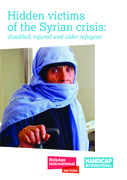
New research published today shows that older, disabled and injured Syrian refugees are paying a double toll as a result of the conflict. The report, released by Handicap International and HelpAge Internat
...