
Filter
693
Text search:
salt
reduction
Featured
69
239
Language
Document type
397
123
85
32
27
12
9
3
2
1
1
1
Countries
57
45
30
28
21
20
19
17
16
14
13
13
12
12
11
11
10
8
8
8
7
7
6
6
6
5
5
5
5
5
4
4
3
3
3
3
3
2
2
2
2
2
2
2
2
2
2
2
2
2
1
1
1
1
1
1
1
1
1
1
1
1
1
1
1
1
1
1
1
1
1
1
1
1
1
Authors & Publishers
Publication Years
Category
348
86
61
54
29
11
5
Toolboxes
76
39
33
17
13
13
12
11
10
10
10
8
7
7
7
6
6
5
4
3
3
2
2
2
1
1
Excessive consumption of salt (more than 5 g per day) raises blood pressure, a major risk factor for cardiovascular diseases such as heart disease and stroke, and is the leading cause of death in the WHO European Region. Many countries in the Region
...
To address the health challenges brought about by the changing food environment and high salt intake, WHO China, jointly with the National Institute for Nutrition and Health of China CDC and Tsinghua University, conducted an innovative study that ap
...

Almost all populations are consuming too much sodium. The global mean intake of adults is 4310 mg/day sodium (equivalent to 10.78 g/day salt). This is more than double the World Health Organization recommendation for adults of less than 2000 mg/day
...
Report of a regional workshop, New Delhi, India, 29–30 September 2014
To reduce the burden of cardiovascular disease and its subsequent problems, the WHO Regional Office for South-East Asia organized a regional workshop on sodium intake and iodized ...
To reduce the burden of cardiovascular disease and its subsequent problems, the WHO Regional Office for South-East Asia organized a regional workshop on sodium intake and iodized ...
2nd edition. The document outlines a structured approach to developing a comprehensive sodium reduction strategy, including preparatory steps such as establishing governance mechanisms, engaging stakeholders and investing in data systems. It present
...

High salt consumption is an important determinant of high blood pressure and reducing it would improve health outcomes by lowering cardiovascular disease and therefore death rates. Reducing salt int
...

Poor diets are the major cause of death and disease globally, driving high levels of obesity and noncommunicable diseases. Cheap, heavily marketed, ultra-processed, energy-dense and nutrient-poor food and drinks that are high in fat, sugar and salt
...

The UNICEF-GAIN Partnership Project
The report notes that iodine deficiency is a leading cause of preventable brain damage worldwide. Insufficient iodine during pregnancy and infancy results in neurological and psychological deficits, reducing a child’s IQ by 8 to 10 points. This translates ...
The report notes that iodine deficiency is a leading cause of preventable brain damage worldwide. Insufficient iodine during pregnancy and infancy results in neurological and psychological deficits, reducing a child’s IQ by 8 to 10 points. This translates ...
Hypertension is the main risk factor for developing cardiovascular disease. Each year 1.6 million deaths befall from cardiovascular disease in the region of the Americas, of which about half a million occur in people under age 70, which is considered premature and preventable death. Hypertension aff
...
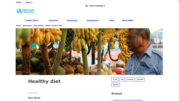
Key facts
- A healthy diet helps to protect against malnutrition in all its forms, as well as noncommunicable diseases (NCDs), including diabetes, heart disease, stroke and cancer.
- Unhealthy diet and lack of physical activity are leading global risks to health.
- Healthy dietary practices start
...
The document outlines strategies for reducing salt intake to combat high blood pressure, strokes, and heart disease in the Eastern Mediterranean Region. It highlights the need for progressive reductions in
...

The WHO Guidelines on risk reduction of cognitive decline and dementia provide evidence-based recommendations on lifestyle behaviours and interventions to delay or prevent cognitive decline and dementia. These WHO Guidelines are an important tool fo
...

This document is an output of a WHO cross-programme initiative aiming to improve the prevention, diagnosis and management of anaemia and thereby accelerate reduction in its prevalence. It comes at an important time, midway through the era of the Sus
...

The scope of the Guidance is primarily the education in rural settings in Myanmar, but it covers some of the issues which have pan Myanmar implication and relevance. Considering the importance, complexity and vastness of the subject, similar type of initiatives on urban school and education system a
...
This paper provides case studies of several food product improvement policies from across the WHO European Region. The aim is to share country experience, assess the various merits of the different approaches, discuss lessons learned, and provide guidance for best practice that may be more widely ap
...
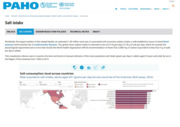
The article on the PAHO website discusses the health risks of excessive salt consumption, which contributes to numerous deaths worldwide. It highlights that average salt intake significantly exceeds
...
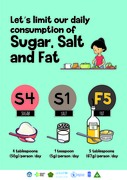
The documents promote balanced nutrition and healthy eating habits, emphasizing the need to limit daily consumption of sugar, salt, and fat while educating about the essential roles of food for energy, growth, and regulation. They are designed as ed
...

A guide to facilitating community-managed disaster risk reduction in the Horn of Africa.
This manual describes how to help communities implement disaster risk reduction activities. It was written f
...
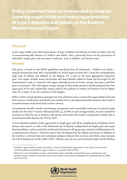
The documents focus on promoting healthier nutrition by addressing issues like sugar, salt, and fat intake, emphasizing their role in non-communicable diseases such as obesity, diabetes, and heart diseases. They include educational tools for childre
...
