
Filter
1859
Text search:
gender
inclusive
development
Featured
154
488
Language
Document type
988
380
184
139
94
28
18
18
4
2
1
1
1
Countries
111
66
53
47
46
44
39
36
35
35
35
33
29
27
27
27
23
21
20
19
18
18
18
17
17
16
15
15
14
14
13
13
13
12
12
11
10
9
9
9
8
8
8
8
8
7
7
7
7
6
6
6
6
6
5
5
5
5
5
5
5
5
4
4
4
4
3
3
3
3
3
3
3
2
2
2
2
2
2
2
2
2
2
2
2
1
1
1
1
1
1
1
1
1
1
1
1
1
1
1
1
1
1
1
Authors & Publishers
Publication Years
Category
721
161
115
93
52
25
Toolboxes
322
166
106
104
96
85
58
55
36
33
31
30
26
25
23
18
14
13
9
9
4
4
3
3
2
1
1
Although the COVID-19 crisis is, in the first instance, a physical health crisis, it has the seeds of a major mental health crisis as well, if action is not taken. Good mental health is critical to the functioning of society at the best of times. It must be front and centre of every country’s resp
...
Internally displaced persons (IDPs), refugees, migrants and returnees constitute a sizeable population in the WHO Eastern Mediterranean Region. There were 12 million refugees (half are Palestinians) and 13 million IDPs in the Region as of 2018. These populations are often vul
...
Accessed on 21.05.2020
Considering a hotline? This set of tools will help you assess, set up and manage different types of channels to communicate with communities during humanitarian crises.

How should humanitarian organisations prepare and respond to COVID-19 in humanitarian settings in low- and middle-income countries?
This Rapid Learning Review outlines 14 actions, insights and ideas for humanitarian actors to consider in their COVID-19 responses. It summarises and synthesises the
...
Mental health and psychosocial considerations during the COVID-19 outbreak
The Toolkit for Child Friendly Spaces in Humanitarian Settings was developed by
the International Federation of the Red Cross and Red Crescent Societies Reference
Centre for Psychosocial Support and World Vision International. The toolkit provides
a set of materials to assist managers and facilit
...
Children expressed the need for organisations to
support in the delivery of services such as health and
sanitation. The children also emphasized that schools
and the child-friendly spaces (CFSs) were effective
and important spaces to provide them with what they
need.

A thesis submitted for the Degree of Master of Theology at the South African Theological Seminary
A statement by the Catholic Bishops' Conference of England and Wales
1996

This document has been developed to assist National Societies in deciding if and how they may wish to assist their government’s strategy for contact tracing as part of their response plan for COVID-19.

This brief document compiles existing material related to mental health and psychosocial support (MHPSS) for the COVID-19 crisis, as well as other resources that can be applicable to the context. Documents are divided into different sections, based on the ‘’spaces of new vulnerability” inheren
...
Ce guide rassemble des documents existants liés à la santé mentale et au soutien psychosocial (MHPSS) relatifs à la crise du COVID-19, ainsi que d'autres ressources applicables au contexte. Il est divisé en différentes sections en fonction des « espaces de nouvelle vulnérabilité » inhéren
...
Guidance for General Medical and Specialised Mental Health Care Settings
En este documento se ofrece, en un formato de fácil consulta, el panorama general de las cuestiones relativas a la salud y los derechos sexuales y reproductivos que pueden afectar a los derechos humanos, la salud y el bienestar de los adolescentes (de edades comprendidas entre los 10 y los 19 años
...

Ethiopia saw a six-fold increase in confirmed COVID-19 cases between June and August, with 5,689 cases by end June compared to 34,058 cases as of 19 August. Ethiopia also registered more than 13,000 recoveries and more than 600 deaths. As of the last week of August, Ethiopia was leading eastern Afri
...

The COVID-19 pandemic is a multiplier of vulnerability, compounding threats to food insecurity, while exposing weaknesses in food and health systems. It is severely undermining the capacity of communities to cope in times of crisis and has become a stress test for political and economic stability.
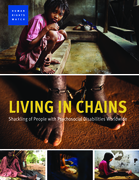
The report examines how people with mental health conditions are often shackled by families in their own homes or in overcrowded and unsanitary institutions, against their will, due to widespread stigma and a lack of mental health services.
Many are forced to eat, sleep, urinate, and defecate in t
...

A framework for planning, developing and implementing solutions with and for young people.
The guidance presented in this document is intended for digital health intervention designers, developers, implementers, researchers and funders. Newcomers to digital health can use it as a start-to-finish pr
...

WHO‘s Global Strategy to Accelerate the Elimination of Cervical Cancer, launched today, outlines three key steps: vaccination, screening and treatment. Successful implementation of all three could reduce more than 40% of new cases of the disease and 5 million related deaths by 2050.
